1 week ago
Sugar Price Hike Revives Material Concerns in Indian Politics
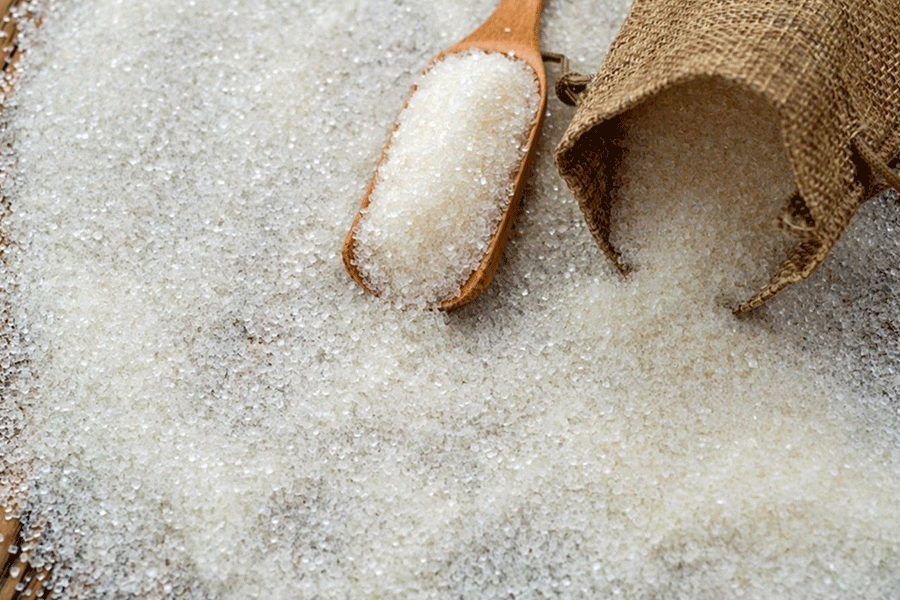
Sugar became much more expensive in August.
Its price rose by more than 15% in a few weeks.
The government responded by checking sugar stocks and allowing some sugar to be imported without duty.
Sugar production had fallen in several important states.
Bad weather, pests, and diseases were among the reasons.
Earlier estimates had expected more sugar than was actually produced.
The editorial says people are increasingly worried about prices, jobs, and other everyday problems.
It argues that elected governments should be judged by whether people can afford basic needs.

Sugar prices rose more than 15%, from Rs 48.18 per kilogramme in late July to Rs 55.70 by August 20.
The government announced stock limits, inspections of sugar mills, and duty-free imports of one million tonnes of raw sugar.
Falling production, adverse weather, pests, diseases, and inaccurate yield projections contributed to supply disruptions.
High sugar import duties remained in place despite declining production, adding to pressure on consumers.
The editorial argues that rising prices, unemployment, leaks, and inequality are bringing everyday material concerns back into Indian politics.
- Who
- Indian consumers, sugar producers, and the government are central to the issue.
- What
- Sugar prices rose sharply, prompting government measures to address supply and stock concerns.
- Where
- India, particularly sugar-producing states including Maharashtra, Uttar Pradesh, Tamil Nadu, and Karnataka.
- When
- Prices increased from late July to August 20; the article discusses the wider political implications during the approaching festive season.
- Why
- Production fell amid adverse weather, pests, and diseases, while higher yield projections and continued import duties contributed to supply and price pressures.
Editorial Critique
Government Response
Timing of action
Editorial Critique
The editorial says the government responded belatedly and questions why the supply problem was not identified earlier.
Government Response
The government responded by imposing stock limits, inspecting mill inventories, and permitting duty-free imports of one million tonnes of raw sugar.
Cause of the price rise
Editorial Critique
The editorial attributes the increase to falling production, adverse weather, pests, diseases, optimistic yield projections, and high import duties.
Government Response
The reported government measures indicate an attempt to address the supply disruption through monitoring and additional imports.
Political meaning
Editorial Critique
The editorial argues that commodity prices and other everyday concerns are weakening the dominance of emotive political issues and returning material conditions to the center of Indian politics.
Government Response
The article does not present a direct government response to this broader political interpretation.
Key facts
- Price increase
- Sugar prices rose more than 15%.
- Earlier price
- Rs 48.18 per kilogramme in late July.
- Price by August 20
- Rs 55.70 per kilogramme.
- Government import measure
- Duty-free import of one million tonnes of raw sugar was allowed.
- Government actions
- A stock limit was announced and Central and state teams inspected sugar stocks in mills.
- Production trend
- Sugar production fell between 2021-22 and 2023-24.
- Political concerns
- The editorial links price rise, unemployment, examination leaks, and inequality to renewed attention to material conditions.
Sources
Related news

Onion and Sugar Prices Raise Political Heat Before Festivals
India’s Sugar Prices Rise as Production Falls, Policies Lag
India’s Sugar Price Surge Exposes Deeper Supply-Management Challenges
Congress Questions Modi Government Over Sugar Prices And Inflation
Congress Blames E20 Policy and Delayed Imports for Sugar Price Rise

Haryana Congress Flags Sharp Rise in Sugar Prices

Stocks to Watch Thursday as Key Corporate Developments Drive Focus

Jarange Accuses Maharashtra Government of Inciting Riots During Fast
Mumbai Trains Election Officials Amid Statewide Electoral Roll Revision

Bombay Gymkhana Squash Finals Set After Junior Semifinals
NMMC Launches Navi Mumbai Drive to Protect Existing Trees