1 week ago
India’s Ethanol Push Could Shift Food, Water, and Vehicle Costs
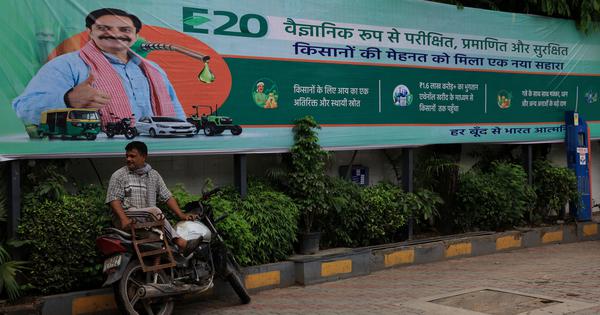
India is mixing more ethanol, a fuel often made from crops, into petrol.
The government says this uses extra farm produce, helps farmers, and reduces oil imports.
The article argues that some of this “extra” food could otherwise help feed people.
Growing crops for fuel also uses a lot of water and land.
Poor households may face higher food prices if more maize, rice, and other crops go to fuel.
Farm workers can also suffer health problems while harvesting sugarcane in extreme heat.
Older motorcycles and other vehicles may use more fuel or need repairs when ethanol blends rise.
Newer vehicles are generally better able to handle the blends.
The article says agricultural waste could offer a less harmful source of ethanol in the future.

India’s ethanol program has purchased 705.43 crore litres for the 2025–26 supply year, with state-run oil companies spending Rs 49,577 crore.
The government says only surplus grain is diverted, while critics argue subsidized rice and maize ethanol can increase food pressure and prices.
Rice, sugarcane, and maize ethanol production places heavy demands on land and water, particularly in water-stressed regions.
Older vehicles, especially two-wheelers, may experience larger mileage losses and repair costs than newer fuel-injected vehicles.
The article proposes expanding second-generation ethanol made from agricultural waste, while acknowledging its higher costs and logistical challenges.
- Who
- The Indian government, state-run oil marketing companies, ethanol producers, farmers, agricultural laborers, vehicle owners, and food-dependent households are affected.
- What
- India is expanding its Ethanol Blended Petrol Programme, including purchases of crop-based ethanol for petrol blending.
- Where
- India, including ethanol-producing and sugarcane-growing regions such as Maharashtra, Uttar Pradesh, and Panipat.
- When
- The figures discussed include the 2025–26 ethanol supply year, purchases through June 2026, and a government statement made in July 2026.
- Why
- The government says ethanol blending reduces crude-oil imports, supports farmers, and uses surplus stocks; the article argues that it shifts food, environmental, health, and vehicle costs onto poorer people.
Government and Industry Case
Critics’ Concerns
Food and fuel
Government and Industry Case
The government says ethanol is made from surplus stocks after food-welfare needs are met, while the program supports farmers and reduces crude-oil import costs.
Critics’ Concerns
The article argues that publicly subsidized rice and growing maize demand can tighten food supplies, raise prices, and encourage farmers to move away from pulses and oilseeds.
Environmental impact
Government and Industry Case
The Ministry of Petroleum and Natural Gas presents ethanol as a cleaner-fuel program supported by diversified feedstocks, efficient irrigation, water recycling, and Zero Liquid Discharge systems.
Critics’ Concerns
The article says crop-based ethanol can consume substantial water, require millions of hectares of cropland, strain ecosystems, and impose health costs on agricultural laborers.
Vehicle costs
Government and Industry Case
Newer vehicles with electronic fuel injection and upgraded materials are described as better able to adapt to ethanol blends, with only a modest efficiency reduction.
Critics’ Concerns
The article says older vehicles—widely used by delivery workers, commuters, and traders—can suffer greater mileage losses, corrosion, and repair expenses without manufacturer retrofit support.
Key facts
- Ethanol purchased
- 705.43 crore litres through June 2026 for the 2025–26 ethanol supply year.
- Procurement spending
- State-run oil marketing companies spent Rs 49,577 crore on that supply and more than Rs 1.72 lakh crore over the previous three years.
- Distillery capacity
- India had 501 ethanol distilleries with annual capacity approaching 16 billion litres.
- Food support
- The National Food Security Act provides free foodgrains to nearly 80 crore Indians, with rice making up about two-thirds of the allocation.
- Land requirement
- Meeting ethanol targets is expected to require diverting about seven million to eight million hectares of cropland.
- Vehicle effects
- The article says newer fuel-injected vehicles may lose 2%–5% in efficiency, while older carburetted vehicles may lose 15%–20% and face fuel-system damage.
- Alternative proposed
- Second-generation ethanol made from agricultural waste, including paddy straw and sugarcane bagasse, is presented as a potential alternative.
Sources
Related news

Priyank Kharge Questions Centre’s Subsidised Rice Ethanol Policy
India's ethanol policy must count water, sustainability costs

India’s Ethanol Push Raises Questions About Sugar Supplies
India’s Ethanol Push Shifts From Sugarcane Toward Grain Feedstocks

Major leaks in India's food security system
India’s Sugar Prices Rise as Ethanol Policy Strains Food Security

The Great Khali Says He Is Fine After Panipat Accident

Panjab University Law Student Allegedly Dies by Suicide in Hostel

ITAT Grants Taxpayer Final Chance After Rs 11.22 Crore Additions

Proposals Link Maharashtra and Haryana Through Memorial, Bhavan

Delhi 2047 Plan Targets 24-Hour Transit, Affordable Housing