3 weeks ago
Fruit juice tied to lower depression scores in UK trial
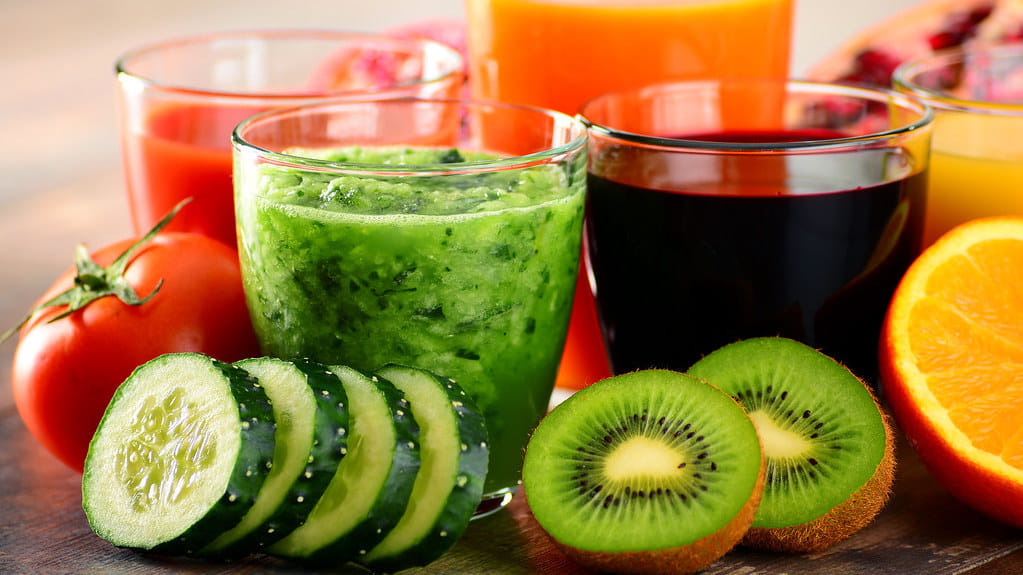
Scientists in the UK wanted to find out if eating more fruits and vegetables could help people feel better.
They asked 42 grown-ups who did not eat many fruits and vegetables to join a study for four weeks.
The people were split into three groups.
One group kept eating the way they always did.
The other two groups got help and a little money to eat more fruits and vegetables.
One of those groups also drank fruit juice or a smoothie every day.
At the end, the people who drank juice had lower scores on a test that measures sad feelings.
The difference was bigger than what might happen by chance.
But the study was small and short, so it does not prove that fruit juice makes people less sad.
Scientists say more research is needed before we can be sure.

A small randomised controlled trial by Newcastle University researchers found that adults who added a daily serving of 100% fruit juice or a smoothie to an increased fruit and vegetable intake recorded lower depression symptom scores.
The four-week study involved 42 UK adults who initially ate two or fewer portions of fruit and vegetables a day, split into three groups of 14.
The juice/smoothie group had an adjusted PHQ-9 depression score of 2.93 versus 5.45 in the control group, a statistically significant difference of 2.52 points.
There were no significant differences between groups in anxiety, gut symptoms, or metabolic biomarkers, but both intervention groups increased their fibre intake.
Researchers caution the results are an early finding, cannot be widely generalised, and do not prove fruit juice prevents or treats depression; the trial was funded by the Fruit Juice Science Centre.
The findings were published online in the British Journal of Nutrition on 22 May 2026 and the paper's authors include Courtney Neal, Georg Lietz, Kirsten Brandt, Anthony William Watson and Oliver Michael Shannon.
- Who
- Researchers at Newcastle University led by Courtney Neal, and 42 UK adults with low fruit and vegetable intake
- What
- A four-week randomised controlled trial tested whether increasing fruit and vegetable intake, with or without daily fruit juice or smoothies, affects mood; the juice/smoothie group showed significantly lower depression scores
- Where
- United Kingdom (study conducted at Newcastle University)
- When
- Findings published online in the British Journal of Nutrition on 22 May 2026; the trial itself lasted four weeks
- Why
- To investigate whether helping people overcome barriers to eating more fruits and vegetables, including via fruit juice, could benefit mental well-being
Key facts
- Study type
- Randomised controlled trial
- Lead institution
- Newcastle University
- Journal
- British Journal of Nutrition
- Publication date
- 22 May 2026
- Participants
- 42 adults
- Trial duration
- Four weeks
- Key result
- 2.52-point lower adjusted PHQ-9 depression score in the juice/smoothie group (2.93 vs 5.45)
- Funding
- Fruit Juice Science Centre
Quotes
Courtney Neal
Lead researcher at Newcastle University, now affiliated with the University of Liverpool
“The findings suggest that helping people overcome barriers to eating more fruits and vegetables could have potential benefits for their mental well-being.”
 theprint.in
Sources
Related news

Brain And Gut Signals May Predict Antidepressant Response Early

How Treatment-Resistant Depression Can Improve With Combined Therapies

Travel May Benefit Mental Health More Than Expected, Research Finds
Fibre Benefits May Begin Quickly but Build Over Time

How Low-Fat Vegan Diet May Aid Weight Loss Without Hunger
Anthocyanin-Rich Foods May Boost Heart and Metabolic Health

When Investment Conviction Becomes a Cognitive Trap for Investors

10-Minute Workout Triggers Anti-Cancer Molecules

Short Intense Exercises Improve Blood Vessel Function, Metabolism, and Fight Cancer

10 Minutes of Daily Exercise Lowers Bowel Cancer Risk