2 hrs ago
Tanker Rates Surge, But Shipping Stocks Face Cyclical Risks
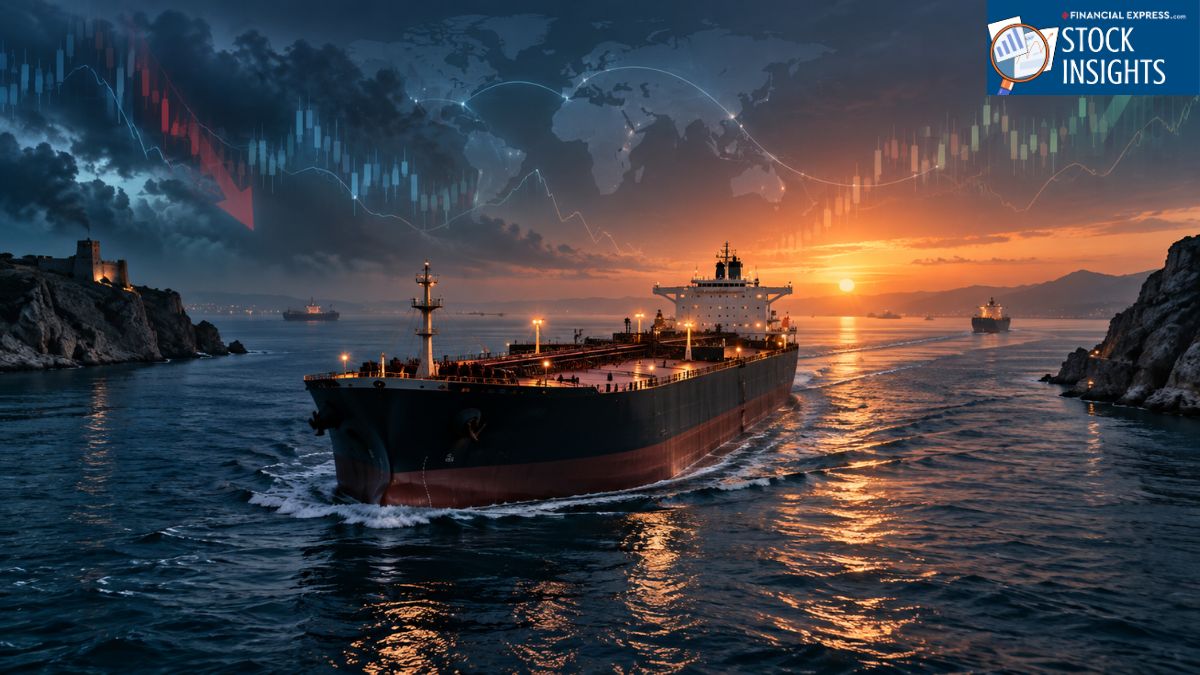
Oil tankers earn money by carrying crude oil between countries.
Recently, the daily price for using some large tankers rose sharply.
The increase was linked to fighting in the Middle East and problems using the Strait of Hormuz.
Longer journeys and safety risks mean fewer ships are available for normal routes.
Older tankers that cannot sail are also reducing available capacity.
This could help shipping companies earn more money for a while.
However, tanker prices can fall quickly if the conflict is resolved.
That is why cheap-looking shipping stocks may still be risky investments.

VLCC spot freight rates from the Middle East to China and India recently reached $700,000–$800,000 per day.
VLCC rates averaged $137,000 per day in 1QFY27, versus $42,065 a year earlier, while Suezmax rates averaged $140,300.
The Middle East conflict and a more-than-10-day effective closure of the Strait of Hormuz have extended journeys and increased risks.
About 20% of global VLCC capacity is more than 20 years old and reportedly not permitted to sail, tightening available supply.
Great Eastern Shipping and Shipping Corporation of India offer potential upside, but volatile rates make low P/E ratios potentially misleading.
- Who
- Shipping companies, tanker operators, investors, and oil-consuming countries including China and India are affected.
- What
- VLCC and Suezmax freight rates have surged, prompting analysis of whether Indian shipping stocks are undervalued or merely benefiting from a temporary cycle.
- Where
- The main routes discussed run from Middle Eastern oil producers to China, India, and southern Europe, with the Strait of Hormuz affecting passage.
- When
- The latest rates were reported over the past few weeks in 2026; comparisons include 1QFY27 and earlier periods from 2022 through 2025.
- Why
- Middle East conflict, the effective closure of the Strait of Hormuz, longer voyages, elevated crew risks, and unavailable older tankers have tightened tanker capacity.
Upside Case
Cyclical-Risk Case
Freight-rate outlook
Upside Case
The Middle East conflict, longer voyages, elevated security risks, and unavailable older tankers could keep tanker rates strong if the crisis continues.
Cyclical-Risk Case
A resolution or de-escalation of the Middle East crisis could cause spot freight rates to fall sharply.
Stock valuations
Upside Case
Great Eastern Shipping’s reported low P/E and proposed ₹900 crore buyback may make the stock appear attractively valued, while strong tanker earnings could support performance.
Cyclical-Risk Case
Low P/E ratios in shipping may reflect temporarily elevated earnings rather than durable value, because freight rates respond quickly to global economic changes.
Investor strategy
Upside Case
Investors may benefit from exposure to companies with substantial tanker fleets and a mix of short- and long-term customer contracts.
Cyclical-Risk Case
Investors should account for volatility and may consider tendering only part of their holdings in the buyback, after consulting independent advisers.
Key facts
- Latest VLCC rate
- $700,000–$800,000 per day on Middle East-to-China and India routes
- Latest Suezmax rate
- $275,000–$300,000 per day on Middle East-to-southern Europe routes
- VLCC 1QFY27 average
- $137,000 per day, compared with $42,065 in 1QFY26
- Suezmax 1QFY27 average
- $140,300 per day, compared with $46,000 a year earlier
- Fleet constraint
- Nearly 20% of global VLCC capacity is more than 20 years old and reportedly not permitted to sail
- Great Eastern Shipping buyback
- Up to ₹900 crore at no more than ₹1,530 per share
- Reported P/E comparison
- Great Eastern Shipping was reported at 5.3 times consolidated P/E, while Shipping Corporation of India was reported at 8.1 times; another passage cites 5.9 and 8.3 times, respectively
Sources
Related news
GE Shipping Posts Record Profit Amid Buyback and Freight Surge
Hormuz Disruption Drives India’s Crude Freight Costs Sharply Higher
India Hits Record Exports Despite Freight Surge Amid US-Iran War

West Asia Crisis Sends India-Bound Tanker Rates Soaring

India urged to boost shipping capacity, naval protection: GTRI

Hormuz Shipping Falls as Middle East Maritime Risks Rise

Indian Stocks Set to Turn Ex-Dividend on September 4

Expert Recommends Five Stocks as Market Risks Weigh
India’s 100-Vessel Plan Puts Five Maritime Stocks in Focus