

3 weeks ago
Centre panel examines Rohingya and Pandit settlements in Jammu
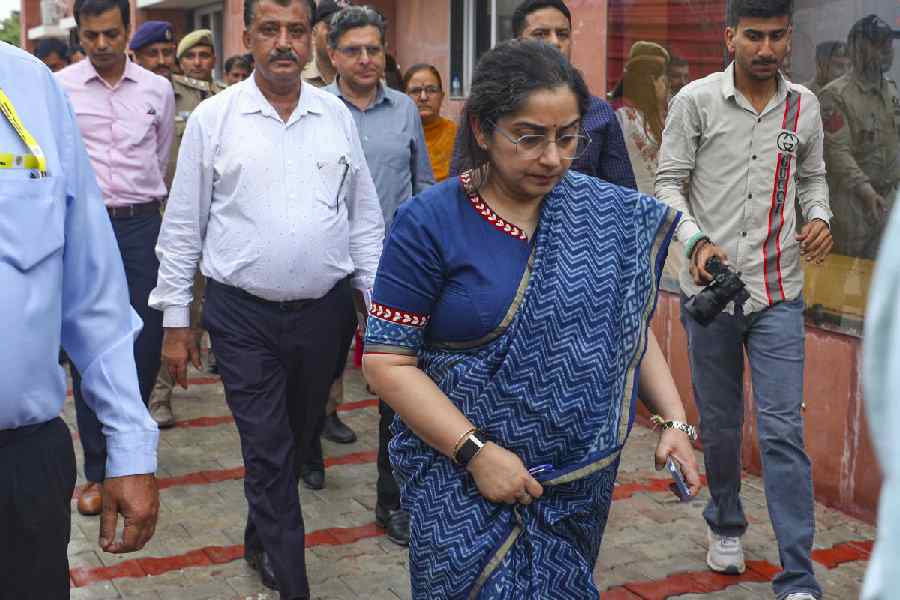
The government of India sent a special group of four people, called a committee, to a place called Jammu.
The committee wants to learn how the people living there have changed over time.
Many Kashmiri Pandit families left their old homes in Kashmir and now live in a place called Jagti.
The committee visited them and listened to what they had to say.
They also visited a neighborhood where Rohingya families, who came from far away, are living.
Some people in Jammu are upset about the Rohingya families because they are worried the area will change.
The committee also learned about a big argument over land in Kashmir.
Kashmiri Pandits want to get their old land back, but some other people say they already sold it.
The committee talked to police and government leaders for help.
In the end, the committee will share ideas to fix these problems.

A four-member committee headed by retired Justice Prabhakar Navlekar visited Jammu to examine demographic changes in border states, focusing on Rohingya settlements and Kashmiri Pandit migrant colonies.
Members visited Jagti township, the largest designated satellite settlement for displaced Kashmiri Pandits, and held closed-door consultations for nearly an hour.
The team also inspected a slum housing Rohingya immigrants in Jammu's Narwal and met Gorkha representatives; roughly 13,000 Rohingya live in the region.
Kashmir's Hindu population fell from 3.96 per cent in 1981 to 2.45 per cent in 2011, as most Pandits migrated mainly to Jammu during militancy.
Land retrieval in Kashmir is a bone of contention, with Pandits seeking allegedly encroached land while some Muslims allege claims on properties sold over decades.
- Who
- A four-member committee headed by retired Justice Prabhakar Navlekar and set up by the BJP-led government at the Centre, including census commissioner Mritunjay Kumar, retired IAS officer Durga Shankar Mishra, retired IPS officer Balaji Srivastava and Prime Minister's economic advisory council member Shamika Ravi.
- What
- Examined demographic changes in border states, focusing on Rohingya settlements and Kashmiri Pandit migrant colonies in Jammu.
- Where
- Jammu, including Jagti township and a slum housing Rohingya immigrants in Narwal.
- When
- Tuesday, during a three-day trip that began on Monday.
- Why
- To study demographic changes reportedly arising from illegal immigration and other factors, under the High-Powered Demography Mission announced by PM Narendra Modi on August 15 last year.
Migrant and minority community perspective
Local community and demographic concerns
Rohingya presence in Jammu
Migrant and minority community perspective
Rohingya immigrants — roughly 13,000 in the region, including women and children — have been detained at a holding centre inside Kathua sub-jail since 2021, and the committee examined their settlement in Narwal.
Local community and demographic concerns
Jammu Dogras fiercely resent the Rohingya presence, claiming it is a ploy to change the Hindu-majority demography of the region.
Retrieval of Kashmiri Pandit land
Migrant and minority community perspective
Kashmiri Pandits say the issue of fully retrieving land allegedly encroached in Kashmir remains unresolved, and they apprised the committee of their concerns.
Local community and demographic concerns
Many Muslims allege Pandits are laying claim to properties sold by them over decades, which helped them build homes in Jammu and other places.
Key facts
- Committee head
- Justice (retd) Prabhakar Navlekar
- Focus areas
- Rohingya settlements and Kashmiri Pandit migrant colonies in Jammu
- Hindu population of Kashmir in 1981
- 3.96 per cent
- Hindu population of Kashmir in 2011
- 2.45 per cent
- Rohingya immigrants in the region
- Roughly 13,000
- Rohingya detention
- Holding centre inside Kathua sub-jail since 2021
- Gorkhas in Jammu
- Present in thousands; originally from Nepal, with ancestors who served in the Dogra army
- Mission
- High-Powered Demography Mission announced by PM Narendra Modi on August 15 last year
Sources
Related news
Central Committee Reviews Demographic Change in Jammu and Kashmir

Centre's Panel to Examine Demographic Changes, Illegal Migration in Jammu

Marandi Seeks Deportation of Bangladeshi Infiltrators from Jharkhand
Zardari's 'tolerate 4% Hindus' comment draws minority rights scrutiny

Jammu and Kashmir's forgotten minorities: a mosaic of identities

India Rejects UN Panel’s Claims of Targeting Rohingya Muslims
Lokesh Calls for NDA Victory in Upcoming Local Elections
Jagga Reddy touts Telangana welfare schemes after 1,000 days
BMC Introduces Randomized Online Engineer Transfers Amid Political Interference Allegations
Madhya Pradesh CM Hints at Renaming Orchha’s Jahangir Mahal
Lokesh Urges Alliance Leaders to Secure Huge Local Poll Victory
