3 days ago
Punjab Industries Face Uncertainty Ahead of MLU Relocation Deadline
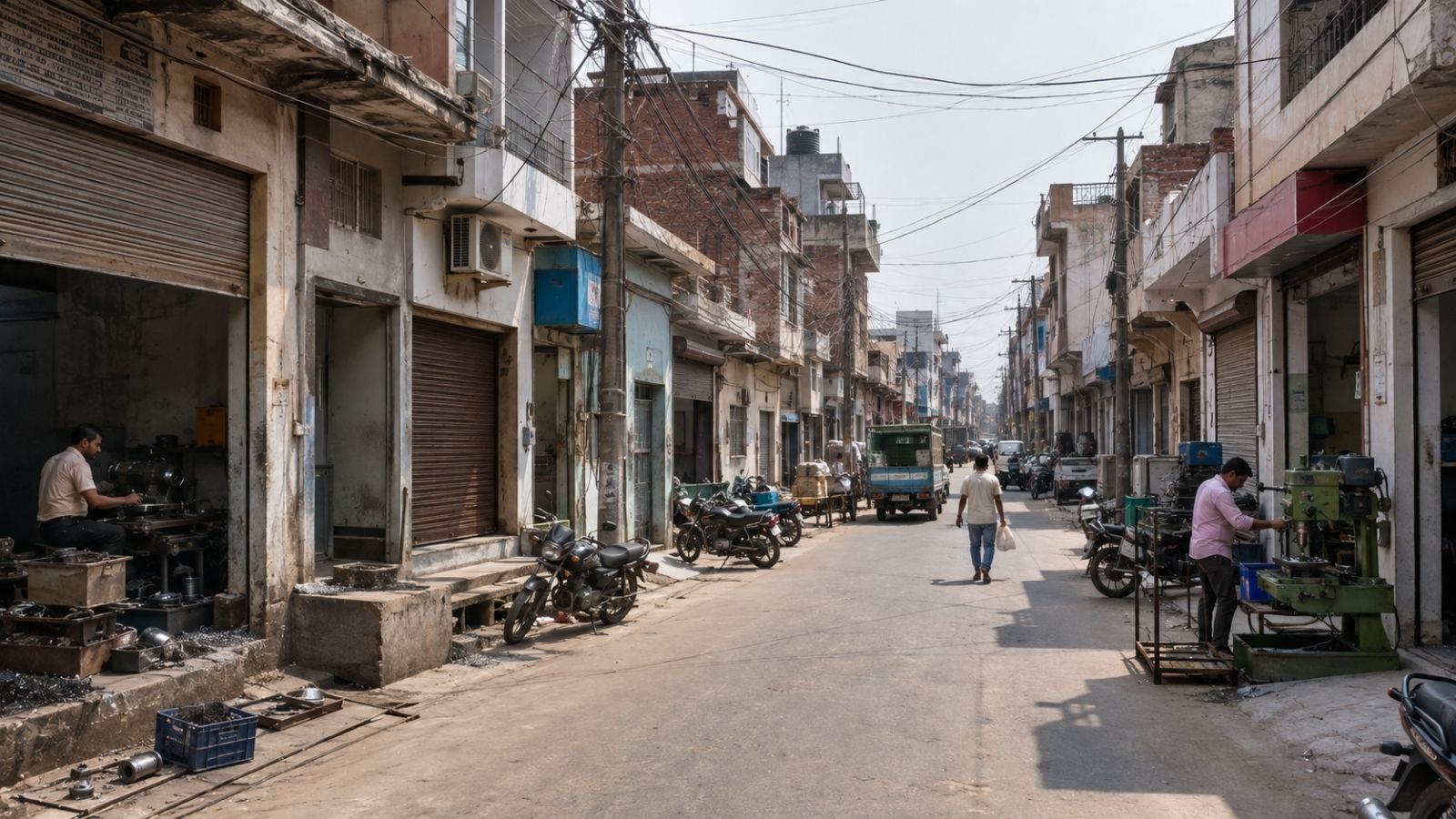
Many small factories in Punjab operate in neighborhoods where homes, shops and workshops are together.
These places are called Mixed Land Use areas.
The government says factories should move to planned industrial areas because pollution, waste, noise and traffic can affect residents.
The latest permission for these factories ends on September 30, 2026.
Factories that do not move could have trouble getting permission to operate from the pollution board.
Factory owners say moving is difficult because there is not enough affordable land in suitable locations.
They also say many workers, including women, live nearby and depend on these factories for jobs.
The government must now balance environmental protection with the jobs and businesses supported by these industrial neighborhoods.

Industries operating in Punjab’s Mixed Land Use areas must relocate by September 30, 2026, or risk difficulties obtaining or renewing pollution-control consent.
Ludhiana is the most affected city, with major MLU industrial clusters also identified in Jalandhar, Sangrur and other districts.
Industry groups want established industrial pockets to be formally designated as industrial zones and say suitable relocation land is unavailable.
Associations claim Ludhiana has more than 50,000 micro and small units employing around five to six lakh workers.
The Punjab Pollution Control Board says polluting industries have shifted in several cases, while existing units may continue at current capacity subject to regulatory conditions.
- Who
- Thousands of micro and small industrial units, industry associations, the Punjab government and the Punjab Pollution Control Board are involved.
- What
- The future of industries operating in Mixed Land Use areas is uncertain because their authorization to operate expires on September 30, 2026.
- Where
- The issue affects several Punjab districts, especially Ludhiana, including Janta Nagar, New Janta Nagar, Shimlapuri, Partap Nagar and Chet Singh Nagar.
- When
- The current deadline is September 30, 2026; the issue dates back to relocation plans introduced in 2008-09.
- Why
- The government seeks to address pollution and planned urban development, while industry groups say relocation is impractical without suitable industrial land and could threaten jobs.
Industry and Employment Concerns
Pollution Control and Planned Development
Whether units should be relocated
Industry and Employment Concerns
Industry associations argue that established industrial pockets should receive permanent recognition as industrial zones because relocation is not feasible without suitable land.
Pollution Control and Planned Development
Authorities maintain that industries in densely populated areas create air and water pollution, waste, noise and traffic concerns, supporting movement to designated industrial clusters.
Availability of alternative space
Industry and Employment Concerns
Industrialists say suitable space for micro and small units is limited, and that much of the Hi-Tech Cycle Valley has been occupied by larger units.
Pollution Control and Planned Development
The government’s relocation efforts included the 360-acre Cycle Valley project, while the pollution board says several polluting industries have already shifted to designated clusters.
Impact on workers and businesses
Industry and Employment Concerns
Industry groups say the units support five to six lakh workers in Ludhiana and are especially important for women workers because they are close to residential areas and supply chains.
Pollution Control and Planned Development
The pollution board allows existing units to operate at current capacity under regulatory conditions but does not permit expansion in existing Mixed Land Use areas.
Key facts
- Deadline
- September 30, 2026
- Regulatory risk
- Units that have not relocated could face difficulties obtaining or renewing Consent to Operate from the Punjab Pollution Control Board.
- Most affected city
- Ludhiana has Punjab’s largest concentration of industrial units in Mixed Land Use areas.
- Reported scale
- Industry associations claim Ludhiana has more than 50,000 micro and small units employing around five to six lakh workers.
- Major sectors
- Cycle parts, sewing-machine parts, auto-parts, fasteners and other small manufacturing activities operate in the affected clusters.
- Relocation project
- A 360-acre Cycle Valley was announced at Dhanansu village near Ludhiana and later developed as the Hi-Tech Cycle Valley.
- Current board position
- Existing units may continue at their present capacity subject to regulatory conditions; expansion is not permitted in existing Mixed Land Use areas.
Quotes
R.K. Ratra
Chief engineer of the Punjab Pollution Control Board
“The MLU issue concerns several districts, although Ludhiana is the most affected because of the density of industrial activity in its mixed-use areas.”
 indianexpress.com
Sources
Related news

Chakan industrialists put move-out decision on hold after minister assurance

Chakan MIDC Infrastructure Crisis Prompts 20 Companies to Consider Relocating

Sharad Pawar: closure of 36,000 Maharashtra industrial units 'deeply shocking'

Hyderabad Government Plans More Incentives For HILT Relocations
Chakan Auto Hub Faces Relocation Threat Over Infrastructure Gaps
Over 36,000 industrial units shut in Maharashtra in five years

NGT Criticizes Delay in Jharkhand Mining Probe

NGT raps Punjab civic body for illegal waste dumping
Mohali MC implements door-to-door waste collection
HC Directs Punjab Kesari to NGT in Hotel Pollution Case