7 hrs ago
UPI MDR Rules Set Rs 5 Cap for Essential Sectors

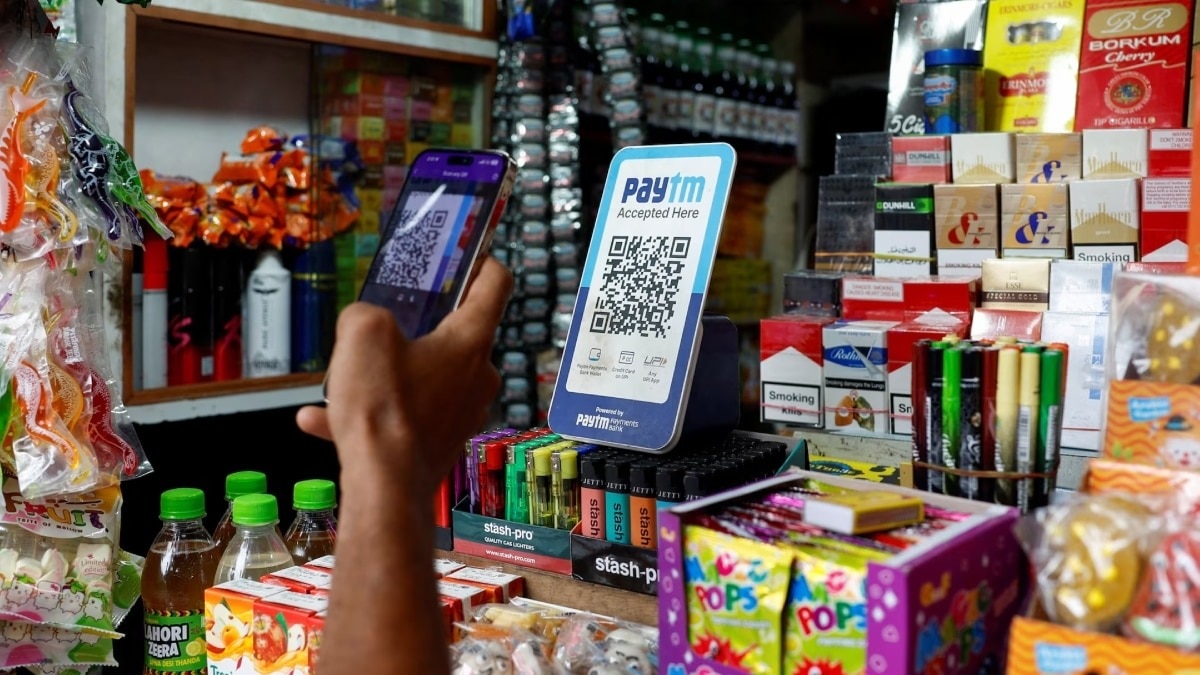
The article describes proposed charges for some businesses that accept UPI payments.
For certain payments over Rs 2,000, many businesses would pay a fee of 0.4% of the transaction.
Some essential services, such as railways, fuel and telecom, would pay a flat Rs 5 instead.
The article says this could protect services with low profit margins from larger fees.
The charge is meant to help support the systems that process digital payments.
Businesses officially pay the fee, not customers directly.
But businesses might absorb the cost, or it could affect prices, discounts or other charges.
The article also says payment providers need ways to prevent businesses from claiming the wrong category to get the lower fee.

The article says new UPI guidelines would apply from October 15 to certain person-to-merchant transactions above Rs 2,000.
Most eligible transactions would face a 0.4% merchant discount rate, capped at Rs 300 for transactions totalling Rs 75,000 or more.
Railways, telecom, insurance, fuel and specified utility payments would instead pay a flat Rs 5 per qualifying transaction.
The Ministry of Finance says the flat fee is intended to limit costs for essential services and thin-margin sectors while supporting digital payments.
The article says MDR is formally a merchant-side charge, though merchants and payment providers may absorb it or pass some costs through indirectly.
- Who
- The National Payments Corporation of India announced the guidelines; the Ministry of Finance described the sector-specific Rs 5 charge.
- What
- A proposed UPI MDR structure sets a 0.4% rate for eligible person-to-merchant transactions above Rs 2,000, with a Rs 5 flat charge for specified sectors.
- Where
- The UPI payments system.
- When
- The article says the rules start October 15; it does not specify the year in the provided text.
- Why
- The stated aim is to balance payment-system sustainability with affordability for essential services and relatively thin-margin sectors.
Case for the differentiated fee
Concerns and trade-offs
Affordability versus ecosystem funding
Case for the differentiated fee
The Ministry of Finance and quoted experts say a flat Rs 5 charge can protect essential services and thin-margin sectors while still contributing to payment infrastructure.
Concerns and trade-offs
A fixed lower charge may affect the revenue available to banks and other payment participants; the article says the long-term system must remain financially sustainable.
Merchant cost versus consumer impact
Case for the differentiated fee
The charge is formally paid by merchants, and merchants or payment providers may absorb some or all of the cost.
Concerns and trade-offs
The article says some costs could indirectly affect customers through pricing, reduced discounts or loyalty benefits, or other fees.
Sector-specific pricing versus classification risks
Case for the differentiated fee
Different rates can support lower-cost digital payments in sectors considered essential or relatively low-margin.
Concerns and trade-offs
Different rates could encourage merchant misclassification; experts call for classification checks, monitoring, audits and enforcement.
Key facts
- Qualifying transaction threshold
- Above Rs 2,000
- Standard MDR rate
- 0.4%
- Standard MDR maximum
- Rs 300 for transactions totalling Rs 75,000 or more
- Specified-sector charge
- Flat Rs 5 per qualifying transaction
- Sectors cited for flat charge
- Railways, telecom, insurance, fuel and specified utility-type payments
- Effective date stated
- October 15; year not specified in the article text
- Fee payer
- The MDR is structured as a merchant-side charge; the government has advised banks to ensure merchants do not pass it directly to customers.
Quotes
Ramkumar Subramanian
Partner at Grant Thornton Bharat.
“Any attempt to recover the economics through a differently labelled charge would have to be examined carefully against the applicable regulatory framework. A charge cannot merely be re-characterised if, in substance, it circumvents the prescribed MDR structure”
 financialexpress.com
“The policy rationale behind a lower fixed cap for sectors such as railways, insurance, fuel and telecom is likely to preserve affordability and encourage seamless digital payments in services that have a significant public interest and inclusion dimension”
financialexpress.com

Ministry of Finance
The Indian government ministry discussing the rationale for the flat MDR.
“This flat-rate model prevents cost escalations in critical public services, utility bill collection, and thin-margin sectors like fuel retail. It ensures that essential consumer services remain low-cost and digitally efficient”
financialexpress.com
Sources
Related news

New UPI MDR rules set flat ₹5 charges for services

New UPI MDR Framework Sets Merchant Fees From October 15
UPI Payments Above ₹2,000 Face New Merchant Fee

New UPI MDR Rules Keep Consumers Free, Charge Eligible Merchants

UPI Sets 0.4% MDR on High-Value Merchant Payments

UPI MDR Begins October 15, Merchants Face Charges, Customers Don’t

HRA Claims: Government Accommodation, Tax Regime Rules Employees Must Know

GST Cut Removed Tax, but Did Not Guarantee Cheaper Premiums
Das Urges Reforms and Domestic Capacity Amid Global Uncertainty

UPI MDR Charges Raise Sustainability Hopes and Merchant Concerns