1 hr ago
Trump and Xi Trade Tariffs for Negotiating Leverage
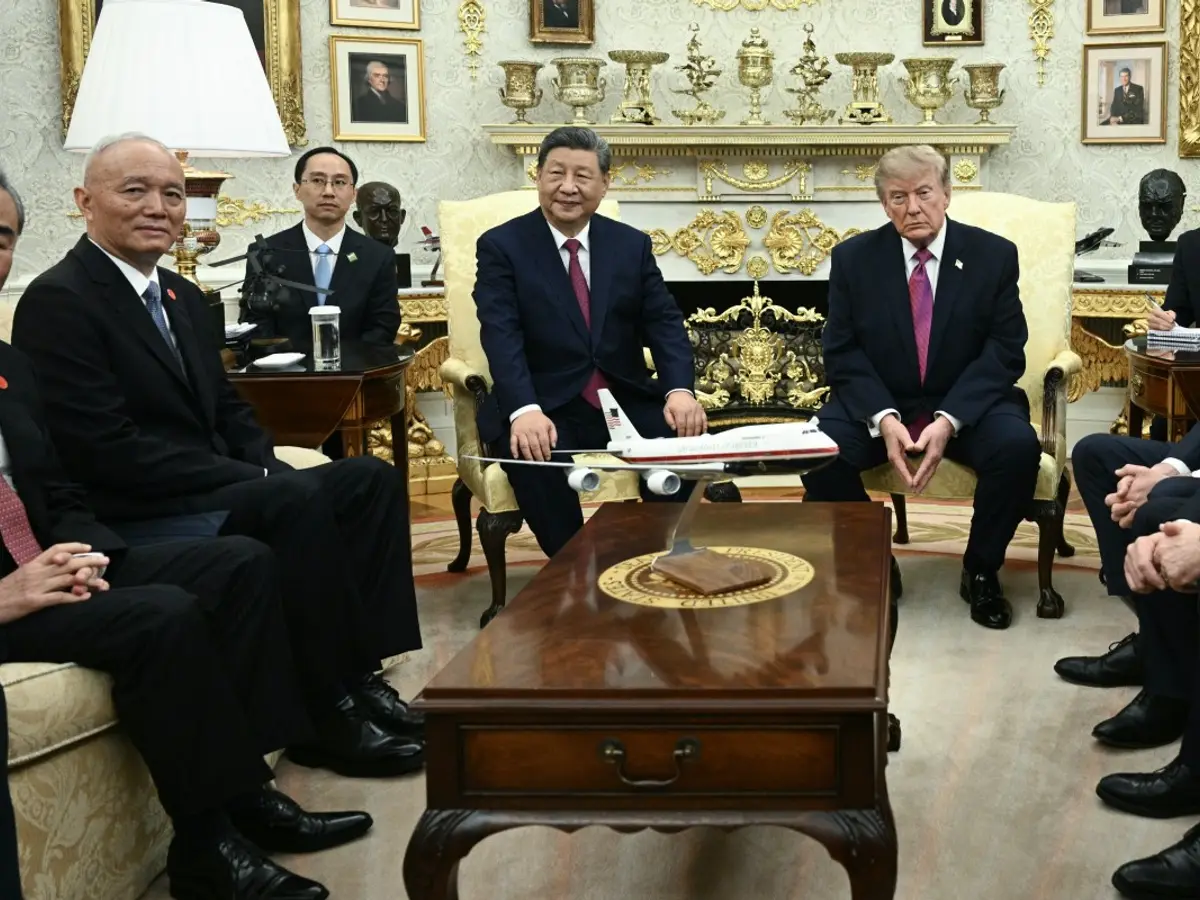
Donald Trump and Xi Jinping are meeting while the United States and China are still economic competitors.
Trump once focused mainly on using tariffs to pressure China.
Now, both countries are also trying to negotiate and avoid making tensions worse.
China controls much of the world’s rare-earth supply, which is important for many high-tech products and defense equipment.
The United States has its own powerful tools, including advanced technology, money and access to its large market.
This means both countries need something from each other.
They still disagree about technology, security and Taiwan.
A small agreement on tariffs, minerals, farm purchases or artificial intelligence could count as progress.
Avoiding a new escalation may be as important as reaching a major deal.

Donald Trump’s approach toward China has shifted from tariff confrontation toward diplomacy during an extended trade truce.
China’s control of rare-earth supply chains gives Beijing leverage over industries using automobiles, electronics, semiconductors and defense equipment.
The United States retains leverage through advanced technology, capital and access to the American market.
Xi Jinping’s visit also reflects competition over the future global economic order and China’s outreach to the Global South.
Taiwan remains a major red line, while analysts expect incremental progress rather than a sweeping breakthrough at the summit.
- Who
- U.S. President Donald Trump and Chinese President Xi Jinping, representing the United States and China.
- What
- A Washington summit focused on trade, tariffs, rare earths, artificial intelligence and broader strategic competition.
- Where
- Washington, United States.
- When
- During Xi Jinping’s state visit to Washington, amid an extended trade truce; the article does not provide a specific date.
- Why
- Both governments are seeking leverage and economic stability while managing their mutual dependence and disagreements over technology, security, global influence and Taiwan.
U.S. Leverage
Chinese Leverage
Economic pressure
U.S. Leverage
The United States can use its large consumer market, advanced technology, capital and technology restrictions to pressure Beijing.
Chinese Leverage
China can use its importance to global supply chains, especially rare-earth mining, refining and magnet production, to create pressure on Washington and other economies.
Summit objectives
U.S. Leverage
A narrower tariff agreement, increased agricultural purchases or progress on artificial-intelligence discussions could demonstrate useful Chinese concessions and stabilize trade.
Chinese Leverage
China can seek economic stability while preserving its broader strategic position and avoiding commitments that undermine its influence or core interests.
Limits of cooperation
U.S. Leverage
Washington may pursue reduced tensions while continuing to compete with China over technology, security, military power and the Indo-Pacific.
Chinese Leverage
Beijing may negotiate on trade and economic issues, but Taiwan remains a stated red line and limits how far bilateral warmth can go.
Key facts
- Central question
- Whether the United States or China needs the other more.
- Trade status
- The meeting occurs during an extended trade truce.
- China’s rare-earth position
- Reuters reports China controls up to 70% of global rare-earth mining, around 85% of refining capacity and roughly 90% of rare-earth metal alloy and magnet production.
- U.S. leverage
- Washington retains access to advanced technology, capital and the American market as key sources of influence.
- China’s priorities
- Beijing seeks economic stability while managing domestic challenges.
- Major red line
- China describes Taiwan as the first red line in China-U.S. relations.
- Expected summit result
- Analysts cited by AP expect incremental progress rather than a sweeping breakthrough.
Sources
Related news

Trump and Xi Prepare for High-Stakes White House Talks
Trump-Xi Meeting Tests Fragile US-China Trade and Technology Truce
Xi Jinping's US Visit Tests Trade and AI Cooperation
Trump-Xi Meeting Could Reshape India’s Strategic Value to Washington

Trump Welcomes Xi With Red Carpet as Trade Talks Loom

Trump-Xi Washington Talks Put Global Economy in Focus
Xi Urges US-China Peaceful Coexistence Amid Rising Rivalry
Trump-Xi Summit Tests Taiwan Arms Deal and US-China Stability
India Urged to Build Buffers Beyond Protectionism
Trump and Xi Weigh AI, Trade Truce and Taiwan