

1 hr ago
Trump-Xi Meeting Tests Fragile US-China Trade and Technology Truce
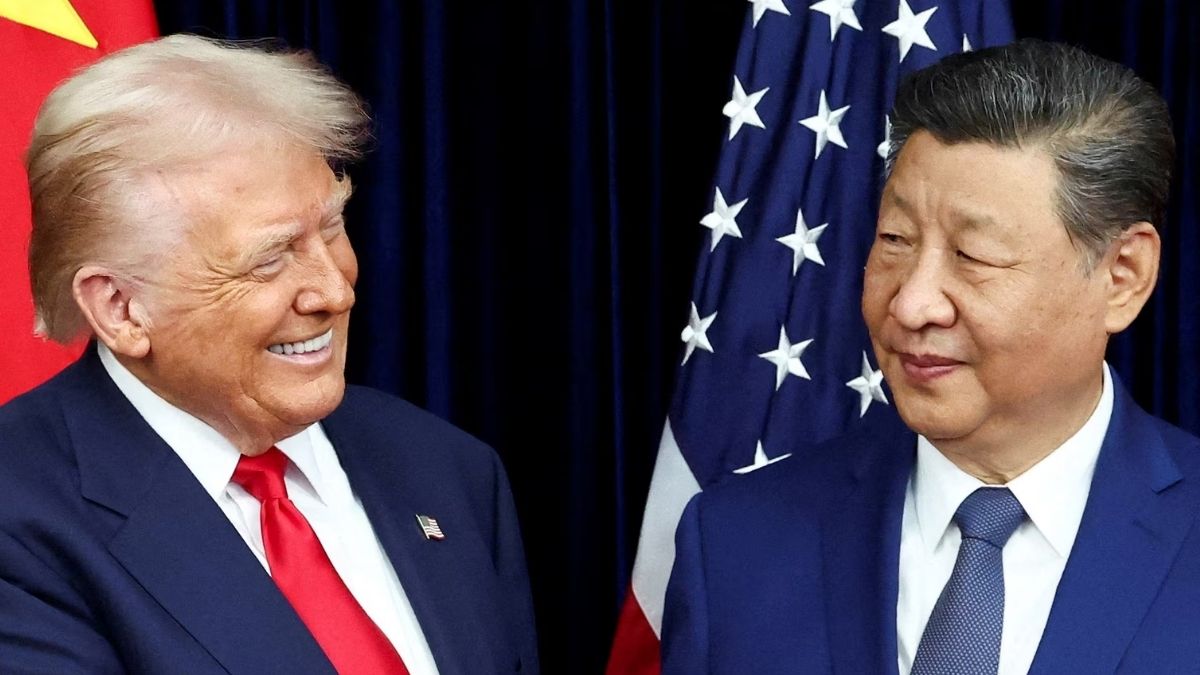
Donald Trump and Xi Jinping are meeting to manage disagreements between the United States and China.
They are not expected to end the rivalry between their countries.
Artificial intelligence is important because it can affect business, safety and national security.
The two countries may discuss a way to warn each other about serious AI-related incidents.
Rare-earth metals are also important because they are used in electronics, cars and defense equipment.
China controls much of the mining and processing of these materials.
The countries are also trying to keep a trade truce from ending and avoid new tariffs.
Taiwan and Iran could make the talks more difficult.
The meeting will show whether the two countries can cooperate in limited areas while continuing to compete.

Donald Trump and Xi Jinping are meeting at the White House during Xi’s first Washington visit in a decade.
Artificial intelligence discussions may cover safety notifications, open-weight models and safeguards against misuse, despite unresolved technology disputes.
China’s dominance of rare-earth mining, refining and magnet production gives Beijing significant leverage over US supply chains.
The leaders are considering extending the Busan trade truce, which is due to expire in November, and reducing tariffs on about $30 billion of goods each.
Taiwan, Iran, agricultural purchases, energy and Boeing aircraft may also feature in broader negotiations aimed at managing rivalry rather than resetting relations.
- Who
- United States President Donald Trump and Chinese President Xi Jinping, with officials from both governments involved in related negotiations.
- What
- A high-level meeting on trade, tariffs, artificial intelligence, rare earths, technology controls and wider security disagreements.
- Where
- The White House in Washington.
- When
- The meeting is scheduled for Thursday during Xi Jinping’s September 23–25 state visit to the United States.
- Why
- The two countries are trying to preserve a fragile economic truce, prevent another tariff escalation and manage their broader technology and security rivalry.
United States Position
China Position
Artificial-intelligence controls
United States Position
The United States wants safeguards against dangerous AI uses, greater transparency and continued restrictions on China’s access to advanced semiconductor technology.
China Position
China is developing domestic AI capabilities, rejects US accusations about model distillation and criticizes American technology restrictions as attempts to limit its development.
Rare earths and trade
United States Position
The United States wants reliable access to critical minerals and argues that Chinese export restrictions create supply-chain and national-security risks.
China Position
China wants assurances that US export controls and other restrictions will not be used against Chinese companies without consequences, while retaining leverage from its dominant supply chains.
Future of the truce
United States Position
Washington wants to extend the arrangement while seeking greater Chinese market access, continued mineral supplies and possible tariff reductions.
China Position
Beijing is seeking relief from tariffs and technology restrictions while discussing purchases and trade arrangements with the United States.
Key facts
- Xi Jinping’s visit
- September 23–25; his first visit to Washington in a decade.
- Trade truce
- The Busan agreement paused some Chinese export controls and is due to expire in November.
- Rare-earth dominance
- China controls up to 70% of global rare-earth mining, 85% of refining capacity and about 90% of rare-earth metal alloy and magnet production, according to AlixPartners.
- Potential tariff discussions
- The two sides are discussing possible reductions involving about $30 billion of goods on each side.
- AI proposal
- The United States has proposed a notification system for AI incidents with potential national-security consequences.
- Other topics
- Possible discussions include agriculture, energy, medical devices, Boeing aircraft, Taiwan and Iran.
Quotes

Jamieson Greer
US Trade Representative
“We think that just like any cross-border activity, that moving from opaque to more transparency between the No. 1 and the No. 2 AI powers in the world is very important.”
 financialexpress.com
“They have limited rare earth exports. They’ve controlled them”
financialexpress.com
Sources
Related news
US, China Begin Trade and AI Talks Before Trump-Xi Summit
Xi Jinping's US Visit Tests Trade and AI Cooperation

Trump and Xi Prepare for High-Stakes White House Talks

Trump-Xi Washington Talks Put Global Economy in Focus
Trump-Xi Talks Put AI and Chips at Center
Bessent and He Lifeng Prepare Trade Agenda Before Trump-Xi Summit
Trump-Xi Summit Emphasizes Pageantry Amid U.S.-China AI Feud
United States Announces $31 Million for Nepal Flood Recovery
Trump to Ask Xi to Free Detained US Seismologist

Trump Plans Refugee Admissions Primarily for South African Afrikaners
