6 hrs ago
MoSPI Explains Negative Manufacturing Deflator Through Double Deflation

GDP can be measured using today’s prices or prices adjusted to remove inflation effects.
The adjusted figure is meant to show how much the economy’s actual output grew.
MoSPI reported real GDP growth of 7.8% in the first quarter of FY27.
Some people questioned why this figure differed so much from growth measured at current prices.
Former finance secretary Subhash Garg said actual growth was 2.6%.
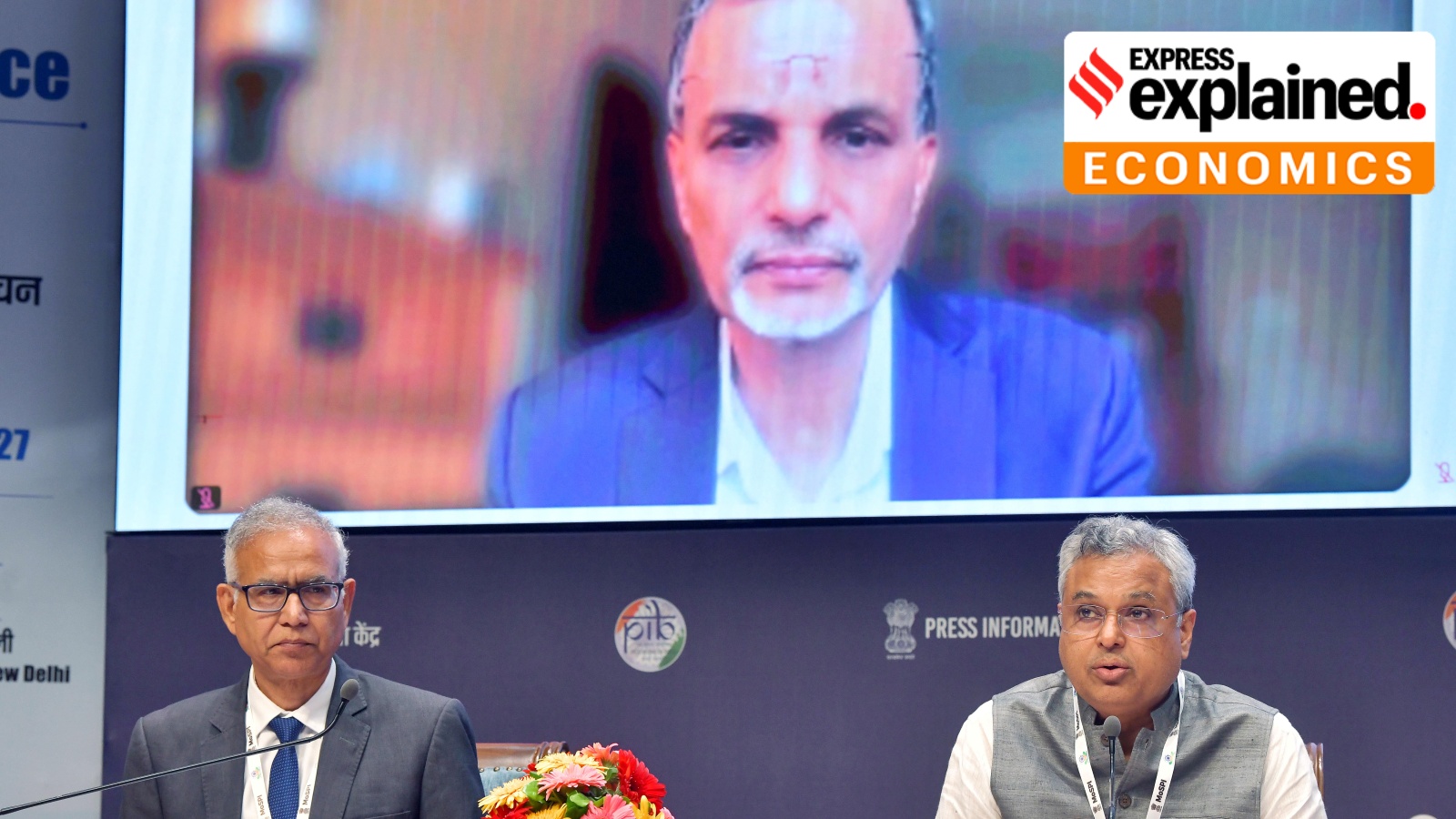
MoSPI Secretary Saurabh Garg explained that manufacturing uses a method called double deflation.
This method considers both the prices of products sold and the costs of materials used to make them.
If materials become more expensive but factories cannot raise selling prices, the value added by manufacturing becomes smaller at current prices.
That can make the manufacturing deflator negative even when output measured at constant prices is higher.

MoSPI reported 7.8% real GDP growth for the first quarter of FY27.
The data prompted questions about the gap between current-price and constant-price GDP growth.
Former finance secretary Subhash Garg said the economy had actually grown by 2.6%.
MoSPI Secretary Saurabh Garg attributed the negative manufacturing deflator to rising input costs and limited price increases for consumers.
He explained that higher input costs reduce current-price value added even when constant-price value added remains unchanged.
- Who
- MoSPI Secretary Saurabh Garg, MoSPI, and former finance secretary Subhash Garg.
- What
- MoSPI explained why manufacturing recorded a negative deflator while reporting 7.8% real GDP growth for the first quarter of FY27.
- Where
- The explanation was given in an interview with Business Today Group Editor Siddharth Zarabi.
- When
- The figures discussed were for the first quarter of FY27; the article does not provide a specific interview date.
- Why
- Input costs rose significantly while manufacturers were unable to pass the increases fully on to consumers, reducing current-price manufacturing value added.
MoSPI’s Explanation
Criticism and Alternative Interpretation
Meaning of the GDP figures
MoSPI’s Explanation
MoSPI says constant-price GDP removes price effects and gives a better picture of real economic and output growth.
Criticism and Alternative Interpretation
Former finance secretary Subhash Garg argued that the economy had grown by only 2.6%, raising questions about the reported 7.8% real growth.
Cause of the negative manufacturing deflator
MoSPI’s Explanation
Saurabh Garg attributed it to rising input prices and manufacturers’ inability to raise final prices enough, a result captured through double deflation.
Criticism and Alternative Interpretation
Critics questioned the divergence between current-price and constant-price growth, although the article does not present a separate technical explanation from them.
Key facts
- Reported real GDP growth
- 7.8% in the first quarter of FY27
- Alternative growth assessment
- Former finance secretary Subhash Garg argued that growth was 2.6%
- Method discussed
- Double deflation, which accounts for input and output prices in manufacturing
- Illustrative automobile price
- An automobile sells for ₹100 in the example
- Initial input cost
- ₹60 in the example
- Higher input cost
- ₹80-85 while the final price remains ₹100
- Resulting value added
- The example’s current-price value added falls to ₹10-15, compared with ₹40 at constant prices
Quotes

Saurabh Garg
MoSPI Secretary explaining the role of input prices in manufacturing deflation
“But on the output side, corporates have not been able to pass on those price increases to the final consumer, and therefore, the final prices have not increased to the same level.”
 businesstoday.in
“What has actually happened on the factory prices, and that's where the issue of double deflation comes in that in manufacturing, input materials form a very important component.”
businesstoday.in
Sources
Related news
Experts Question Q1 FY27 GDP Growth Estimate
Three Questions Challenge India’s New Manufacturing Growth Data
Former Adviser Defends India’s 7.8% GDP Growth Methodology

Government Defends Revised GDP Estimates Amid Growth Manipulation Claims

Malviya Challenges Garg’s Reversal on India’s New GDP Series

India Positioned as Potential Global Growth Engine

MoSPI Secretary Defends India’s GDP Data Against Jugglery Allegations
Centre Rejects 2.6% GDP Claim, Defends 7.8% Growth