3 days ago
Sukchar’s Sugar Legacy Endures as Bengal’s Industry Fades
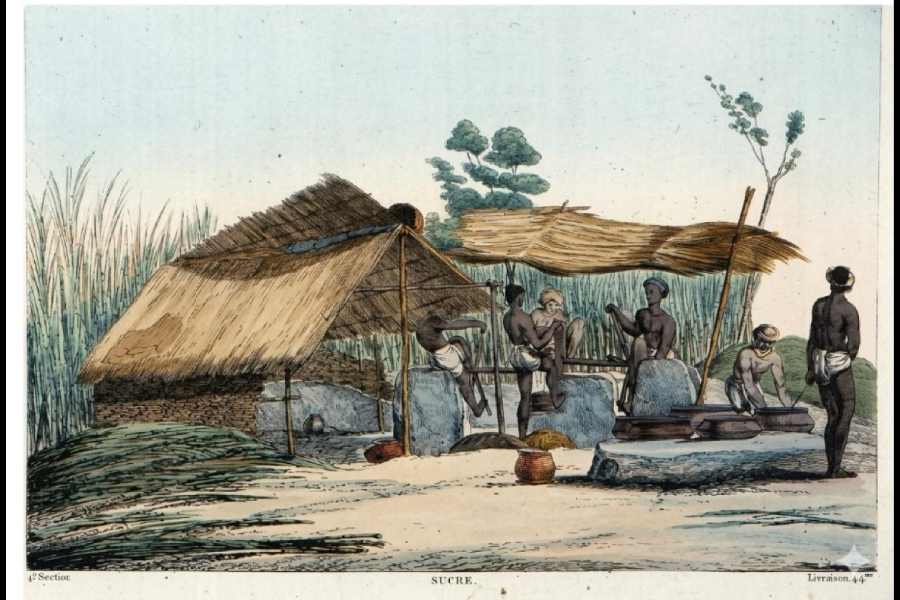
Sukchar is a neighbourhood beside the Hooghly river near Calcutta.
Long ago, it was famous for making a reddish type of sugar called lal chini.
Sugarcane was brought there by boats from many parts of Bengal and nearby regions.
Families in Sukchar made sugar in simple presses, pots and large iron boilers.
The sugar was sold in Calcutta, other parts of India and Southeast Asia.
It was also sent to temples in Benaras for making offerings.
Many sweetmakers lived in the area and made famous Bengali sweets.
Today, old boilers and ovens remain, but Bengal is no longer one of India’s leading sugar producers.

Sukchar was a major sugar-producing centre about two centuries ago, making high-quality unrefined lal chini.
Sugarcane arrived by rivers and canals from Malda, Murshidabad, Patna, Jessore and other parts of undivided Bengal.
Local families and sweetmakers expanded sugar production and supplied sweets such as ramchaki, gupo sandesh and monohara.
Sukchar’s reddish sugar was exported to Burma and Batavia and transported to Benaras for temple offerings.
Bengal now produces less than 1,000 metric tons of sugar and ranks 15th among India’s sugar-producing states.
- Who
- Sugar producers, sweetmakers and families including the Seths, Nags, Santras, Ghoshals and Chattopadhyays were associated with Sukchar’s sugar trade.
- What
- Sukchar developed a major indigenous sugar-making and trading industry centred on lal chini, or reddish unrefined sugar.
- Where
- Sukchar, between Khardaha and Panihati on the eastern bank of the Hooghly river near Calcutta, with trade reaching Benaras, Burma and Batavia.
- When
- The industry was prominent roughly two centuries ago and continued from the 18th century into the colonial period; Sekhar Seth recalls seeing household ovens in the 1950s.
- Why
- The area had access to fertile sugarcane-growing regions, waterways for transport and strong demand for sugar in India and Southeast Asia.
Key facts
- Historic product
- Lal chini, a coarse, reddish-brown sugar also known as khandsari.
- Main transport route
- Sugarcane and finished sugar moved through rivers, canals and the Hooghly.
- Export destinations
- Burma, now Myanmar, and Batavia, now Jakarta in Indonesia.
- Religious use
- Sukchar sugar was transported to Benaras for bhog at the Kashi Vishwanath Temple.
- Historic production method
- Cane was crushed in wooden or stone presses, then boiled in large boilers and cooled on mats.
- Current Bengal production
- Bengal produces less than 1,000 metric tons of sugar and ranks 15th among India’s sugar-producing states.
- Remaining heritage
- Large cast-iron kadais and the ruined terracotta Shiva temple associated with the Seth family remain in Sukchar.
Quotes
Sadhan Chattopadhyay
Local historian and former Sodepur High School teacher
““Two centuries ago, this was a prominent hotspot of sugar production. High quality unrefined lal chini or red sugar produced through indigenous methods was exported to different parts of India and Southeast Asia,””
 telegraphindia.com
““Bengal produced a huge amount of sugar until the colonial period in South Asia, according to data from the Dutch East India Company and English East India Company archives,””
telegraphindia.com
Sources
Related news
Nankhatai’s Long Journey from Surat to Kolkata Bakeries
A Childhood Among India’s Early Sugar Mills and Factories
Rising Sugar Prices Put Bengali Sweet Traditions Under Pressure

Bengal Sugar Prices Soar to Rs 70 Ahead of Festivities

Bengal’s Lost Commercial Heritage Revisited Through Historical Fiction
How Charnock’s Riverbank Decision Shaped Kolkata’s Modern Identity