5 days ago
Holy Sepulchre Excavation Finds Clues Consistent With Jesus’ Burial
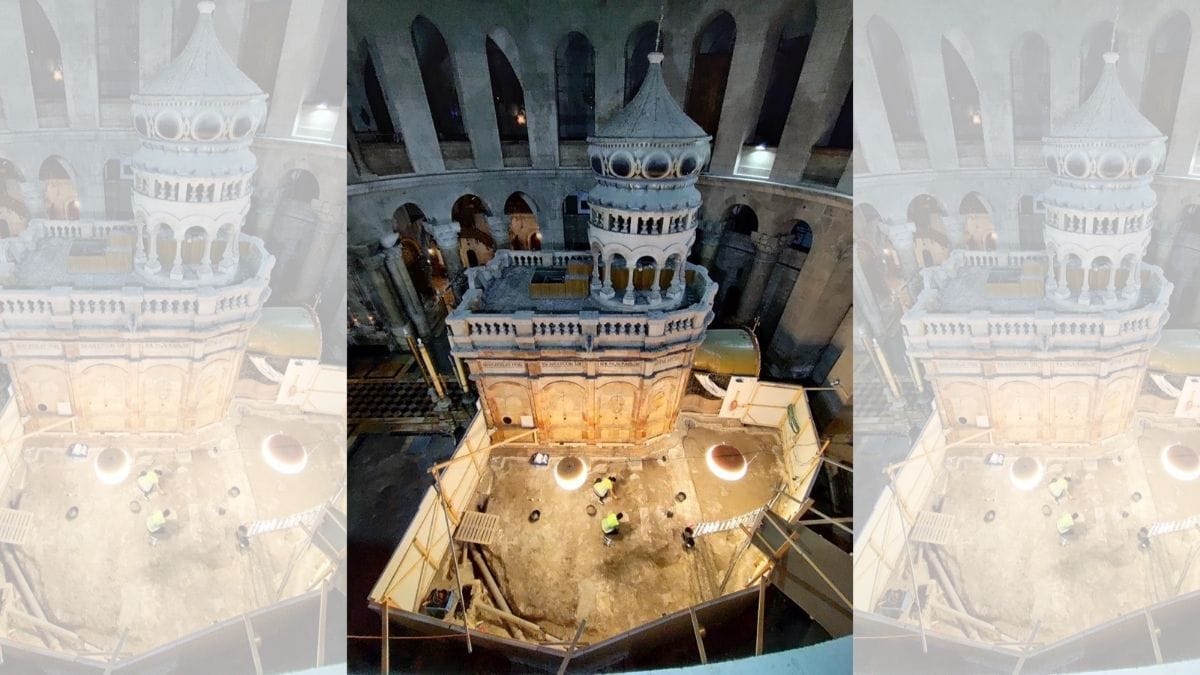
Archaeologists dug beneath the Church of the Holy Sepulchre in Jerusalem.
They found old tombs and signs that plants may once have grown there.
Some evidence suggests the area could have looked like the garden described in the Gospel of John.
The plants were dated to around the time Jesus is believed to have died.
The tombs also resemble descriptions in several Gospels.
However, the researchers have not said that they found proof of Jesus’ tomb.
More testing of the tomb materials is still needed.
Another place called the Garden Tomb is also connected to the story.

Archaeologists excavated an ancient burial landscape beneath Jerusalem’s Church of the Holy Sepulchre.
The team found rock-cut tombs, cultivated land, and traces of olive trees and grapevines.
The vegetation was dated to around 33 AD, near the traditionally accepted time of Jesus’ death.
Researchers said the findings resemble Gospel descriptions but do not prove Jesus was buried there.
Further testing and excavation remain necessary, while the Garden Tomb remains a rival proposed site.
- Who
- A team led by Francesca Romana Stasolla of Sapienza University of Rome.
- What
- An excavation uncovered tombs, cultivated land, and evidence of a garden beneath the Church of the Holy Sepulchre.
- Where
- Beneath the Church of the Holy Sepulchre in Jerusalem.
- When
- The excavation began in 2022, continued through 2025, and the findings were later published in Liber Annuus.
- Why
- The excavation was conducted during floor-restoration work and investigated the ancient burial landscape beneath the church.
Evidence Supports the Traditional Site
Evidence Does Not Establish Jesus’ Tomb
Gospel consistency
Evidence Supports the Traditional Site
The garden traces, cultivated land, tombs, and the site’s former location outside Jerusalem’s walls are consistent with details in the Gospels.
Evidence Does Not Establish Jesus’ Tomb
Researchers say these similarities are corroborative evidence only and do not demonstrate that Jesus was crucified or buried at the site.
Historical identification
Evidence Supports the Traditional Site
The Church of the Holy Sepulchre has been treated as a sacred pilgrimage site for centuries and is traditionally associated with Jesus’ crucifixion and burial.
Evidence Does Not Establish Jesus’ Tomb
The Garden Tomb is also associated with Jesus, and earlier claims involving East Talpiot were widely dismissed by biblical scholars and archaeologists.
Key facts
- Excavation period
- 2022 through 2025
- Site
- Church of the Holy Sepulchre, Jerusalem
- Findings
- Rock-cut tombs, cultivated fields, marble tombs, olive trees, and grapevines
- Vegetation date
- Around 33 AD
- Publication
- The findings were published in the archaeological journal Liber Annuus.
- Outstanding work
- Geological testing of marble tombs and mortar is still pending, and part of the northern aisle remains unexcavated.
Quotes
Francesca Romana Stasolla
Lead archaeologist from the Sapienza University of Rome who led the excavation team
“We have found evidence of a funerary landscape”
 theprint.in
Sources
Related news
Archaeologists Resume Excavations at Kashmir’s Ancient Buddhist Ruins

Possible ancient Roman firefighters' barracks found near Colosseum
Buddhist Excavation Near Bengaluru Faces Land Acquisition Hurdle

Tunnel Discovery Near Qutb Shahi Tombs Revives Golconda-Charminar Mystery
Researchers Defend Monte Verde’s Older Age in Chile
1,000-Year-Old Sealed Skeleton's DNA May Reveal Its Past

Palestinian Artist Sliman Mansour, Creator of Camel of Hardship, Dies

Israel’s E1 Settlement Plan Draws Broad International Condemnation

Iran Rejects US Threats Amid Wider West Asia Tensions

Kalimpong Caregiver Killed in Israel, Body Returned After Weeks