

3 hrs ago
AHPI Seeks Broader Review of Hospital Medicine Pricing

A hospital does more than simply give patients medicines.
It also pays doctors, nurses and other staff, runs tests, uses equipment and keeps buildings safe and clean.
The Association of Healthcare Providers of India says these costs should be considered when medicine prices are reviewed.
It says a hospital’s total income is not the same as its profit.
Some hospitals usually have operating margins of about 8–12%.
The association also says medicines do not all cost the same to buy, store or handle.
This can be especially important for cancer medicines and advanced treatments.
AHPI wants experts to study pricing based on the actual work and costs involved.
It says prices should remain affordable and transparent without risking patient safety.

The Association of Healthcare Providers of India wants medicine and consumable pricing assessed alongside total hospital-care costs.
AHPI says hospital revenues should not be treated as profits because facilities face substantial operating and capital expenses.
The association says many hospitals typically operate with margins of 8–12%.
AHPI argues a uniform 16% margin may not reflect differing procurement, storage and handling requirements.
It has called for an activity-based pricing study focused on affordability, transparency, safety and quality care.
- Who
- The Association of Healthcare Providers of India, represented by Director General Girdhar Gyani.
- What
- AHPI called for a broader, activity-based assessment of medicine and consumable pricing in hospitals.
- Where
- India.
- When
- Why
- AHPI says pricing should account for clinical services, operating and capital costs, supply-chain requirements, patient safety and quality care.
Broader Cost Assessment
Affordability and Transparency
How prices should be assessed
Broader Cost Assessment
AHPI says medicine and consumable prices should be evaluated alongside staffing, diagnostics, equipment, infrastructure, infection control, monitoring and other hospital-care costs.
Affordability and Transparency
Affordability and transparency are identified as important objectives, supporting scrutiny of medicine pricing and margins.
Uniform margin proposal
Broader Cost Assessment
AHPI says a uniform 16% margin may be unsuitable because products have different procurement, storage, inventory, working-capital and handling requirements.
Affordability and Transparency
A uniform margin could represent an effort to apply a consistent pricing standard across medicines and consumables, although the article does not identify a specific supporting organization.
Key facts
- Organization
- Association of Healthcare Providers of India (AHPI)
- Typical operating margins
- AHPI said many hospitals operate with margins of 8–12%.
- Pricing concern
- AHPI questioned applying a uniform 16% margin across medicines and consumables.
- Bundled payments
- Medicines and consumables may be included in overall payments under private insurance and government healthcare schemes.
- Retail pricing
- For other patients, hospitals and retailers generally dispense medicines at manufacturers’ printed maximum retail price, subject to regulations.
- High-complexity products
- Biologics, targeted therapies, immunotherapies, oral cancer medicines and supportive drugs may have different storage and supply-chain requirements.
- Proposed approach
- AHPI called for an activity-based study covering regulatory, supply-chain and clinical-care costs.
Quotes
Girdhar Gyani
Director General of the Association of Healthcare Providers of India
“Affordability and transparency in healthcare are important objectives, but they must be pursued without compromising patient safety or overlooking the actual cost of delivering quality care.”
 CNBC TV 18
“Hospitals are not merely selling medicines; they are delivering comprehensive, round-the-clock clinical services.”
CNBC TV 18
Sources
Related news
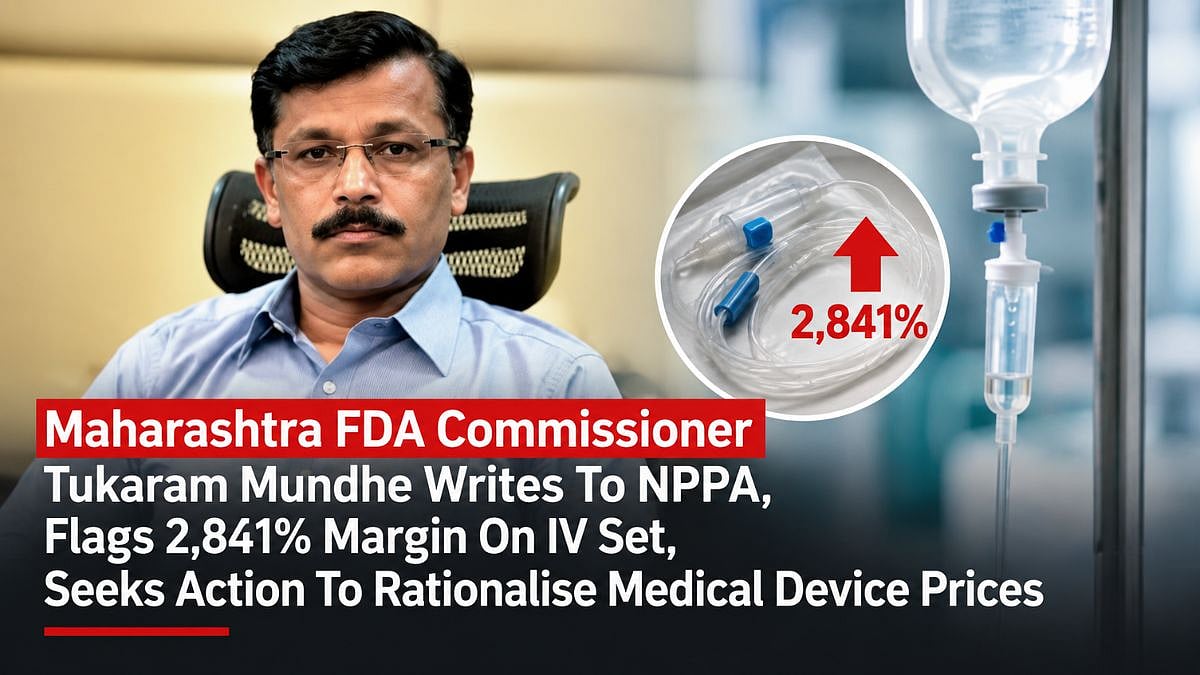
Maharashtra FDA Flags Huge Markups on Hospital Consumables
Karnataka Seeks Centre Action Over Hospital Drug Price Gaps
Maharashtra Hospitals Face Scrutiny Over Steep Medical Item Markups

Brokerages See Hospital Stocks Rising Despite Supreme Court Scrutiny

Jefferies Sees 22-46% Upside in Major Hospital Stocks

Medical Device Industry Seeks Overhaul of Pricing Rules

Satheesan Calls for Comprehensive New Kerala Development Model
India, Netherlands Expand Agricultural Cooperation, Explore Seed Partnership

Experts Seek Stronger Screening for Indian Pilots Abroad

India Women Win Asian Games Hockey Gold Against China

New UPI Merchant Charges Aim to Sustain Digital Payments
