2 weeks ago
Deccan sugarcane more productive but increasingly vulnerable to climate variability
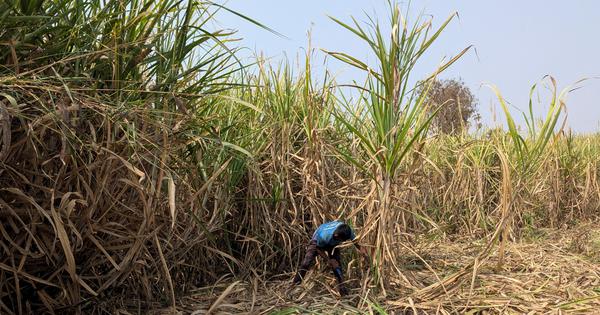
Sugarcane is a very important crop in India that helps make sugar, ethanol and bioenergy and supports millions of farmers.
Scientists studied sugarcane farms in five districts of Maharashtra and Karnataka over 22 years.
They found that farmers are getting more sugarcane from the same amount of land than before.
But they also found the crop is becoming more easily hurt by dry weather and very hot days.
One district called Solapur grows the most sugarcane, while Bellary gets the biggest harvest from each hectare.
Very dry years and lots of heat stress days were linked to poorer harvests.
The scientists say climate change may make sugarcane harder to grow in dry areas in the future.
Experts say farmers can adapt by using drip irrigation, better water scheduling and stronger crop varieties.

A 22-year study of five districts in Maharashtra and Karnataka found sugarcane production is becoming more productive but also more vulnerable to climate variability.
Solapur was the largest producing district, averaging about 117,000 hectares and 10 million tonnes, while Bellary recorded the highest average yield at almost 90 tonnes per hectare.
Ahmednagar and Nashik showed statistically significant annual yield increases of about 1.12 and 1.08 tonnes per hectare, respectively.
Drought index, moisture adequacy index and heat stress days were strongly related to yields, with Solapur facing roughly 127 heat stress days per crop year.
Researchers say the findings point to moderate to high vulnerability under future climate change, particularly in water-limited regions.
Analysis indicates that the primary source of production growth was yield improvements rather than bringing more land under cultivation.
- Who
- Researchers from the Department of Applied Science and Humanities at MIT-ADT University, Pune, including Krishna Kumar, with commentary from independent expert Priyanka Singh of the UP Council of Sugarcane Research.
- What
- A long-term study found sugarcane cultivation across the Deccan Plateau is becoming more productive but increasingly vulnerable to climate variability.
- Where
- Ahmednagar, Solapur and Nashik in Maharashtra, and Bellary and Dharwad in Karnataka, spanning distinct agro-climatic zones of the Deccan Plateau.
- When
- The study analyzed sugarcane production data from 1999 to 2021; the publication date was not specified in the article.
- Why
- To understand how cultivation, yields and production patterns changed under varying climatic conditions and to inform climate-resilient agricultural policies and infrastructure planning.
Climate vulnerability warning
Management resilience view
Outlook for sugarcane under climate change
Climate vulnerability warning
Warming temperatures are projected to push up crop water requirements and increase the chance of yield losses under water-limited conditions, pointing to moderate to high vulnerability in the study districts.
Management resilience view
The findings should not be interpreted as sugarcane cultivation being unable to continue in these regions; the broader national trend is increasing variability and growing dependence on efficient management, not simply declining productivity.
Key facts
- Study period
- 1999-2021 (22 years)
- Districts studied
- 5 (Ahmednagar, Solapur, Nashik, Bellary, Dharwad)
- States covered
- Maharashtra and Karnataka
- Largest producing district
- Solapur (average ~117,000 hectares and ~10 million tonnes)
- Highest average yield
- Bellary at almost 90 tonnes per hectare
- Largest annual yield gains
- Ahmednagar (+1.12 t/ha/year); Nashik (+1.08 t/ha/year)
- Heat stress exposure
- Solapur ~127 days/year; Ahmednagar ~89 days/year
- Climate outlook
- Moderate to high vulnerability projected in water-limited regions
Quotes
Priyanka Singh
Independent expert, senior scientific officer at the UP Council of Sugarcane Research
“We noticed that sugarcane cultivation in Maharashtra and Karnataka was increasingly being affected by climatic variability, even though it remains one of the most important economic activities across the Deccan Plateau.”
 scroll.in
“There is increasing evidence that prolonged dry spells, erratic monsoon distribution, higher temperature episodes and water stress are affecting cane productivity.”
scroll.in
Sources
Related news
Experts Reject Ethanol Link as Sugar Prices Soar
Punjab's paddy area hits all-time high of 32.76 lakh hectares

Experts Link India’s Sugar Price Rise to Lower Cane Output

TNAU Forecasts ₹75-80 Cotton Prices During Upcoming Harvest

Nashik-Palghar Earthquake Swarm Raises Questions About Seismic Safety

Kirloskar Vasundhara Film Festival Brings Environmental Stories Back In Person
Why Maharashtra recorded 29 earthquakes in past 16 days

Sukhbir Badal Attack at Nanded Gurdwara Raises Panthak Politics Questions