

2 days ago
Why Siberian Cranes Stopped Visiting Bharatpur’s Keoladeo Wetlands
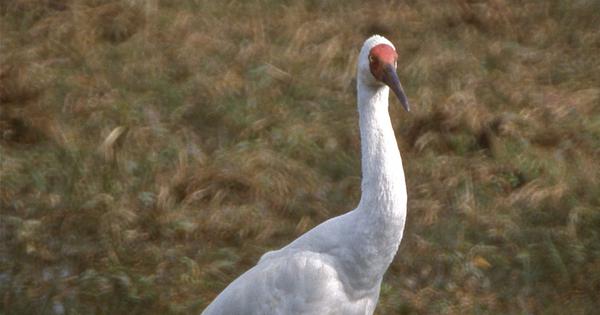
Siberian cranes used to fly thousands of kilometres from Siberia to Bharatpur every winter.
They came to eat plant roots and tubers in the wet mud of Keoladeo Ghana National Park.
The wetland became very dry during a serious drought in 2001 and 2002.
This made it difficult for the cranes to find food.
Some cranes were also hunted or poached during their journey.
People and grazing animals disturbed them when they tried to raise chicks in Siberia.
The last pair was seen in Bharatpur in 2001, and no cranes were recorded there in 2002.
Scientists are raising some cranes carefully so the young birds do not become attached to people.
They hope conservation work may eventually help the cranes return to India.

Siberian cranes once spent winters at Keoladeo Ghana National Park in Bharatpur, Rajasthan.
Their numbers fell from 100 birds in 1968 to none recorded in 2002.
The last pair was seen in 2001, after a severe drought dried the wetland.
Hunting, poaching, and disturbance in their Siberian breeding grounds also threatened the cranes.
Conservationists have used artificial breeding, crane puppets, recorded calls, and satellite tags to help save the species.
- Who
- Siberian cranes, scientists, conservationists, and people using the birds’ breeding and migration areas.
- What
- The Siberian cranes stopped returning to Bharatpur after their wintering population declined to zero.
- Where
- The cranes wintered at Keoladeo Ghana National Park in Bharatpur, Rajasthan, after breeding near the Ob River in western Siberia.
- When
- The last pair was seen in 2001; no birds were recorded in 2002.
- Why
- The decline was linked to hunting and poaching, a drought that dried the Bharatpur wetland, and disturbance in the cranes’ Siberian breeding habitat.
Key facts
- Wintering site
- Keoladeo Ghana National Park, Bharatpur, Rajasthan
- Last sighting
- A pair was seen in 2001
- Population decline
- 100 birds were counted in 1968; none were recorded in 2002
- Migration route
- The cranes traveled through Kazakhstan, Iran, Afghanistan, and Pakistan
- Main food
- Sedges, tubers, and roots of aquatic plants
- Major threats
- Hunting, poaching, drought, and disturbance near breeding grounds
- Conservation methods
- Artificial breeding, crane-shaped puppets, recorded calls, and satellite tracking
Quotes

Dr Salim Ali
Indian ornithologist whose description of the Siberian crane is quoted in the article
“a magnificently beautiful, immaculately white crane”
 scroll.in
Sources
Related news
Ladakh Hosts India's First Black-Necked Crane Festival
Siberian Birds Arrive Early at Perungulam Wetlands
Rare Sharp-Tailed Sandpiper Spotted at Najafgarh in Fifth Indian Record

BNHS sterilises over 2,950 dogs to save black-necked cranes
600 flamingo chicks ringed in Spain for migration to India

Chengalpet to Get Second Bird Sanctuary at Odhiyur Lagoon

Comprehensive Infant and Child Health Pilot to Launch in Rajasthan

Rajasthan Lok Adalat awards compensation after cancer-TB misdiagnosis

Nepal Flood Bodies Overwhelm Morgues As Recoveries Continue

Two Arrested Over Alleged Earring Theft From Nepal Flood Victim
