0 months ago
Trump H-1B visa renewal surcharge plan hits Indian tech workers
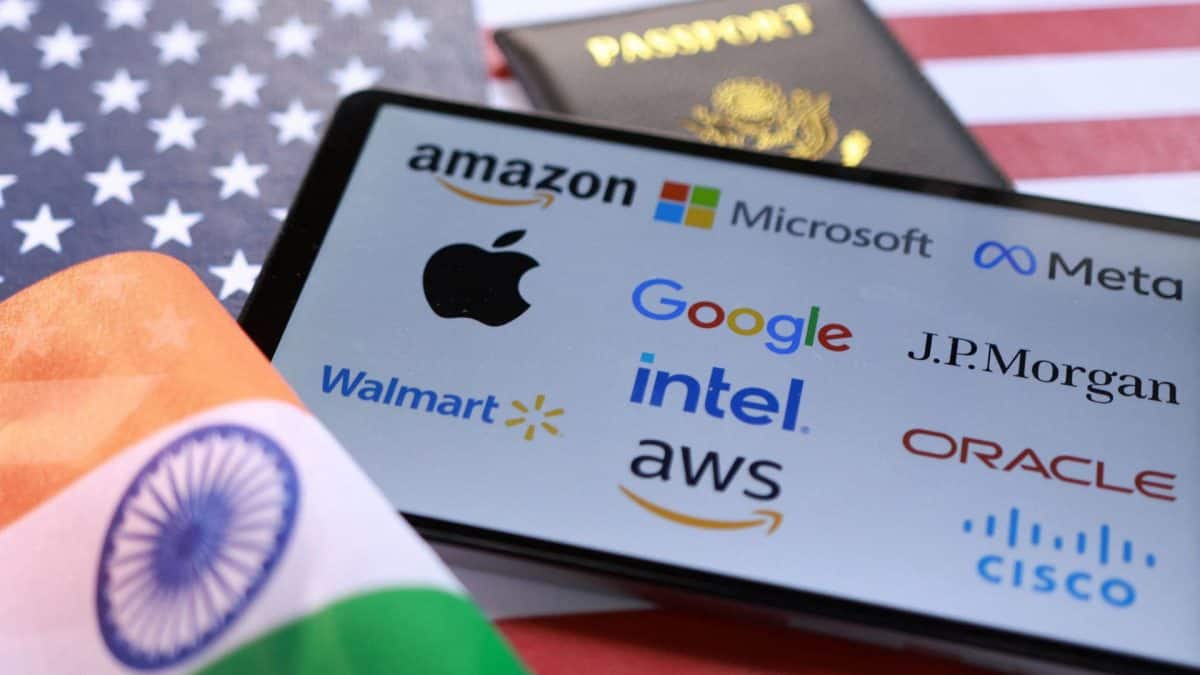
Some people from other countries come to America to work at technology companies.
Many of them come from India and use special work permits called H-1B visas.
Right now, companies must pay a big extra fee of $4,000 when they first hire these workers.
The American government wants to change the rules so companies also pay that fee every time a worker renews their visa.
That could mean paying the fee four, five, or six times over a worker's career.
Indian workers would be hit the hardest because they make up more than three-quarters of all visa renewals.
The money would be used to pay for a system that tracks people coming into and leaving the country.
Companies might become less willing to hire or keep these workers, and some jobs could move to India instead.
The rule is still being reviewed and could be challenged in court.

The Trump administration plans to extend the $4,000 H-1B and $4,500 L-1 surcharge to extension-of-stay petitions, not just initial filings.
Indian nationals received 226,359 of the 291,542 H-1B continuing employment approvals in FY2025, about 77.6% of all approved extensions.
The fee targets 'covered employers' under the 50-50 Rule: companies with 50+ US employees where more than half the US workforce holds H-1B or L-1 visas.
DHS estimates the expansion will generate about $157.3 million annually for the CBP Air and Sea Biometric Entry-Exit System.
Per-petition costs could rise from roughly $5,000-$6,000 to over $10,000, and firms may shift work to Global Capability Centers in India.
Big Tech companies like Amazon, Microsoft, and Google are largely exempt because foreign visa holders make up far less than 50% of their US workforce.
The rule is in the final regulatory pipeline and is expected to face legal challenges from industry groups once published.
- Who
- The Trump administration and the US Department of Homeland Security (DHS); affected parties include Indian tech professionals and IT services firms such as TCS, Infosys, Wipro, HCLTech, Tech Mahindra, and Cognizant.
- What
- Expanding the 9/11 Response and Biometric Entry-Exit Fee — a $4,000 H-1B and $4,500 L-1 surcharge — to cover extension-of-stay petitions, not just initial filings.
- Where
- The United States, with the heaviest impact on Indian professionals and Indian IT services firms operating there.
- When
- The rule is currently in the final regulatory pipeline, with a typical 60-day implementation window expected after Federal Register publication later this year.
- Why
- Regulators frame the change as statutory alignment to fund the CBP Air and Sea Biometric Entry-Exit System, while critics say it sharply raises costs for foreign-worker-dependent employers.
Administration and regulators
Industry and worker advocates
Rationale for the fee expansion
Administration and regulators
DHS says extending the surcharge to renewal petitions is a statutory alignment that closes an administrative gap and funds the congressionally designated Air and Sea Biometric Entry-Exit System.
Industry and worker advocates
Industry groups argue the rule forces covered employers — and indirectly Indian workers — to pay repeated multi-thousand-dollar surcharges, converting an intermittent expense into an annual multimillion-dollar operational fee.
Fairness of the 50-50 targeting
Administration and regulators
The fee targets employers that depend heavily on foreign workers for more than half of their US workforce, as defined by Congress under Public Law 114-113.
Industry and worker advocates
Critics say it creates an unfair competitive divide: US tech giants like Amazon, Microsoft, and Google are exempt, while Indian IT services contractors serving those same clients must pay the surcharge.
Key facts
- H-1B extension surcharge
- $4,000 per petition for covered employers
- L-1 extension surcharge
- $4,500 per petition
- Estimated annual revenue
- $157.3 million for the CBP biometric entry-exit system
- FY2025 approved H-1B petitions
- 406,348 total; 291,542 continuing employment approvals (71.7%)
- Indian share of H-1B extensions
- 77.6% (226,359 of continuing employment approvals)
- 50-50 Rule criteria
- 50+ US employees and more than 50% of the US workforce on H-1B/L-1 visas
- Estimated new cost per petition
- Over $10,000, up from roughly $5,000-$6,000
- Affected deadline
- Employers advised to file extensions within the 180-day pre-expiration window
Sources
Related news
Trump's proposed H-1B renewal fee hike affects Indian professionals

US expands $4,000 H-1B, $4,500 L-1 extension visa fees
Trump Administration Proposes $103,265 H-1B Fee, Indians Face Impact
US Proposes $103,265 H-1B Fee, Threatening Indian Hiring

Indian IT Firms Weather Trump’s New H-1B Visa Fee

H-1B Grace Period Could End After US Layoffs
US Considers Ending H-4 Spouse Work Permits, Indians Hit Hardest
Trump Administration Tightens Scrutiny of Foreign Student Internships

Trump Administration Tightens Scrutiny of International Student Internships
ICE Awards $16.7 Million Contract for Electric Shock Gloves