2 hrs ago
Karnataka Plans 15-Year Bengaluru Development Overhaul
Karnataka’s government is making long-term plans for Bengaluru and nearby areas.
The plans look ahead 10 to 15 years.
They include more roads, trains and Metro lines to help people travel.
The government also wants to build industrial townships and an AI City.
Officials discussed improving drinking water and sewerage systems.
They expect the region will need much more water by 2037.
The plan also includes building up to 6.5 lakh homes, with some set aside for industrial workers.
These are proposals and targets discussed at a government meeting.

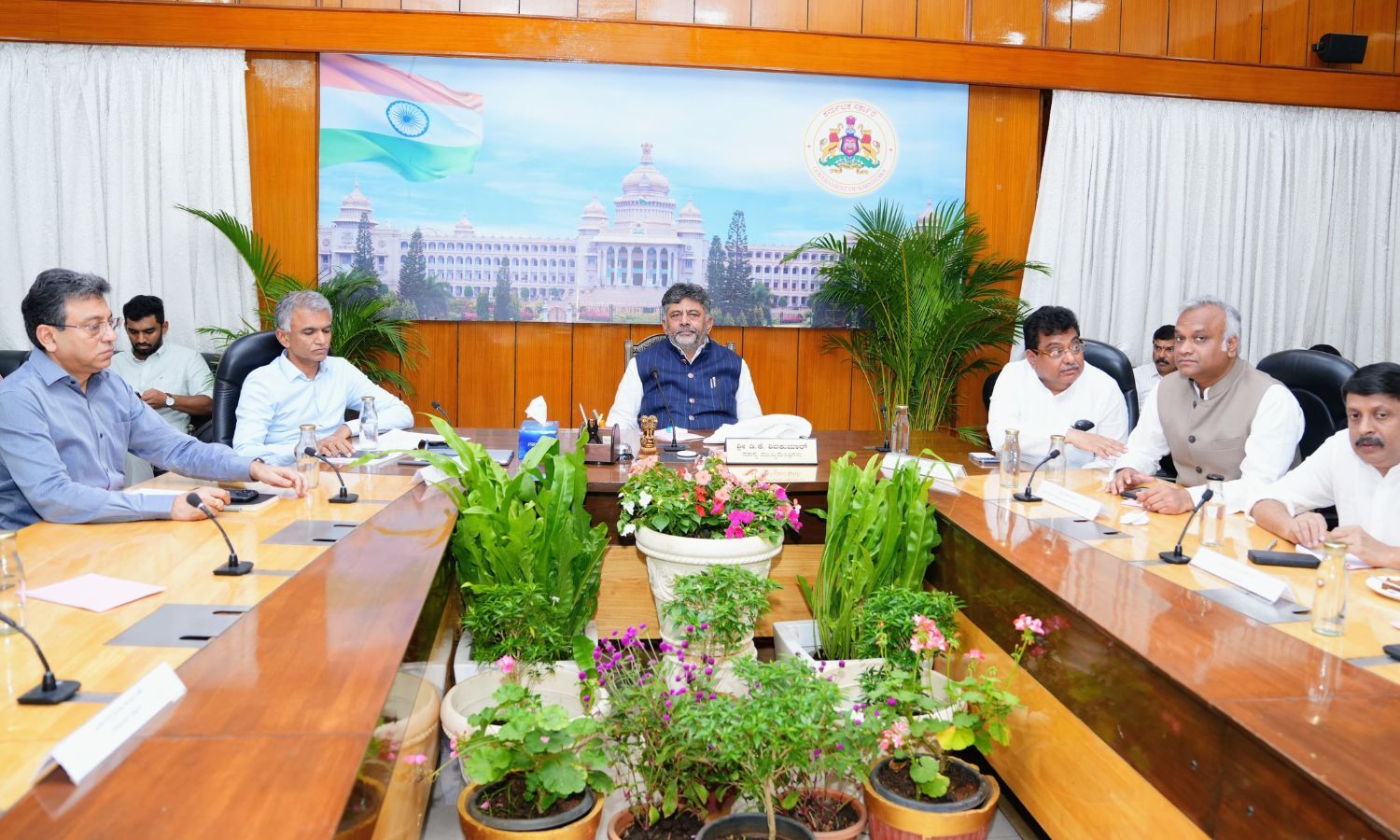
Chief Minister DK Shivakumar said plans are being prepared for Bengaluru’s development over the next 10 to 15 years.
The blueprint includes nine integrated industrial townships, an AI City and plans to identify land for an AI university.
Transport proposals include 312 km of additional Metro connectivity by 2037, 72 km of suburban rail and a 210-km ring road.
Officials discussed water and sewerage expansion, with the region projected to need 3,600 MLD of water by 2037.
The government plans 6 to 6.5 lakh homes, including housing for 40,000 to 50,000 industrial workers.
- Who
- Karnataka Chief Minister DK Shivakumar and officials, including Minister Krishna Byre Gowda.
- What
- The government discussed a long-term development blueprint for Bengaluru and the Bengaluru Metropolitan Region, covering transport, industry, water, sewerage and housing.
- Where
- Bengaluru and the Bengaluru Metropolitan Region in Karnataka, India.
- When
- At an advisory committee meeting held on Monday; the plans look ahead 10 to 15 years, with several targets set for 2037.
- Why
- To support the region’s development and economic growth, improve transport and infrastructure, meet future water needs and provide housing.
Government development plans
Implementation status and proposals
Transport expansion
Government development plans
The government outlined proposed Metro, suburban rail, ring road and regional rapid transit expansions, as well as a possible extension of the Mumbai–Bengaluru high-speed rail link to Mysuru.
Implementation status and proposals
The article reports these as plans and proposals discussed at a meeting, not completed projects; it provides no opposing stakeholder view.
Infrastructure and land
Government development plans
Officials said the region needs coordinated development of industrial land, water, sewerage, roads and housing.
Implementation status and proposals
The article gives acquisition figures and future targets but does not describe public or expert responses to the plans.
Key facts
- Planning horizon
- 10 to 15 years
- Economic targets
- Karnataka aims for a $400–420 billion economy by 2037 and $1 trillion by 2047.
- Industrial townships
- Nine integrated industrial townships are proposed for the Bengaluru Metropolitan Region.
- Land acquisition
- 7,900 acres have been acquired and acquisition of another 5,600 acres is under way.
- Metro expansion
- An additional 312 km of Metro connectivity is planned by 2037.
- Water demand
- The Bengaluru Metropolitan Region is expected to require 3,600 MLD of water by 2037.
- Housing plan
- The government plans to build 6 to 6.5 lakh houses, including accommodation for 40,000 to 50,000 industrial workers.
Quotes
Krishna Byre Gowda
Karnataka minister
“The state has set a target of taking its economy to $1 trillion by 2047. A plan has also been prepared to take the state economy to $400-420 billion by 2037. In line with this objective, a blueprint is being prepared for better transportation, housing and industrial development in the Bengaluru Metropolitan Region (BMR). Nine new integrated industrial townships need to be developed in the BMR.”
 thehansindia.com
“Land measuring 7,900 acres has already been acquired, while the acquisition process for another 5,600 acres is under way. Our government has already announced the establishment of an AI City, which should be developed on the lines of Punggol in Singapore. Land will also be required to establish an AI university, and suitable locations should be identified.”
thehansindia.com
Sources
Related news
Karnataka Notifies Road Grid Beyond Greater Bengaluru Authority
Amaravati Approves Transport Plan, Assembly Spire and Infrastructure Proposals
Bengaluru Home Approvals To Become Faster With Nambike Nakshe 2.0

Embassy Developments Unveils ₹4,500 Crore Bengaluru Housing Projects
Karnataka Plans Mandapam, Tourism Policy and Convention Centre
Karnataka CM announces 10 programmes to accelerate regional development

Karnataka Reconsiders Cash Awards for Asian Games Medallists
Yediyurappa Condemns SIR Actions as NDA Plans Governor Meeting
Ballari FIR Probes Alleged Bid to Delete 7,561 Voters
Congress Finalises 25 Karnataka MLAs for Board Posts