

3 weeks ago
The gajar ghas invasion: from US wheat to India's fields
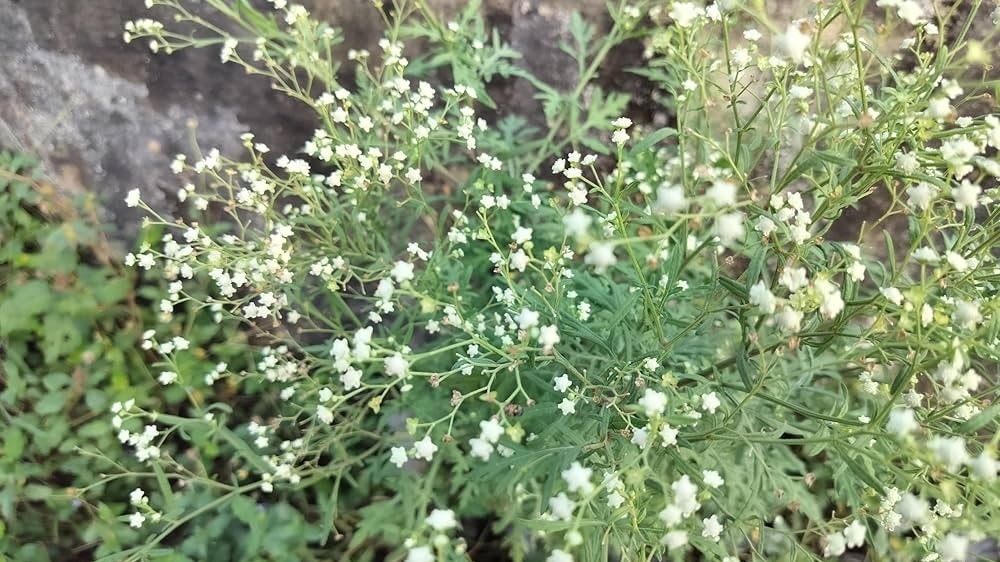
Many years ago, India did not have enough food for everyone.
The United States sent wheat to help, as part of a food-aid programme.
Hiding inside that wheat were tiny seeds of a plant called Parthenium, known in India as 'gajar ghas.'
When the wheat was used, the seeds fell into the ground and started to grow.
The plant grows very fast and makes thousands of seeds, so it spreads everywhere — roadsides, railway tracks and farm fields.
Scientists at ICAR say the weed has now taken over about 35 million hectares of land in India.
The weed is a problem because it takes space and food from crops and other plants.
It can also make people sick with rashes and allergies when they touch it.
India has tried pulling it out, using weed-killer sprays and bringing in a beetle from Mexico that eats the plant, but the weed is still very hard to get rid of.

Parthenium, known as 'gajar ghas,' is an invasive weed believed to have reached India hidden in wheat shipped under the US food-aid programme during a period of food insecurity.
ICAR estimates the weed has invaded around 35 million hectares across India, including the Andaman and Nicobar Islands and Lakshadweep.
A single Parthenium plant can produce thousands, and by some documented estimates tens of thousands, of seeds that can remain viable for years.
The weed competes with crops and native vegetation, reducing agricultural productivity and threatening biodiversity, while also causing skin, respiratory and allergic problems in people and animals.
India has tried manual removal, herbicides and biological control, including the leaf-feeding beetle Zygogramma bicolorata introduced from Mexico, but eradication remains difficult.
- Who
- ICAR researchers, Indian farmers and communities affected by the invasive weed Parthenium (gajar ghas).
- What
- The invasive weed Parthenium, believed to have arrived with US food-aid wheat, has spread across about 35 million hectares of land in India, damaging agriculture, biodiversity and health.
- Where
- India, including the Andaman and Nicobar Islands and Lakshadweep.
- When
- Introduced during the period when India struggled with food insecurity under the US food-aid programme; the article gives no exact dates.
- Why
- Parthenium seeds travelled unnoticed with grain shipped from the US and found remarkably favourable conditions to spread and establish themselves.
Key facts
- Weed
- Parthenium (gajar ghas)
- How introduced
- Seeds carried in wheat shipped under the US food-aid programme
- Area invaded
- About 35 million hectares (ICAR estimate)
- Regions affected
- Across India, including Andaman and Nicobar Islands and Lakshadweep
- Seed production
- Thousands to tens of thousands of seeds per plant
- Health effects
- Skin irritation, dermatitis, respiratory and allergic problems; animals also affected
- Control methods tried
- Manual removal, herbicides and biological control
- Biological control agent
- Zygogramma bicolorata, a leaf-feeding beetle introduced from Mexico
Sources
Related news
Online Plant Trade Raises Invasive Species Risks in India
How India's nilgai became an ecological concern in Texas
Invasive Fish Spawn India's First Fishermen-Driven Removal System

Usha Soolapani Leads India’s Revival of Forgotten Rice

India Launches Indigenous Non-GMO Popcorn Hybrids to Cut Imports
New Tamil Nadu Herb Highlights Coastal Dune Biodiversity

BJP Appoints Satya Kumar Yadav to Lead Southern Seva Sankalp

GST Collection Rises Nearly 15% To About Rs 2 Lakh

Minister Highlights Rising Fish Exports, New Markets Despite US Tariffs
India Reports Nearly 80% Malaria Decline, High-Burden Districts Fall

Former Telangana Sports Official Urges BCCI Cricket Association Recognition
