

1 hr ago
Nicotine Pouches Expose Gaps in India’s Substance-Use Policy
India wants to reduce drug use and trafficking through a new three-year plan.
The plan includes stopping illegal drugs, reducing harm, and helping people recover.
But some newer products do not fit neatly into existing laws.
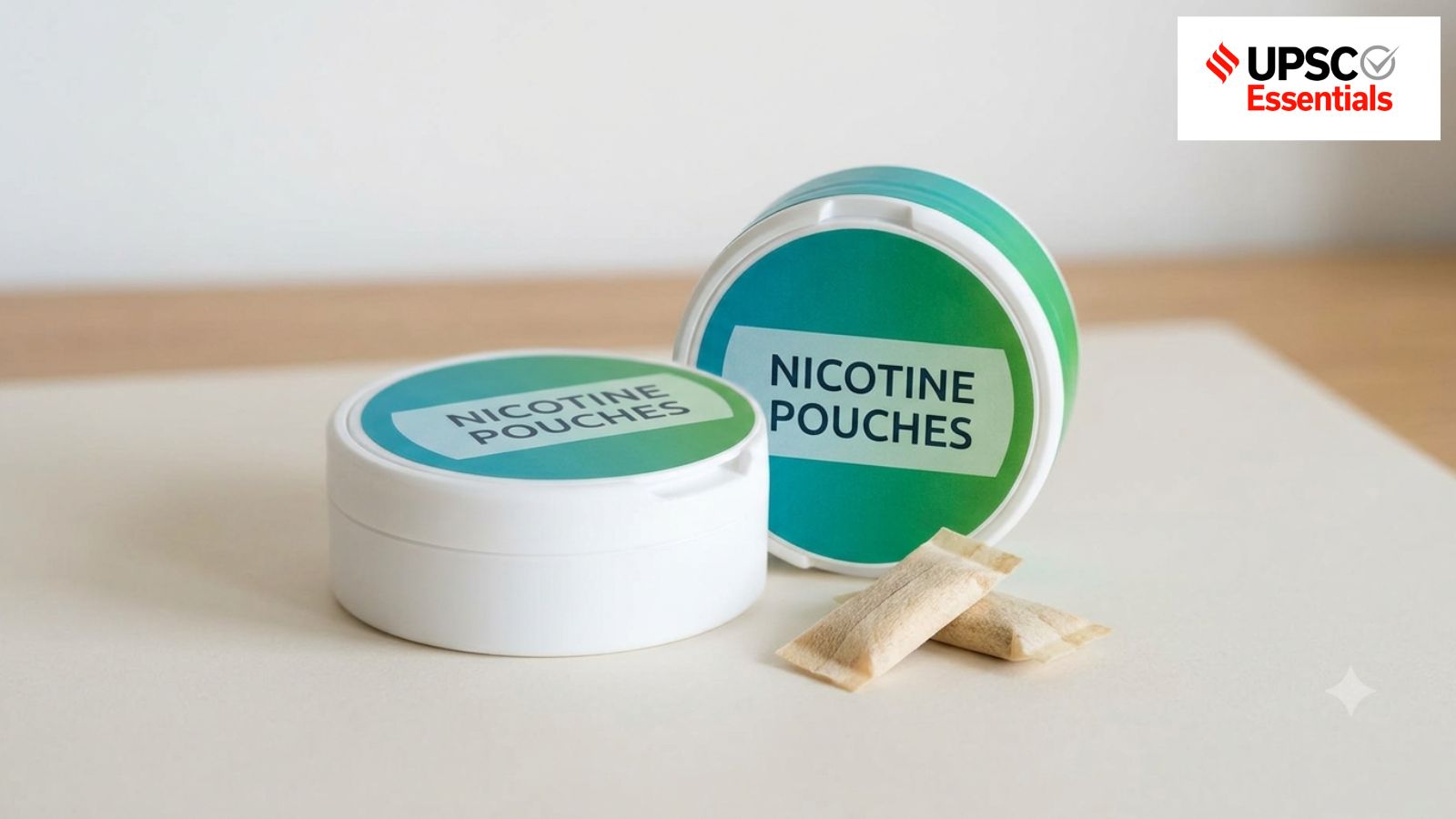
Nicotine pouches are small products that contain nicotine but no tobacco leaves.
They can come in many flavours and may be sold online or delivered to homes.
Young people can also encounter substance-related advertising and peer networks on digital platforms.
Drug problems can be connected to poverty, conflict, organised crime, and social pressures.
The article says India needs both stronger enforcement and better treatment.
It also supports community programmes that help prevent addiction and encourage rehabilitation.

India’s three-year narcotics-control roadmap seeks a “drug-free India” by 2029 through enforcement, precursor control, harm reduction, and coordination.
Existing laws heavily regulate narcotic drugs but may not clearly cover newer products such as tobacco-free nicotine pouches.
Nicotine pouches are reportedly sold through online platforms, hookah shops, and gig-delivery services, including products with many flavours and varying nicotine strengths.
Drug use is linked to poverty, conflict, organised crime, digital markets, social norms, and broader political and ecological conditions.
The article recommends combining enforcement with local monitoring, accessible treatment, rehabilitation, and community-based prevention programmes.
- Who
- The Government of India, drug-control agencies, communities, young people, and people affected by substance use.
- What
- India is reassessing whether its substance-use policy can address nicotine pouches, synthetic drugs, digital drug markets, and changing patterns of addiction.
- Where
- India, with examples from Manipur, Sikkim, Tamil Nadu, and Kerala; the article also references Afghanistan and global drug trends.
- When
- India recently announced a three-year narcotics-control roadmap aimed at 2029; other measures and programmes cited date from 2010, 2017, 2018, 2025, and 2026.
- Why
- New substances and distribution channels are developing faster than existing legal and institutional frameworks, while addiction is also shaped by social, economic, political, and health conditions.
Enforcement and prohibition
Public health and rehabilitation
Policy priority
Enforcement and prohibition
Stronger enforcement is needed to control trafficking, synthetic drugs, new psychoactive substances, and products entering through emerging distribution networks.
Public health and rehabilitation
Enforcement alone cannot address addiction rooted in poverty, conflict, social norms, stigma, and unequal access to care.
Treatment of drug use
Enforcement and prohibition
Criminal and regulatory measures can deter possession, sale, and distribution of substances that are considered harmful.
Public health and rehabilitation
Treatment, detoxification, psychiatric evaluation, rehabilitation, and social reintegration should receive greater emphasis, including through community-based services.
Regulating nicotine pouches
Enforcement and prohibition
Regulators need clearer controls because flavoured nicotine pouches may create new addiction avenues, particularly for young people.
Public health and rehabilitation
An adaptive public-health framework should monitor emerging products while providing accessible prevention, cessation, and treatment support rather than relying only on punishment.
Key facts
- National target
- India’s roadmap seeks to achieve a “drug-free India” by 2029.
- Roadmap pillars
- Enforcement; precursor and synthetic-drug control; demand and harm reduction; and capacity building and coordination.
- Main legal framework
- The Narcotic Drugs and Psychotropic Substances Act, 1985, alongside Article 47 of the Constitution and the 2012 national policy.
- Nicotine-pouch issue
- Tobacco-free nicotine pouches are not included in the statutory definition of tobacco products under the Cigarettes and Other Tobacco Products Act, 2003.
- Reported product range
- An ICMR-NICPR study cited in the article found pouches available in 445 flavours, with nicotine strengths up to 120 mg.
- Access channels
- The products reportedly reach Indian cities through online platforms, hookah shops, and gig-delivery services.
- Community responses
- Examples include Sikkim’s rehabilitative approach, Tamil Nadu’s school and college awareness clubs, and Kerala’s Student Police Cadet project.
Sources
Related news
Amit Shah Sets 2029 Roadmap for Drug-Free India
Shah Sets 2029 Roadmap for Drug-Free India
Amit Shah Sets 2029 Deadline To End India’s Drug Trade
Trump Praises Modi’s Opium Crackdown as India Remains Drug-Listed
Trump Praises Modi as US Names India Drug Transit Nation
Andhra Pradesh Campaign Urges Society to Unite Against Drug Abuse

United States, Japan, South Korea Deepen Technology and Security Ties
Gaddafi-Shaped Ecstasy Seizure Highlights Libya’s Growing Drug-Hub Role
Assam Warns of New Myanmar Drug Trafficking Route
Five Years On: How Afghanistan Changed Under Taliban Rule
