1 week ago
Rising Government Debt Interest Payments Bring Uneven Economic Effects

Governments borrow money and must pay interest on it.
Those interest payments are becoming more expensive.
This is not equally bad news for everyone.
The situation is different from the decade after the global financial crisis.
Back then, governments could borrow at interest rates close to zero.
Their economies were growing faster than the interest costs, which made debt easier to manage.
Now governments have more debt and face higher interest rates.
Growth has also slowed, making the debt burden harder to handle.

Government interest payments are becoming a greater concern as borrowing costs rise.
The situation differs from the decade after the global financial crisis.
During that period, governments could borrow at near-zero interest rates.
Borrowing costs were then below nominal economic growth, helping governments manage debt burdens.
Today, debt and interest rates are higher while growth has moderated, worsening the arithmetic.
- Who
- Governments and those affected by government debt costs.
- What
- Rising interest payments are making government debt more difficult to manage, though the effects are not equal for everyone.
- Where
- When
- The article contrasts current conditions with the decade after the global financial crisis.
- Why
- Debt is higher, interest rates are higher, and economic growth has moderated.
Key facts
- Main issue
- Rising interest payments on government debt
- Earlier period
- The decade after the global financial crisis
- Earlier borrowing costs
- Near-zero interest rates
- Earlier debt conditions
- Borrowing costs were below nominal GDP growth
- Current debt level
- Government debt is higher
- Current interest rates
- Interest rates are higher
- Current growth
- Growth has moderated
Sources
Related news
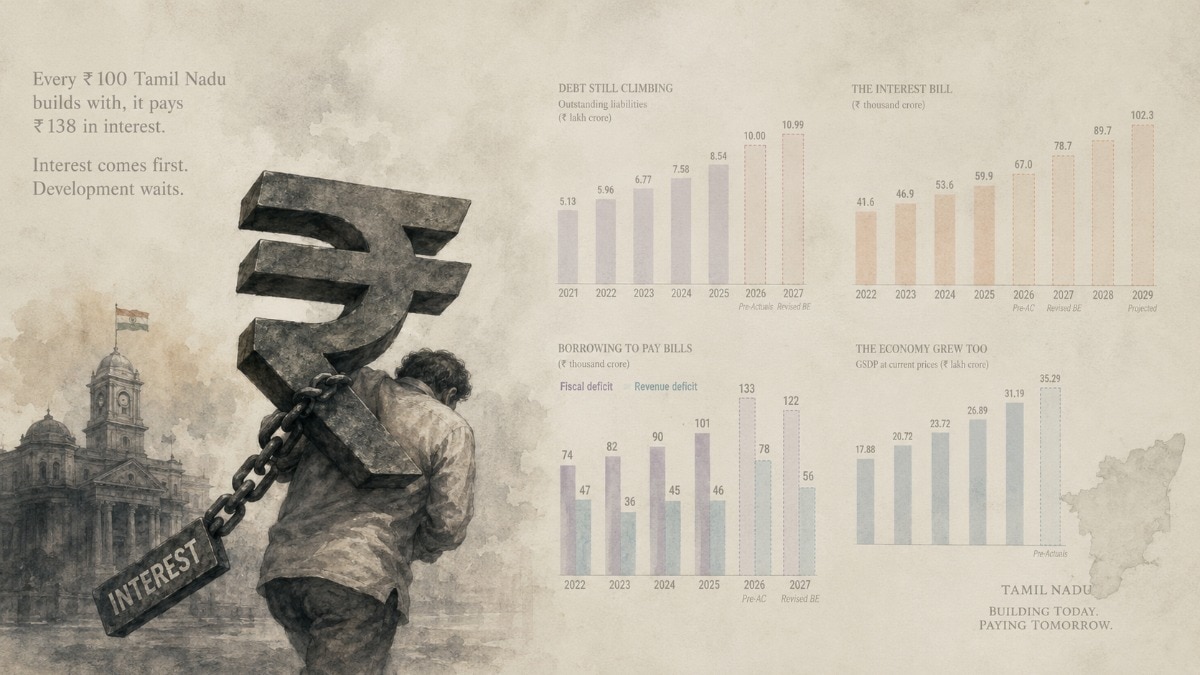
Tamil Nadu Pays Rs 138 Interest Per Rs 100 Borrowed

Global Bond Yields Surge as Inflation and Debt Risks Rise

Global Debt Tops $353 Trillion as 'Time Bomb' Looms

Madhya Pradesh Uses 30% of Fresh Borrowing on Old Debt

Uday Kotak Warns Global Bond Markets Face Roller-Coaster Volatility

Global Debt Nears 100% of GDP as Crisis Risks Rise

Economist challenges claim UPI merchant fee won't affect consumers
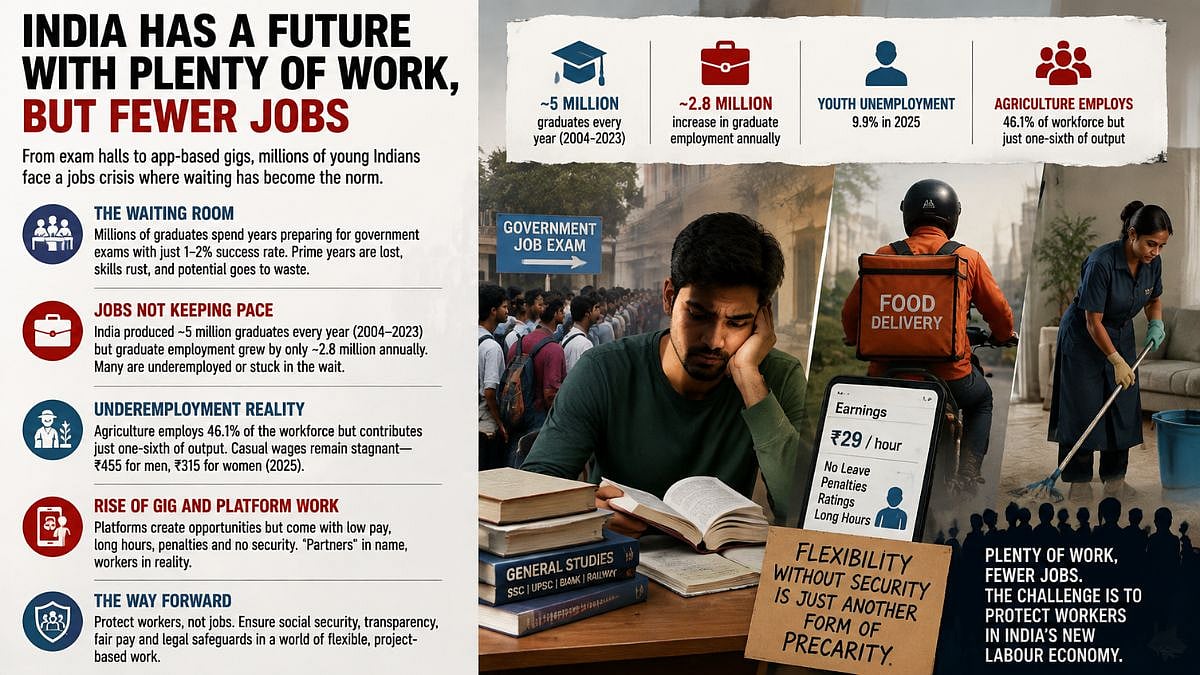
India Faces a Future With Plenty of Work, Fewer Jobs

CFA Society India Hosts 16th Investment Conference