2 hrs ago
How a 1890 Mill Workers’ Rally Led to Provident Funds

In 1890, thousands of mill workers in Bombay asked for one regular day off each week.
Narayan Meghaji Lokhande helped organise the rally.
The mill owners agreed to give workers Sundays off.
This campaign was mainly about rest, not retirement savings.
However, it helped strengthen the idea that workers deserved protection from employers and the government.
India later created provident fund laws to help workers save money for the future.
The national scheme began covering industries such as textiles in 1952.
It eventually added pensions, insurance and some permitted withdrawals during working life.
Today, the system supports millions of workers and pensioners.

More than 10,000 Bombay mill workers rallied on 24 April 1890 for a weekly day of rest.
Organiser Narayan Meghaji Lokhande helped workers press for better conditions, with women workers also addressing the gathering.
Mill owners accepted a Sunday holiday on 10 June 1890, and Lokhande later joined the Factory Labour Commission as an associate member.
The Employees’ Provident Funds Act was enacted in 1952, initially covering six industries including textiles.
The Employees’ Provident Fund Organisation now administers provident fund, pension and insurance schemes for organised-sector workers.
- Who
- More than 10,000 Bombay mill workers, organised by Narayan Meghaji Lokhande, took part in the campaign.
- What
- Workers demanded a weekly day of rest, while the later provident fund system provided retirement savings, pensions and insurance.
- Where
- The rally was held at the Race Course Ground in Mahalaxmi, Bombay.
- When
- The rally took place on 24 April 1890; Sunday holidays began on 10 June 1890; the Employees’ Provident Funds Act was enacted on 4 March 1952.
- Why
- Workers sought relief from long hours and poor living conditions, contributing to broader demands for labour welfare and social security.
Key facts
- Rally date
- 24 April 1890
- Rally location
- Race Course Ground, Mahalaxmi, Bombay
- Estimated attendance
- More than 10,000 mill workers
- Sunday holiday accepted
- 10 June 1890
- Provident fund law
- Employees’ Provident Funds Act, enacted 4 March 1952
- Initial industries covered
- Cement, cigarettes, engineering products, iron and steel, paper, and textiles
- Reported contributing members
- About 7.98 crore, according to figures reported on 22 September 2026
Sources
Related news
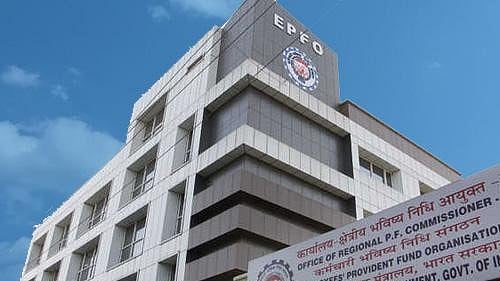
EPFO Raises Wage Ceiling to Expand Worker Social Security
Cabinet Raises EPFO Wage Ceiling, Expanding Social Security Coverage

Cabinet Raises EPFO Wage Ceiling to Expand Worker Coverage

EPFO Campaign Offers PF Coverage to Previously Excluded Workers

Bombay High Court Clears Swadeshi Mills Revival, Worker Settlement

EPFO Wage Ceiling Set to Rs 25,000 After Years

New Wage Ceiling Expands EPS Coverage for Some EPF Members

Seven Wealth-Transfer Gaps That Can Delay Heirs’ Access

EPFO Raises Mandatory PF Wage Ceiling To Rs 25,000

Jammu and Kashmir Allows One-Time Switch From NPS to OPS