7 hrs ago
Kolkata Event Examines Bangladesh’s Marginalized Bihari Muslims
Bihari Muslims are an Urdu-speaking community living in Bangladesh.
During the 1971 war, some were accused of supporting Pakistan.
Because of this, many people in Bangladesh continued to distrust the whole community after the war ended.
Some Biharis lost their homes and spent years in temporary camps.
Many still face discrimination and are pushed into difficult, low-paid jobs.
Younger people have often learned Bengali and adopted a Bangladeshi identity.
A court recognized many Biharis as Bangladeshi citizens in 2008.
Annu Jalais told how families separated by borders still struggle to contact one another.
Her work tries to reconnect these families and show how political changes affect ordinary people.

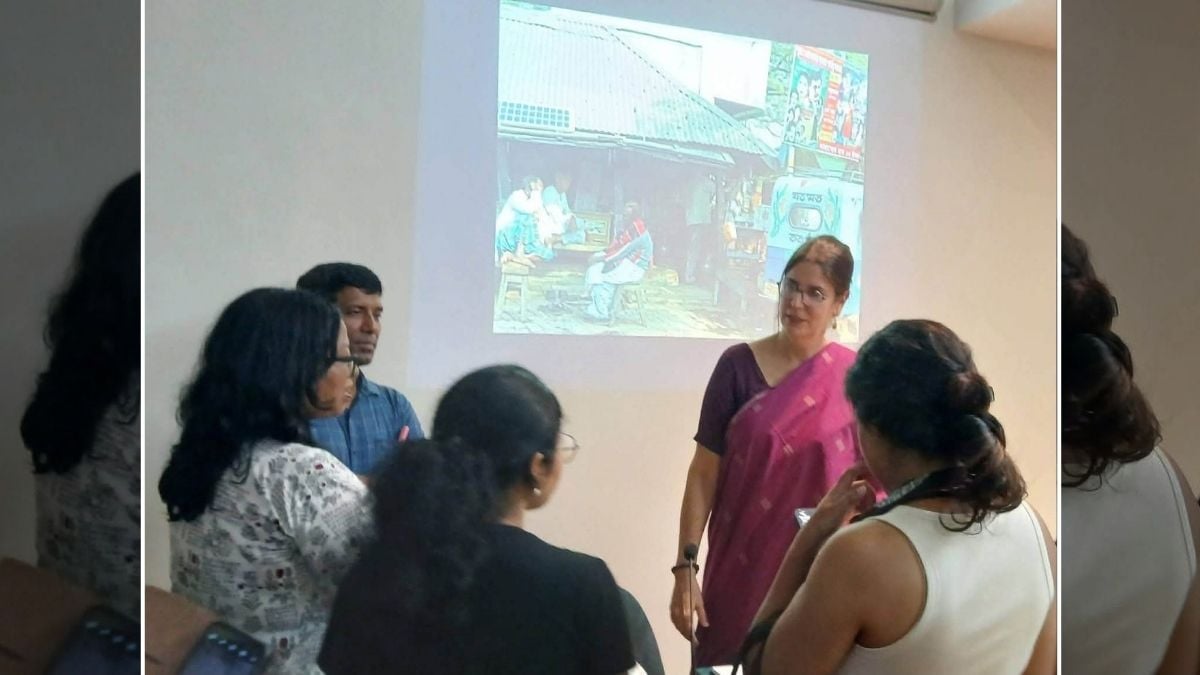
A Kolkata event discussed the continuing marginalization of Urdu-speaking Bihari Muslims in Bangladesh.
The community was stigmatized after many Biharis were seen as having sided with Pakistan during the 1971 Liberation War.
Approximately 300,000 Bihari Muslims reportedly remain in Bangladesh, many living in camps and working in low-paid occupations.
A 2008 Bangladesh High Court ruling recognized many Biharis, including those born after 1971 or who were minors during independence, as citizens.
Anthropologist Annu Jalais described reconnecting families divided by the India-Bangladesh border and changing citizenship rules.
- Who
- Bihari Urdu-speaking Muslims in Bangladesh, discussed by environmental anthropologist Annu Jalais and Bangladeshi columnist Sahidul Hasan Khokon.
- What
- A Kolkata talk examined the community’s continuing stigma, marginalization, citizenship history, and separation from relatives across borders.
- Where
- The event was held at the Jadunath Bhavan Museum and Research Centre in Ballygunge, Kolkata, with related experiences spanning Bangladesh and West Bengal.
- When
- The discussion took place more than five decades after Bangladesh’s 1971 Liberation War and referred to the July 2024 uprising.
- Why
- The event sought to highlight people left marginalized or separated by Partition, the 1971 war, changing borders, and political decisions.
Stigma and Marginalization
Integration and Political Change
Responsibility for the community’s stigma
Stigma and Marginalization
Jalais and Khokon describe Bihari Muslims as a community collectively stigmatized because some members were accused of aiding Pakistan during the 1971 war.
Integration and Political Change
The article notes that some Biharis did support or assist Pakistan, including by allegedly passing information about Bengali freedom fighters, which supporters of this view cite as the source of continuing distrust.
Effect of recent political change
Stigma and Marginalization
Jalais and Khokon argue that any move toward closer Bangladesh-Pakistan relations may not quickly improve social acceptance of Urdu and Urdu-speakers.
Integration and Political Change
Jalais says the July 2024 uprising challenged some foundational principles of the 1971 independence narrative, while Bangladesh watchers cited in the article see a possible geopolitical shift toward Pakistan.
Key facts
- Estimated population
- Approximately 300,000 Bihari Urdu-speaking Muslims reportedly remain in Bangladesh.
- Historical stigma
- Many Biharis were branded as Razakars or Pakistan supporters after the 1971 war.
- Living conditions
- Many remain in temporary settlements or camps and face discrimination.
- Common occupations
- The article says Biharis are still pushed into work as barbers, butchers, and rickshaw pullers.
- Citizenship ruling
- A 2008 Bangladesh High Court ruling recognized many Biharis as Bangladeshi citizens.
- Language
- Many younger Biharis have learned Bengali and adapted to a Bangladeshi identity.
- Family separation
- Annu Jalais carried photographs and messages between families separated across Bangladesh and India.
Quotes
Khalid Hussain
Bangladeshi Bihari Muslim lawyer recalling his experience at school
“Biharis were favoured by Pakistan before Bangladesh became an independent country. But after 1971, they were called Razakars, a far-right auxiliary paramilitary force put up by the Pakistani army in East Pakistan to take on the freedom fighters”
 theprint.in
“A group of Bengali kids surrounded us and made it clear that we were not welcome. The incident still shocks me to this day. But we just wanted to learn.”
theprint.in
Sahidul Hasan Khokon
Bangladeshi author and political affairs columnist
“They were once the eyes and ears of Pakistanis who wanted to deny us our freedom. Unfortunately, that stigma has remained”
theprint.in
Sources
Related news

Bangladesh Reopens Debate Over Jinnah’s Place in History
Opinion Warns of Hindu Persecution and Historical Amnesia
Bangladesh Rejects India Outreach as Jamaat Shapes Foreign Policy
Delhi Discussion Reclaims Kazi Nazrul Islam’s Syncretic Legacy
Bengal BJP chief’s Gupta-Jaiswal remarks trigger political row
Analyst urges Bangladesh to protect rights and political inclusion
Mumbai Deports 1,066 Bangladeshi Nationals In Eight Months
Smriti Mandhana becomes leading T20I run-scorer across cricket

Shafali Verma Makes History With Asian Games Century
Shafali Century Sends Reigning Champions India Into Final