5 days ago
SIR Citizenship Verification Must Balance Electoral Integrity and Fairness

The government is checking voter lists through a process called the Special Intensive Revision.
It wants to make sure eligible citizens can vote and that people who cannot legally vote are removed.
The Supreme Court said the Election Commission can conduct this checking in Bihar.
However, the commission can only make an initial assessment of citizenship, not a final legal decision.
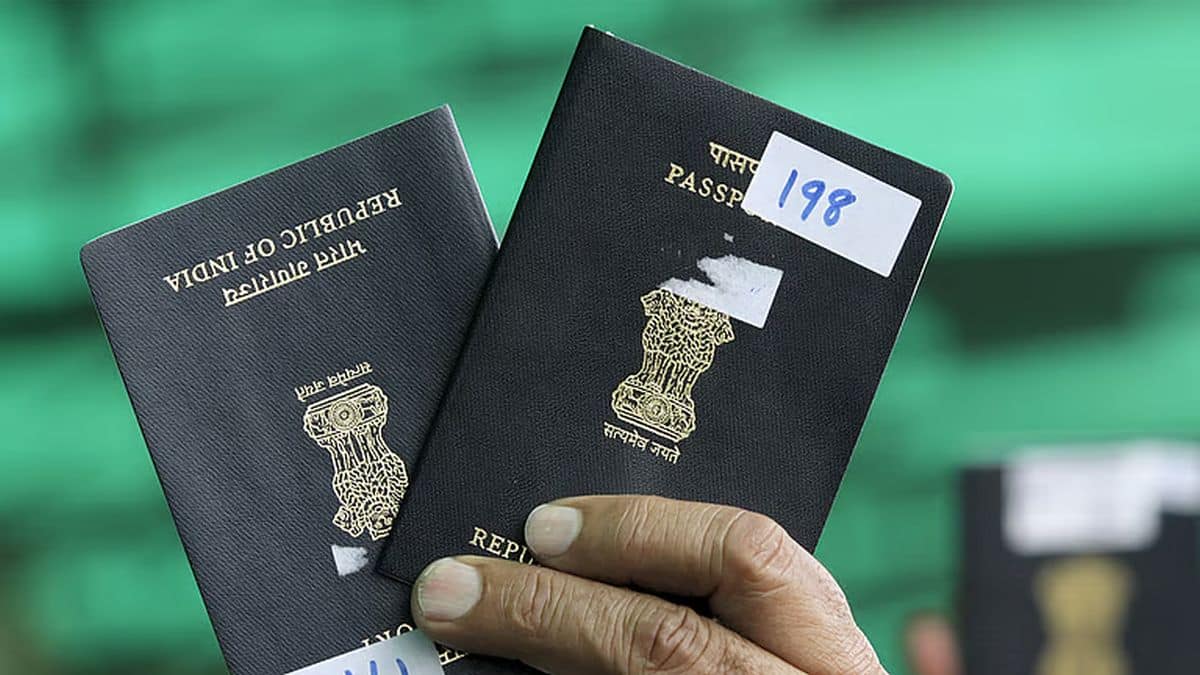
A passport can help someone travel but is not final proof of being an Indian citizen.
Aadhaar also does not prove citizenship, although it can be used as an extra identity document in this process.
Different documents prove different things, so officials need clear rules for judging them.
People whose names may be removed should receive notice and a real chance to respond.
The authors say the process must protect both accurate voter lists and citizens from unfair exclusion.

The Election Commission says the Special Intensive Revision aims to include every eligible citizen and exclude ineligible voters.
The Supreme Court upheld the Election Commission’s authority to conduct the Bihar revision but limited its citizenship assessment to a prima facie inquiry.
Citizenship is governed by the Constitution and the Citizenship Act, not by possession of any single document.
A passport is primarily a travel document, while Aadhaar is not proof of citizenship but may be accepted for limited electoral-roll verification.
The authors argue that evidence standards and safeguards must prevent arbitrary exclusion of eligible voters.
- Who
- The Election Commission of India, the Supreme Court of India, and citizens undergoing electoral-roll verification.
- What
- A legal and administrative debate over the Special Intensive Revision of electoral rolls and the evidence used to verify voter eligibility.
- Where
- The immediate exercise concerned Bihar, with implications for West Bengal and other states conducting similar revisions.
- When
- The debate occurred during the SIR process; the article refers to a May 27 Supreme Court ruling, August and September 2025 orders, and a later ADR judgment identified as 2026 INSC 564.
- Why
- The Election Commission seeks accurate electoral rolls, while legal safeguards are needed to prevent arbitrary or erroneous exclusion of eligible citizens.
Electoral Verification
Citizens’ Safeguards
Purpose of the SIR
Electoral Verification
The Election Commission says the revision is necessary to ensure that no eligible citizen is omitted and no ineligible person is included.
Citizens’ Safeguards
The authors argue that verification must also protect eligible voters from erroneous deletion.
Commission’s Citizenship Role
Electoral Verification
The Supreme Court upheld the Election Commission’s authority to conduct the Bihar SIR and assess eligibility on a prima facie basis.
Citizens’ Safeguards
The commission cannot conclusively decide citizenship, which remains the responsibility of authorities under the Citizenship Act, 1955.
Existing Electoral-Roll Entries
Electoral Verification
The later ADR judgment held that continued inclusion through summary revisions does not create an enduring presumption of eligibility.
Citizens’ Safeguards
The authors cite Lal Babu Hussein as supporting substantial probative value for existing entries and requiring notice and a meaningful opportunity to respond before deletion.
Key facts
- Exercise
- Special Intensive Revision of electoral rolls
- Constitutional authority cited
- Article 324 of the Constitution
- Statutory authority cited
- Section 21(3) of the Representation of the People Act, 1950
- Citizenship framework
- The Constitution’s citizenship provisions and the Citizenship Act, 1955
- Passport status
- A travel document that is not conclusive proof of citizenship
- Aadhaar status
- Not proof of citizenship, but accepted as an additional identity document for electoral-roll verification
- Voting eligibility
- Article 326 links adult suffrage to citizenship, age of at least 18, and the absence of statutory disqualification
Sources
Related news
Ration Card Not Conclusive Proof of Citizenship, ECI Clarifies

Ex-Envoy Questions Citizenship Proof Demands During Punjab SIR
SIR Verdict Criticised for Enabling Electoral Exclusion
MEA lacks consolidated data on passports issued to non-citizens
SIR Voter Verification System Draws Criticism From Senior Officials
SIR Citizenship Check Threatens India's Secular Democracy, Analysts Warn

PUCL Urges CJI Action Over Rajasthan High Court Allegations

Supreme Court Questions IPS Deputation for CAPF Leadership Positions

Supreme Court Quashes 20-Year Conviction, Reaffirms Juvenile Legal Protections
Two Years After RG Kar Doctor's Rape-Murder, Case Remains Unresolved

ED widens Chhattisgarh probes with two arrests and searches