4 hrs ago
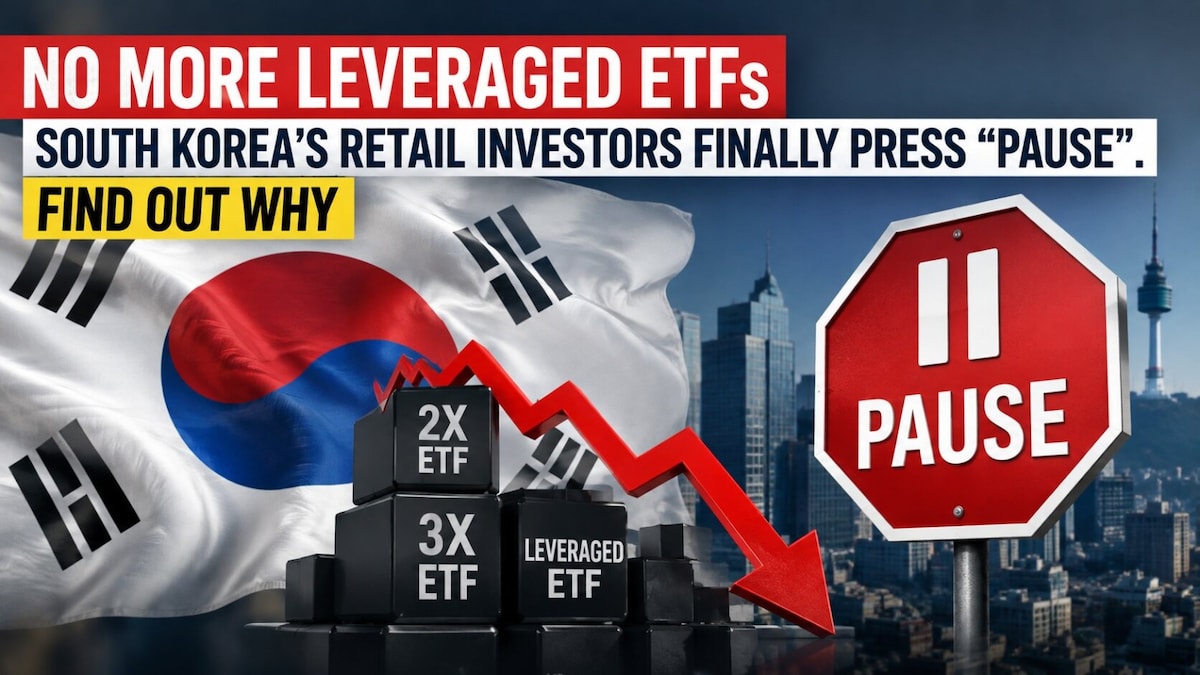
Asia's Next Leverage-Driven Crash May Emerge Beyond Korea

Many investors in Asia borrowed money to buy shares, especially technology stocks.
Borrowing can make profits bigger, but it can also make losses happen faster.
In South Korea, technology shares fell and many investors could not repay their loans.
Brokers then sold their shares automatically, causing prices to fall even more.
Similar borrowing has increased in China, India and Japan.
China appears especially exposed because its margin debt is large compared with its stock market.
The risks differ by country because investors are borrowing to buy different kinds of companies.
Regulators have introduced safeguards, but investors may still face large losses if prices fall quickly.

South Korea’s KOSPI fell 39% from June 22 to July 30 after leveraged retail positions unwound.
Margin balances have surged in India, China and Japan, with China’s balance reaching 2% of market capitalization.
China’s margin balance is 8% above its previous May 2015 peak, which preceded a 48% Shanghai Composite decline.
Leverage is concentrated in technology stocks in China, Japan and South Korea, while Indian borrowing is concentrated more heavily in smaller companies.
Regulators in South Korea, India and China have introduced measures to limit margin-related risks, but the article says these risks remain.
- Who
- Retail investors, brokers, regulators and investors in South Korea, China, India and Japan are involved.
- What
- Rising margin borrowing could amplify another major Asian equity-market correction.
- Where
- Across Asian equity markets, especially South Korea, China, India and Japan.
- When
- South Korea’s rout occurred from June 22 to July 30; margin data cited runs through August 31, and the article is dated September 8.
- Why
- Falling share prices can trigger margin calls and forced selling, while leveraged positions are concentrated in particular sectors and companies.
Leverage Creates Significant Crash Risk
Regulation May Limit Contagion
Potential for forced selling
Leverage Creates Significant Crash Risk
A sharp decline can trigger margin calls and automatic liquidations, producing a self-reinforcing market selloff even without a major change in company fundamentals.
Regulation May Limit Contagion
Regulators have raised requirements, restricted some leveraged products and limited certain uses of securities-backed loans, reducing the risk of an unchecked buildup.
China’s exposure
Leverage Creates Significant Crash Risk
China’s margin balance is 2% of market capitalization and 8% above its 2015 peak, making it a particular concern if leveraged positions unwind.
Regulation May Limit Contagion
The article says the comparison with 2015 is not exact because market rules and regulatory oversight have changed since then.
Key facts
- South Korea equity decline
- The KOSPI fell 39% from June 22 to July 30.
- India margin balance
- India’s Margin Trading Facility book rose to $16.3 billion by August 31, from just over $1 billion at the end of 2020.
- China margin balance
- China’s Shanghai Stock Exchange margin balance reached $200 billion, or 1.34 trillion yuan, by August 31.
- Japan margin balance
- Japan’s margin-loan balance rose to more than $35 billion by August 31, from $18 billion at the beginning of 2020.
- China market exposure
- China’s margin balance equaled about 2% of market capitalization.
- South Korean concentration
- Samsung Electronics and SK Hynix represented nearly 31% of total KOSPI leverage at the June peak.
- Regulatory responses
- South Korea, India and China introduced measures addressing leveraged trading and margin-related risks.
Sources
Related news

Zerodha’s Kamath Warns Margin-Loan Boom Could Spread Market Risk

Kamath Warns MTF May Suit Few Investors Amid Rising Risks

Korean Stocks Rise 22% as Chip Rally Regains Steam

South Korea’s Leveraged ETFs Turn Stock Market Into Fright Ride

Leveraged ETF Rotation Fuels 30% Jump in Korea Small Caps

Korean Investors Shift From Home Stocks to Costlier US Names
AI Boom Drives Chipflation and Consumer Electronics Price Rises

AI Week: Chip Breakthroughs, Brain Surgery and Quantum Campus
South Korean Investors Shift $7 Billion Into U.S. Stocks

Sensex, Nifty Face Cautious Monday Outlook Amid Global Cues