

6 hrs ago
AI Boom Drives Chipflation and Consumer Electronics Price Rises
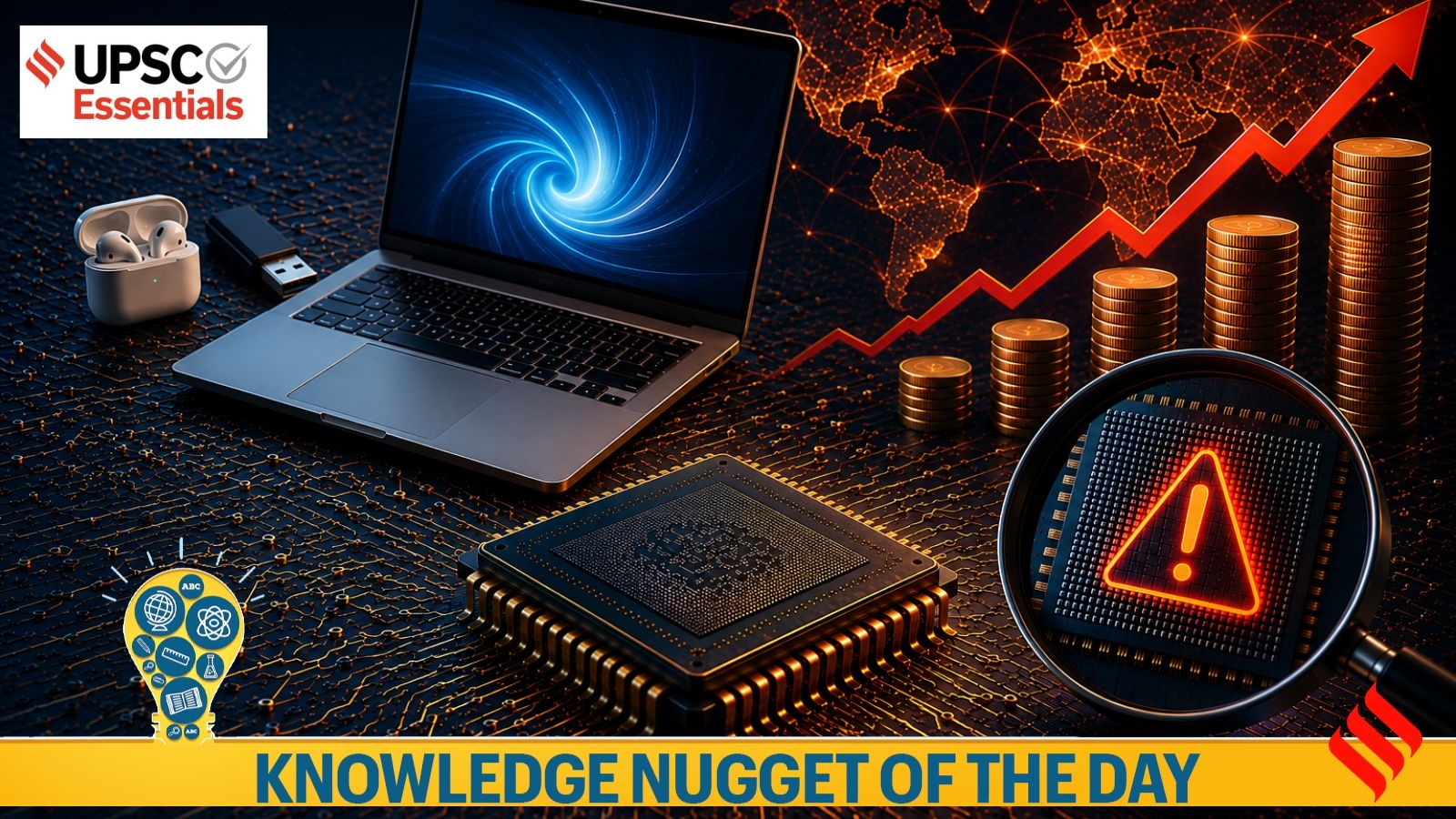
Memory chips are tiny parts that help electronic devices store and use information.
They are used in phones, televisions, refrigerators, washing machines and many other products.
Companies building artificial-intelligence data centres now need huge numbers of these chips.
Chipmakers are therefore making more advanced chips for data centres and fewer ordinary memory chips.
This shortage makes ordinary memory chips more expensive.
Manufacturers may pass those higher costs on to shoppers through more expensive electronics.
In India, several electronics prices rose noticeably during the first seven months of 2026.
This unusual pattern is being called “chipflation.”
India is also trying to build stronger domestic semiconductor and chip-design capabilities through Semicon 2.0.

India’s consumer-electronics prices rose 3–5% between January and July 2026, after much smaller movements during the same period in 2025.
The global AI investment boom has increased demand for memory chips, creating shortages for everyday products such as smartphones, televisions, refrigerators and laptops.
Manufacturers are prioritizing higher-margin data-center chips, while long factory construction times and constrained supply chains limit replacement supply.
DRAM prices are estimated to rise more than 400% from the start of 2024 to the end of 2026, reversing decades of declining memory-chip costs.
The nine affected electronics categories account for about 1% of India’s CPI basket, while India’s Semicon 2.0 programme seeks to strengthen domestic chip capabilities.
- Who
- Global AI companies, semiconductor manufacturers, electronics producers and consumers; in India, the Ministry of Statistics and Programme Implementation tracks the price changes.
- What
- A shortage and sharp price increase in memory chips is raising the prices of consumer electronics, a phenomenon called “chipflation.”
- Where
- The causes are global, while the consumer-price effects highlighted are in India.
- When
- The reported increases occurred mainly from January to July 2026, with comparisons to 2025 and earlier years.
- Why
- AI data-center investment is increasing chip demand, while manufacturers prioritize high-margin advanced chips and face long factory lead times, geopolitical restrictions and fragmented supply chains.
Key facts
- Term
- “Chipflation” describes memory chips becoming more expensive and harder to find instead of continuing their historical decline in price.
- India price rise
- Prices of several consumer-electronics categories increased 3–5% between January and July 2026, according to CPI data cited from the Ministry of Statistics and Programme Implementation.
- Smartphones
- The smartphone CPI index rose 4% from January to July 2026, compared with a 0.7% decline during the same period in 2025.
- Air conditioners
- Air-conditioner prices rose 4.8% from January to July 2026, compared with 1.1% in the same period of 2025.
- Televisions
- The television CPI index increased 3.5% from January 2026; a comparable increase had taken 54 months through December 2025.
- DRAM forecast
- JPMorgan Global Research estimates that DRAM prices will rise by more than 400% between the beginning of 2024 and the end of 2026.
- CPI significance
- The nine electronics categories discussed make up about 1% of India’s overall Consumer Price Index basket.
Quotes
Morgan Stanley analysts
Analysts at the American investment bank Morgan Stanley who coined the term “chipflation”.
“AI’s appetite for memory chips is boosting the cost of everything from data centers to smartphones, with consequences that may reach far beyond the tech industry.”
 indianexpress.com
Sources
Related news

Sridhar Vembu Blames AI Boom for Rising Phone Prices

RAMageddon: AI-driven memory crunch squeezes global and Indian technology firms

AI Chipflation and Tariffs Drive U.S. Inflation Higher

RAM Prices Surge as AI Demand Squeezes Memory Supply
Nvidia Customers Face Reported AI Server Price Hikes Above 15%
AI Boom Drives PC Makers to Buy Chinese Memory Chips

AI Week: Chip Breakthroughs, Brain Surgery and Quantum Campus
South Korean Investors Shift $7 Billion Into U.S. Stocks

Sensex, Nifty Face Cautious Monday Outlook Amid Global Cues
Mock-Trading Rules Cool South Korea’s Leveraged Chip ETF Frenzy
