

1 week ago
Korean Investors Shift From Home Stocks to Costlier US Names

Many South Korean investors are selling stocks at home and buying stocks in the United States.
They bought billions of dollars of US shares in July.
Some even bought US-listed versions of Korean companies that cost more than buying those companies in Korea.
Investors still like technology, computer-chip, and AI companies.
They may prefer the US because its market is larger and easier to trade.
A weaker Korean currency also makes dollar investments look more attractive.
The money from Korea is probably too small to crash the much larger US market by itself.
However, experts warn that heavily concentrated technology investments and borrowed money could make a future decline worse.

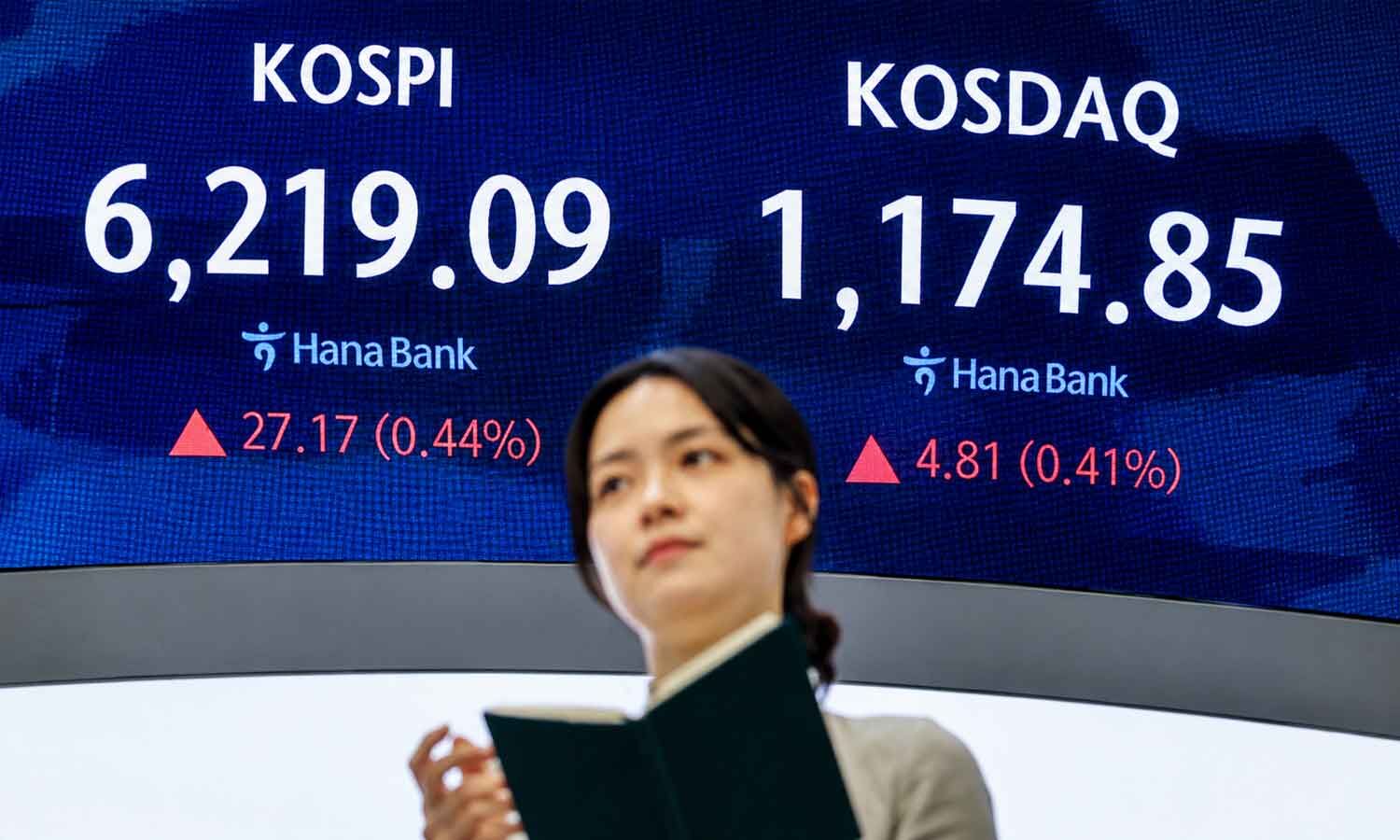
South Korean retail investors sold domestic shares even as the KOSPI entered a bull market.
They bought a net $4.5 billion in US stocks in July, including about $840 million in US-listed SK Hynix depositary receipts.
The shift reflects interest in deeper, more liquid US markets and a weaker won, but investors continue favoring technology, semiconductors, and leveraged products.
Samsung Electronics and SK Hynix drove much of the KOSPI’s roughly 120% first-half 2026 rise, with the stocks gaining about 170% and more than 300%, respectively.
Experts say Korean flows alone are unlikely to crash Wall Street, but concentrated AI exposure and rising leverage could amplify a broader correction.
- Who
- South Korean retail investors, along with analysts Paresh N. Bhagat and Shruti Jain.
- What
- Investors are shifting money from South Korean stocks into US stocks, often buying technology, semiconductor, and leveraged products.
- Where
- The investment flows are moving from South Korea into US markets, including US-listed depositary receipts.
- When
- The shift was reported after investors sold domestic shares for most of the previous week; they bought $4.5 billion in US stocks during July, while the KOSPI’s rise occurred in the first half of 2026.
- Why
- Investors are seeking deeper and more liquid markets, responding to a weaker won, and maintaining exposure to technology and AI companies.
Flow-Driven Risk Is Limited
Concentration Could Amplify Losses
Impact of Korean buying
Flow-Driven Risk Is Limited
Paresh N. Bhagat says South Korean retail flows of several billion dollars a month are relatively small compared with the deeper, more liquid, and diversified US equity market, making a Korea-like crash caused by those flows alone unlikely.
Concentration Could Amplify Losses
Shruti Jain says a broader correction in AI-heavy US stocks remains a genuine risk, regardless of whether Korean investors’ purchases alone can trigger it.
Lessons from Korea
Flow-Driven Risk Is Limited
The movement to US stocks can be viewed as a search for a deeper market and a currency hedge, rather than an immediate sign that Wall Street is facing a Korean-style collapse.
Concentration Could Amplify Losses
The Korean experience shows how concentration in a narrow group of technology and semiconductor stocks can work in reverse, especially when leverage is high.
Technology exposure
Flow-Driven Risk Is Limited
US markets are more liquid and developed, potentially offering investors greater access and diversification than the South Korean market.
Concentration Could Amplify Losses
Investors are carrying much of the same strategy into the US by favoring technology, semiconductors, AI-related stocks, and leveraged ETFs instead of broadly diversifying.
Key facts
- July US stock purchases
- South Korean investors bought a net $4.5 billion in US stocks.
- SK Hynix depositary receipts
- About $840 million went into US-listed SK Hynix depositary receipts, despite cheaper direct shares being available in South Korea.
- KOSPI performance
- The KOSPI rose roughly 120% during the first half of 2026.
- Leading Korean stocks
- Samsung Electronics gained around 170%, while SK Hynix rose more than 300% during the first half of 2026.
- US leveraged ETF assets
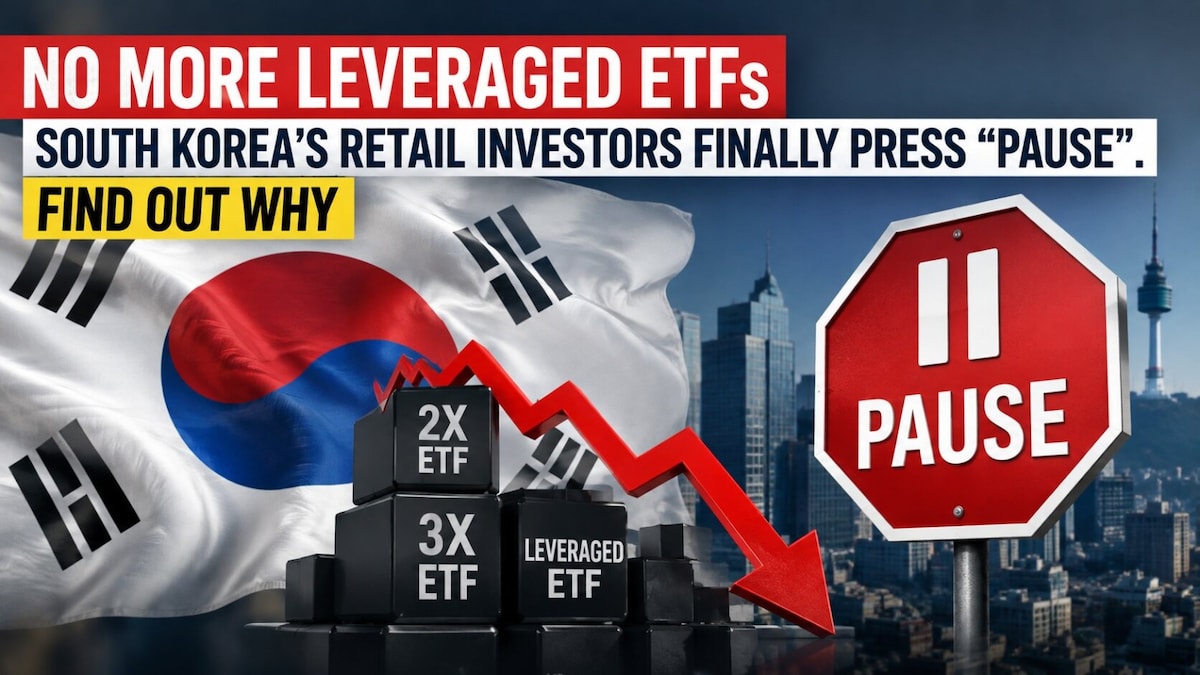
- Assets in leveraged US ETFs reached approximately $218 billion, with technology and semiconductor products accounting for about 67%.
- US market concentration
- The Magnificent Seven account for about 35% of the S&P 500, while the ten largest companies represent close to 40%.
- Recent Magnificent Seven losses
- The group lost $2.2 trillion in June and nearly $800 billion in one day in July amid doubts about AI spending.
Quotes
Paresh N. Bhagat
MD & Chairperson of Mangal Keshav Financial Services
““So, these investors aren’t abandoning the AI story yet; they’re just switching to US AI tickers rather than homegrown companies, since the US market is more liquid, more developed, and more evolved than the South Korean market.””
 livemint.com
““But, the interesting part is these investors are not necessarily reducing risk, but they are shifting where they take that risk.””
livemint.com
Sources
Related news
South Korean Investors Shift $7 Billion Into U.S. Stocks

Seoul Shares Pare Gains as Foreigners Sell Tech Stocks

South Korean shares pare early gains amid heavy tech selling

Korean Stocks Rise 22% as Chip Rally Regains Steam

Seoul shares trim gains on profit-taking amid Iran deal doubts

AI Week: Chip Breakthroughs, Brain Surgery and Quantum Campus

Sensex, Nifty Face Cautious Monday Outlook Amid Global Cues
Mock-Trading Rules Cool South Korea’s Leveraged Chip ETF Frenzy

Netlist Stock Surges 650% as AI Demand Boosts Memory Business
