

3 days ago
AI Could Transform Chemical Safety Testing Beyond Animal Experiments
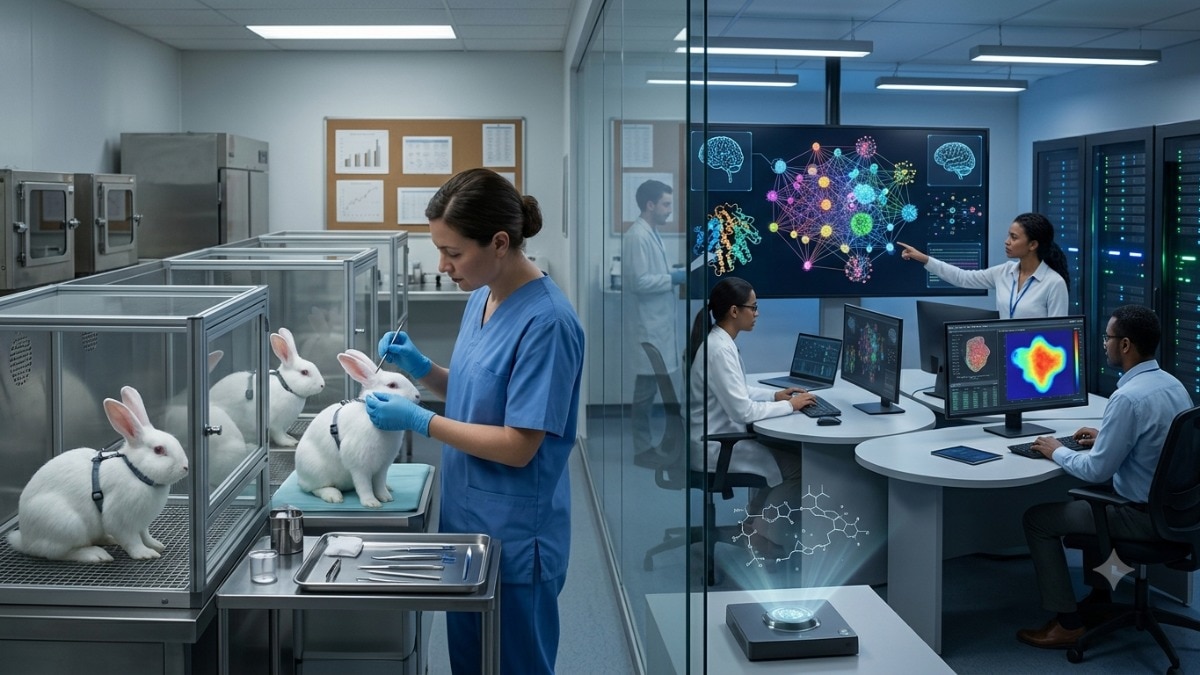
Scientists use animals to help find out whether chemicals are dangerous.
But animals do not always react to chemicals the same way people do.
Some harmful effects take many years to appear, which makes them difficult to study in animals.
Researchers are developing computer models and laboratory tests that use human cells instead.
Tiny devices called organs-on-chips can imitate parts of human organs.
AI can study the data from these tests and look for warning signs.
Scientists also want to know how much of a chemical people actually encounter in daily life.
These methods may reduce animal testing, but they cannot replace it completely yet.

EU chemical-safety rules require companies to demonstrate that substances placed on the market are safe while applying the three Rs.
Researchers say animal tests may not reliably represent human responses, particularly for long-term toxicity and chronic exposure.
AI is being combined with human cells, organ-on-a-chip systems and computational models to predict chemical harm.
The PrecisionTox project is comparing responses across several organisms and human cells to identify shared biological mechanisms.
RISK-HUNT3R combines non-animal test results with real-world exposure data, although researchers say animal testing cannot yet be eliminated completely.
- Who
- European researchers, including scientists involved in PrecisionTox and RISK-HUNT3R, are developing alternative chemical-safety methods.
- What
- They are combining AI, human-cell data, organ-on-a-chip systems, laboratory models and exposure information to assess chemical risks.
- Where
- The work is taking place through European Union-backed research projects and laboratories.
- When
- The projects are currently being developed and tested; the article also notes that the EU cosmetics-animal-testing marketing ban took full effect in 2013.
- Why
- Researchers aim to make safety predictions more relevant to human biology, reduce animal suffering and lower the time and cost of some testing.
Key facts
- Annual animal use
- The article title says about 150,000 animals are used each year.
- EU framework
- REACH requires companies to demonstrate that substances placed on the European market are safe.
- Three Rs
- The principles are to replace animal testing where possible, reduce animal numbers and refine procedures to limit suffering.
- Testing cost and duration
- Some chronic toxicity studies can involve hundreds of animals; testing one substance can take three to seven years and cost up to €15 million.
- PrecisionTox
- The project compares responses to around 200 chemicals across 14 laboratories, several organisms and human cells.
- RISK-HUNT3R
- The project tested a combined assessment approach on 60 chemicals divided between toxic and non-toxic substances.
- EU research funding
- RISK-HUNT3R is part of the EU’s €60 million ASPIS research cluster.
Sources
Related news
Taiwanese Ten-Year-Old Wins Silicon Valley AI Invention Awards

India’s Pharma Industry Embraces AI Amid Regulatory Concerns

AI policies may change every few months: CSIR-NIScPR director

Former Google Researchers Propose Human-AI Judges Against Rogue Models
Novo Nordisk Taps AWS as Preferred Cloud and AI Partner
UK TPO Gel Nail Phaseout Raises Indian Safety Questions

Ikea cuts European prices as cost pressures weaken demand

Europe's Bond Selloff Deepens as Middle East Tensions Lift Oil

China’s Rapid Car Development Faces Growing Safety Scrutiny

CNG Prices Rise Rs 2 per Kilogram in Pune

China Challenges US Leadership in Escalating Global AI Contest
