1 week ago
India’s Forgotten Coins Reveal the Country’s Changing Currency
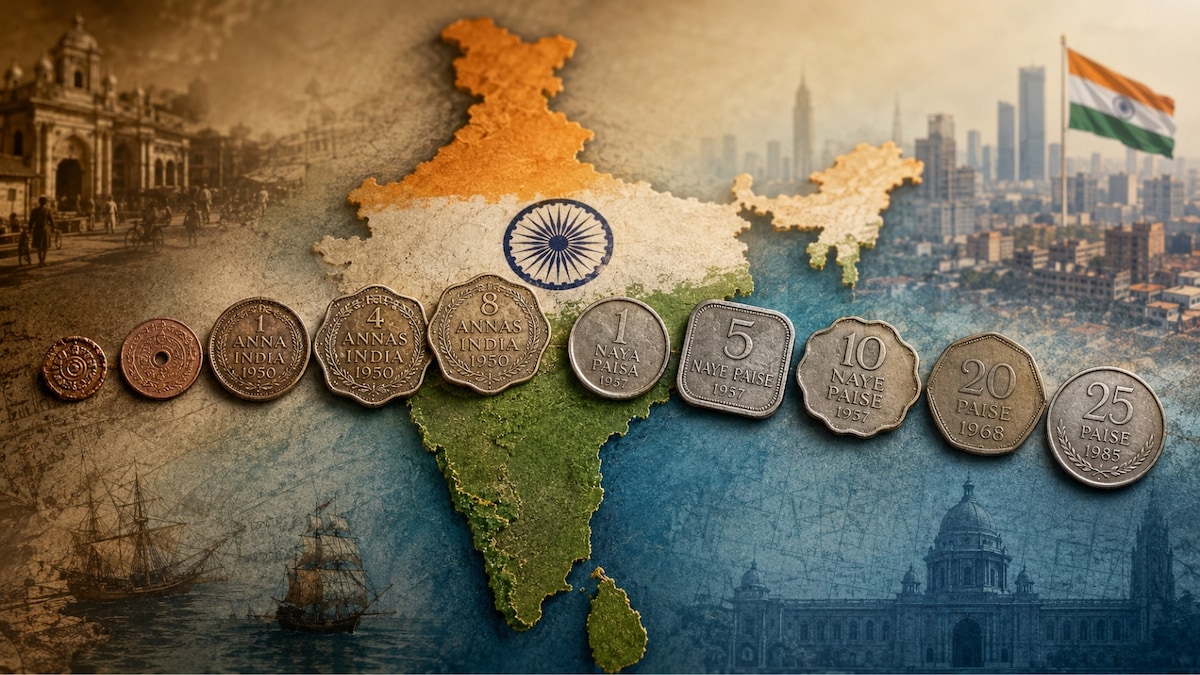
India once divided one rupee into annas, pice, and pies instead of 100 paise.
The pie was the smallest unit in that older system.
In 1957, India changed to a decimal system with 100 naye paise in one rupee.
Some early decimal coins had unusual shapes, such as the square five-paise coin and scalloped ten-paise coin.
A 20-paise coin was introduced in 1968 but was not widely accepted.
The 25-paise coin was once common in daily purchases.
Smaller coins became less useful as prices rose.
Coins worth 25 paise and below stopped being legal tender in 2011, while 50 paise and larger denominations remain legal tender.

Before decimalisation, one rupee equaled 16 annas, 64 pice, and 192 pies.
India adopted decimal currency on April 1, 1957, dividing the rupee into 100 naye paise.
The square five-naye-paise and scalloped ten-naye-paise coins were distinctive early decimal coins.
The 20-paise coin introduced in 1968 gained little public acceptance and later disappeared from circulation.
Coins of 25 paise and below ceased to be legal tender on June 30, 2011, while 50 paise remains legal tender.
- Who
- India, with coinage issued and documented by the Reserve Bank of India.
- What
- India’s monetary system changed from annas, pice, and pies to decimal paise, causing several denominations to disappear.
- Where
- India.
- When
- The major change began on April 1, 1957; 25-paise-and-smaller coins ceased to be legal tender on June 30, 2011.
- Why
- India decimalised its currency, while declining purchasing power and inflation reduced the usefulness of smaller denominations.
Key facts
- Pre-decimal system
- One rupee equaled 16 annas, 64 pice, or 192 pies.
- Decimalisation date
- India began dividing one rupee into 100 naye paise on April 1, 1957.
- Naya Paisa
- The word “Naya,” meaning “new,” was dropped from the denomination’s name in 1964.
- Distinctive coin
- The five-naye-paise coin introduced in 1957 had a square shape.
- 25 paise
- The 25-paise coin, also called a chaavanni, ceased to be legal tender on June 30, 2011.
- Current legal-tender coins
- The article states that 50 paise, ₹1, ₹2, ₹5, ₹10, and ₹20 coins are legal tender.
Sources
Related news
How the 25-Paise Chavanni Became a Political Insult

1913 British-Era Silver Coins Found During Highway Excavation in Morena

Independence Day 2026: What One Rupee Buys Today vs 1947
Tiny Vijayanagar Gold Coin’s Authenticity Makes History Uncertain

India's Markets and Rupee: From Independence to Integration
India’s Banknotes Outnumber Dollar Bills and Euro Notes

Festive Season 2026 May Boost Consumer-Focused Investment Sectors

Mijo Chacko Kurian Wins 400m Gold in Meerut

Government Defends 7.8% GDP Growth as Congress Raises Doubts

India Draws Record $127 Billion Through FCNR Deposit Scheme

Goyal to Visit United States for Trade Agreement Talks