

2 weeks ago
India’s Banknotes Outnumber Dollar Bills and Euro Notes
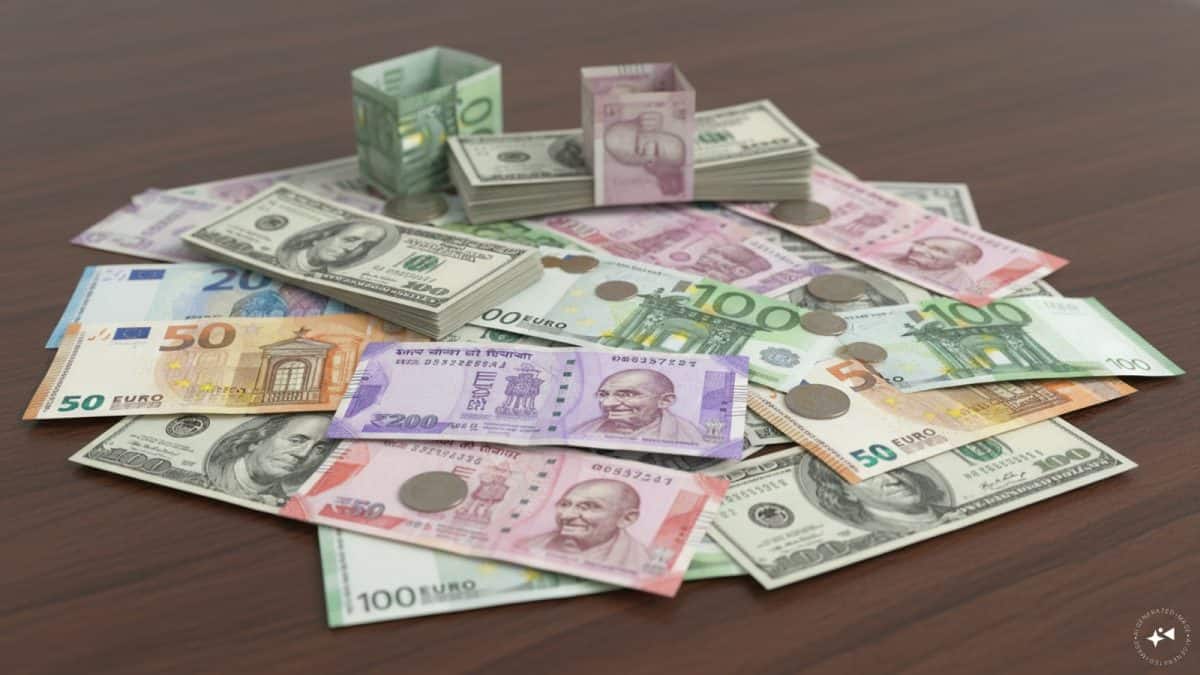
India has many more paper money notes than the United States or Europe.
India has about 176 billion notes, while the United States has about 56 billion dollar bills and Europe has about 30 billion euro notes.
This does not mean India’s currency is worth more.
India uses many lower-value notes, so more individual pieces are needed.
The Reserve Bank of India prints around 28 to 30 billion notes each year.
It also removes about 21 billion old notes annually.
People in India are using digital payments more often, but they still keep and use a lot of cash.
Experts say cash remains important for some large purchases, older people, and election-related spending.
This makes it harder for the central bank to predict how much cash will be needed.

India has about 176 billion banknotes in circulation, compared with roughly 56 billion US dollar bills and 30 billion euro banknotes.
India prints 28–30 billion banknotes annually across six denominations and retires about 21 billion pieces each year.
The ₹500 note is the dominant denomination in India’s currency stock, according to the cited RBI data.
India’s higher note count partly reflects its greater use of lower-value denominations, which require more physical notes for the same transaction value.
Currency in circulation reached ₹42.76 trillion on July 31, 2026, despite the growing adoption of digital payments.
- Who
- The Reserve Bank of India, Deputy Governor Shirish Chandra Murmu, and Bank of Baroda chief economist Madan Sabnavis.
- What
- India’s banknotes in circulation reportedly number about 176 billion, exceeding the numbers of US dollar bills and euro banknotes.
- Where
- The conference was held in Jakarta, Indonesia.
- When
- The comparison was presented at the Global Cash Management 2026 conference; currency in circulation stood at ₹42.76 trillion on July 31, 2026.
- Why
- India’s note count is partly higher because its denomination mix is weighted toward lower-value notes, while cash demand remains strong despite increasing digital-payment use.
Cash remains important
Digital payments are reducing cash’s transaction share
Why cash demand remains high
Cash remains important
Madan Sabnavis said cash remains preferred for high-value purchases involving precious metals and real estate, and is increasingly favored by some senior citizens because of fraud concerns. He also cited election-related cash demand.
Digital payments are reducing cash’s transaction share
The Reserve Bank of India said the share of cash in individual transactions is declining as digital payments expand, although the total amount of currency in circulation continues to rise.
Planning future currency needs
Cash remains important
The RBI estimates transactional demand using factors including GDP growth, interest rates, food inflation, and digital-payment adoption, while also accounting for replacing old notes.
Digital payments are reducing cash’s transaction share
Murmu said the cash paradox makes future demand harder to predict and complicates planning for cash-production and distribution capacity.
Key facts
- Indian banknotes in circulation
- Approximately 176 billion notes.
- US dollar bills in circulation
- Approximately 56 billion bills.
- Euro banknotes in circulation
- Approximately 30 billion banknotes.
- Annual Indian banknote production
- Between 28 billion and 30 billion notes across six denominations.
- Annual notes retired
- Approximately 21 billion banknotes.
- India’s currency in circulation
- ₹42.76 trillion as of July 31, 2026, up from ₹41.66 trillion at the end of FY26.
- Largest reported Indian denomination stock
- The ₹500 denomination, with 7,25,755 notes reportedly valued at ₹36.29 lakh crore in the cited RBI data.
Quotes
Shirish Chandra Murmu
Deputy Governor, Reserve Bank of India
“Transactional demand is estimated from expected changes in currency in circulation, driven by GDP growth, interest rates, food inflation, and the pace of digital payment adoption, etc.”
 firstpost.com
“Our count is driven partly by a denomination mix weighted toward lower-value notes, which naturally means more pieces change hands for the same value of transactions.”
firstpost.com
Sources
Related news

Why India Has More Banknotes Circulating Than the US

A Decade of UPI Makes India Cashless, Not Cash-Free

RBI Says Polymer Notes to Enter Circulation Next Financial Year
RBI targets polymer currency notes launch next financial year

Government approves polymer banknote trials for Rs 10, Rs 20

India’s Foreign Currency Facility Draws $72.85 Billion
BRICS Leaders Eye Local-Currency Trade, Not Common Currency
Rupee Slips Against Dollar Amid Oil and Tension

Rupee Climbs to Two-Month High on RBI Intervention
Rupee Falls to 95.56 as Crude Prices and Dollar Rise

Rupee Gains as Oil Prices Fall, RBI Supports Currency