3 weeks ago
Camera Traps Reveal Healthy Clouded Leopard Population in North Bengal
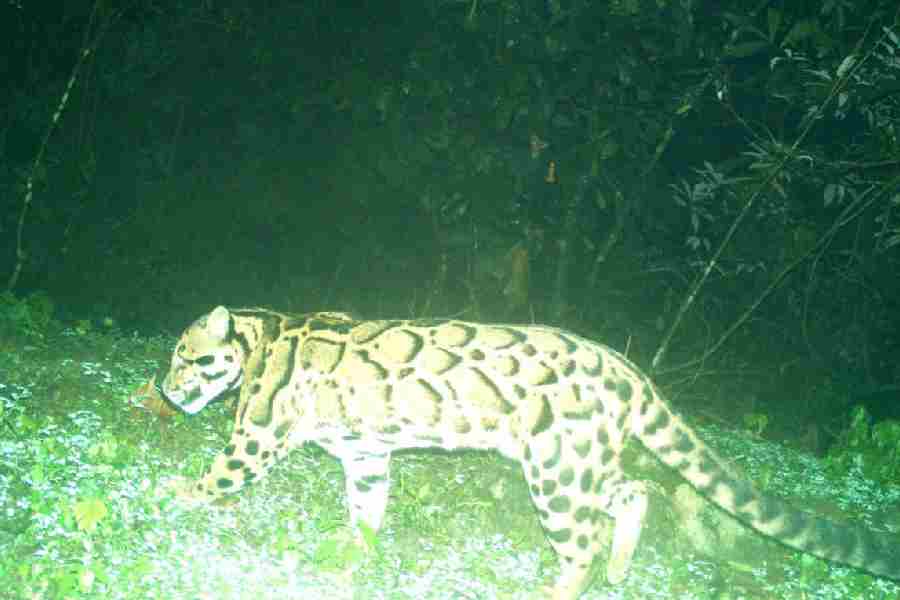
Clouded leopards are very shy wild cats that mostly come out at night, which makes them very hard to see.
Cameras placed in the forests of north Bengal took pictures and videos of them.
Forest rangers were happy to see so many clouded leopards in the area.
The cameras were set up to count tigers, but they also found these rare cats.
The footage was sent to the Wildlife Institute of India to help figure out how many clouded leopards live there.
These cats were seen in four special forest areas in north Bengal.
Clouded leopards are in danger because fewer than 10,000 grown ones are left in the whole world.
People hunting them, cutting down forests, and taking away their food are some of the reasons.
The forest department wants to make a big plan to protect them.
On August 4, which is International Clouded Leopard Day, the state of Meghalaya also started a program called Mission Clouded Leopard to help save them.

Camera trap footage from forests across north Bengal has confirmed the frequent presence of clouded leopards, one of the cat family's most elusive and vulnerable members.
The state forest department plans a comprehensive conservation programme based on camera trap data sent to the Wildlife Institute of India (WII) for analysis.
Clouded leopards were recorded in Buxa Tiger Reserve, Jaldapara National Park, Neora Valley National Park and Singalila National Park.
The IUCN lists the clouded leopard as Vulnerable, with global estimates showing fewer than 10,000 mature individuals remaining and the population continuing to decline.
On International Clouded Leopard Day (August 4), the Meghalaya government launched Mission Clouded Leopard to protect the species, which is Meghalaya's state animal.
- Who
- Bhaskar J.V, chief conservator of forests (wildlife, north), and officials of the north Bengal forest department, along with the Meghalaya government.
- What
- Camera traps installed for the tiger census confirmed a healthy presence of clouded leopards in north Bengal, prompting plans for a conservation programme and a population estimate.
- Where
- Forests of north Bengal, including Buxa Tiger Reserve, Jaldapara National Park, Neora Valley National Park and Singalila National Park, and the state of Meghalaya.
- When
- Announced on Thursday, with the Meghalaya mission launched on August 4, International Clouded Leopard Day.
- Why
- To protect the Vulnerable clouded leopard, which faces threats from poaching, large-scale deforestation and the resulting loss of prey.
Key facts
- Species
- Clouded leopard (Neofelis nebulosa)
- IUCN status
- Vulnerable
- Global population
- Fewer than 10,000 mature individuals, continuing to decline
- Recorded in
- Buxa Tiger Reserve, Jaldapara National Park, Neora Valley National Park, Singalila National Park
- Data source
- Camera traps installed for tiger census; footage sent to Wildlife Institute of India (WII) for analysis
- Threats
- Poaching, large-scale deforestation, loss of prey
- Mission Clouded Leopard
- Launched by Meghalaya government on August 4 (International Clouded Leopard Day)
- Neora Valley altitude
- Approximately 600 feet to 10,500 feet
Quotes
Forest Official
Unnamed forest department official
“Studies indicate that the species is under threat primarily because of poaching, large-scale deforestation and the resulting loss of prey. Despite these challenges, its continued presence in the forests of north Bengal suggests that the prey base remains intact and that strict vigilance by the forest department has helped prevent poaching.”
 telegraphindia.com
“The presence of clouded leopards was recorded in major forests in the region. After the recent tiger census, footage from the camera traps was sent to the Wildlife Institute of India (WII) for analysis. Once we receive the institute’s report, we will be able to estimate the population of clouded leopards in north Bengal.”
telegraphindia.com
Unknown Source
Unnamed source within the forest department
“The footage primarily indicates the presence of a healthy population of the species in the region.”
telegraphindia.com
Sources
Related news

Fourth Leopard Captured in Dudhwa Buffer Zone in UP

Male Tiger Camera-Trapped in Assam’s Dihing Patkai National Park

Forest Department Intensifies Hunt for Nilgiris Man-Eater Tiger
Rare Eurasian lynx photographed for first time in Sikkim

Cheetah Nirva Missing From Monitoring System At Kuno Park
50 Leopards Caught, 500 UP Villages Still on Edge
Bihar Warns Against Unknown Fish Carried By Nepal Floodwaters

Rare Sharp-Tailed Sandpiper Spotted at Najafgarh in Fifth Indian Record

UNCCD CoP 17 Highlights Grassland Restoration and Drought Resilience

Ecologists Seek Marine National Parks Along Andhra Pradesh Coast
Perungulam Wetland Moves Toward Ramsar Recognition in Tamil Nadu