1 hr ago
Kerala High Court Opens Patent Path for Costly Drugs
The Kerala High Court considered whether the government can help make very expensive cancer medicines cheaper.
It said the government may be able to use a patent under Section 100 of the Patents Act in some situations.
This could allow another company to make the medicine and provide it to patients without seeking a commercial profit.
The original patent owner would still receive payment.
The case involved Ribociclib, a medicine used to treat breast cancer.
The court did not immediately order the government to make the medicine cheaper.
Instead, it said the government must collect information and decide whether the medicine is truly unaffordable.
Drug companies said patents encourage them to spend money developing new medicines.
Patients and advocates said high prices can prevent people from receiving life-saving treatment.

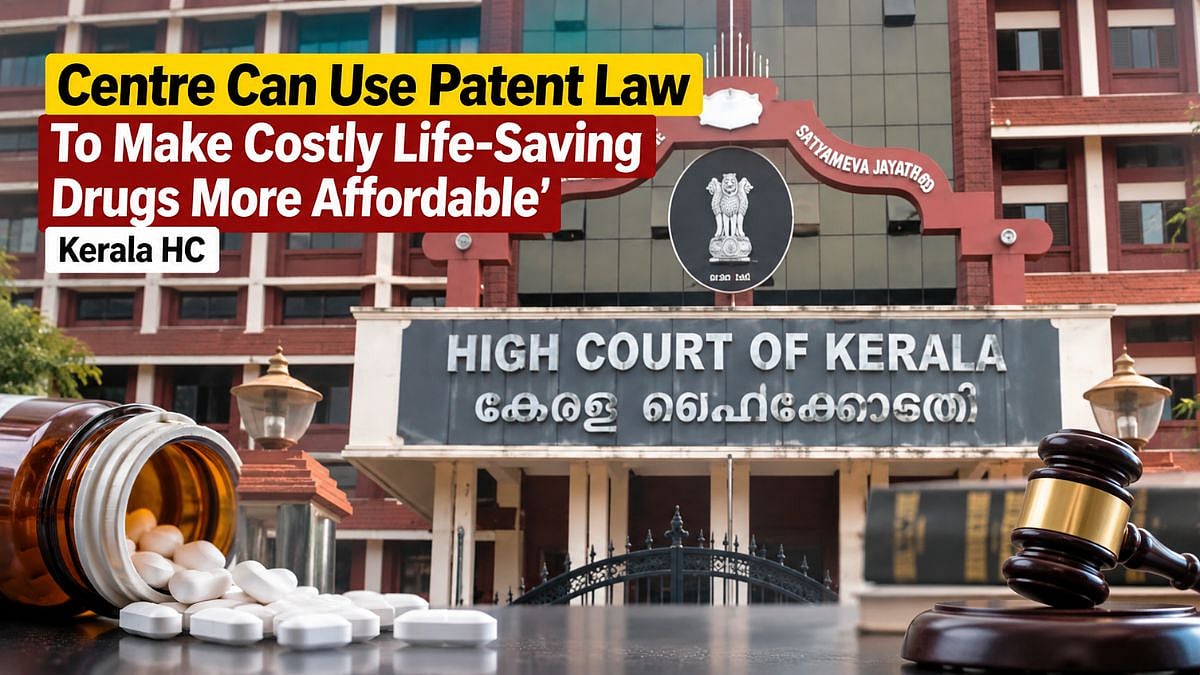
The Kerala High Court ruled that Section 100 of the Patents Act can allow government use of patents when life-saving medicines are sold at exorbitant prices.
The provision may permit another entity to manufacture a patented medicine and supply it non-commercially to needy patients, while the patent holder receives remuneration.
The court did not order intervention for Ribociclib and said the Central government must first collect data to assess affordability.
The case arose from a breast cancer patient’s request for affordable Ribociclib, which was reported to cost about Rs 75,000 to Rs 78,468.75 per month.
Novartis and Eli Lilly opposed intervention, citing patent protections and research costs, while patients and advocates emphasized access to treatment.
- Who
- The Kerala High Court, the Central government, breast cancer patients, advocates, Novartis and Eli Lilly.
- What
- The court held that Section 100 of the Patents Act may be used to facilitate non-commercial access to patented medicines when prices are exorbitant.
- Where
- The Kerala High Court in India.
- When
- The ruling was reported on September 28, 2026; the original petition was filed in June 2022.
- Why
- The case examined whether high prices for patented life-saving medicines, including Ribociclib, could justify government intervention to protect access to healthcare.
Public Health Intervention
Patent Protection Concerns
Use of Section 100
Public Health Intervention
Patients and advocates argued that government use should be considered when patented medicines are unaffordable and prevent access to life-saving treatment.
Patent Protection Concerns
Novartis argued that Section 100 should not be used without first considering the compulsory-licensing provisions under Sections 84 and 92.
Meaning of Affordability
Public Health Intervention
Patients’ representatives said annual treatment costs of roughly Rs 7 lakh to Rs 10.8 lakh could make the medicines inaccessible without government action.
Patent Protection Concerns
The Central government said affordability must be assessed for both patients and manufacturers, and that no single study established the relevant price threshold.
Patent Incentives
Public Health Intervention
Advocates said the right to health should receive due weight when patent rights conflict with access to treatment.
Patent Protection Concerns
Novartis and Eli Lilly said patent protection supports costly pharmaceutical research and that weakening it could reduce incentives to develop and disclose new medicines.
Key facts
- Legal provision
- Section 100 of the Patents Act, 1970
- Medicine at issue
- Ribociclib, used to treat breast cancer
- Reported monthly price
- Approximately Rs 75,000 to Rs 78,468.75
- Potential government action
- Authorise manufacture and non-commercial supply to needy patients
- Patent-holder compensation
- The patent holder remains entitled to remuneration for authorised use
- Court's limitation
- The court did not direct immediate government intervention
- Alternative medicine examined
- Palbociclib was found not to be interchangeable with Ribociclib based on medical evidence
Quotes
Justice Harisankar V. Menon
Kerala High Court judge who delivered the ruling
“Section 100 is required to be invoked in circumstances where the Government is required to intervene, such as an instance where the medicine manufactured on the basis of a patent is being sold at an exorbitant price.”
 freepressjournal.in
“There can be no doubt that the government is required to provide all necessary facilities to citizens to ensure access to healthcare, including access to life-saving treatment, as in the case at hand.”
 financialexpress.com
Sources
Related news
Kerala High Court Backs Government Power on Cancer Drug Access
Supreme Court Questions ₹27,000 MRP on ₹2,700 Cancer Drug
Firstpost Story Sparks India-Netherlands Effort for Affordable Tiratricol
India’s Falling Diabetes Drug Costs Could Expand Modern Treatment Access
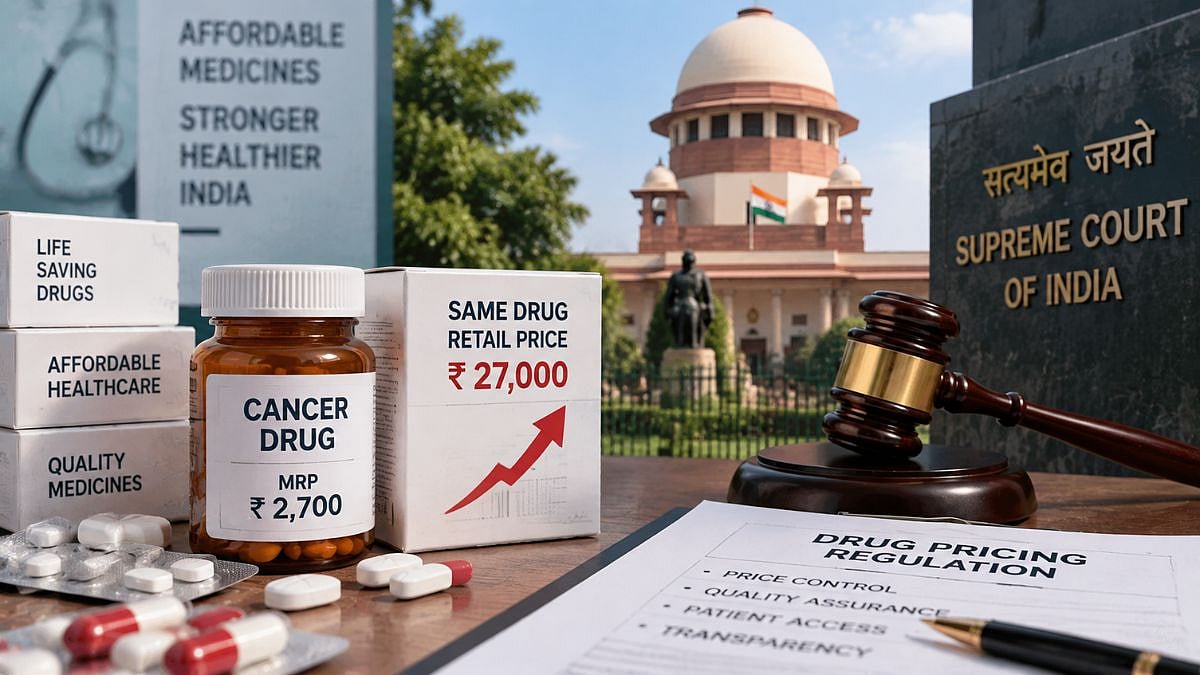
Supreme Court Questions India’s Drug Pricing and Calls for Reform
Maharashtra FDA Seeks Price Caps on Hospital Devices
AstraZeneca Breast Cancer Drug Etcamah Misses Primary Trial Goal
Kerala High Court scrutinizes Centre's breast cancer drug stance