2 hrs ago
Kerala High Court Backs Government Power on Cancer Drug Access
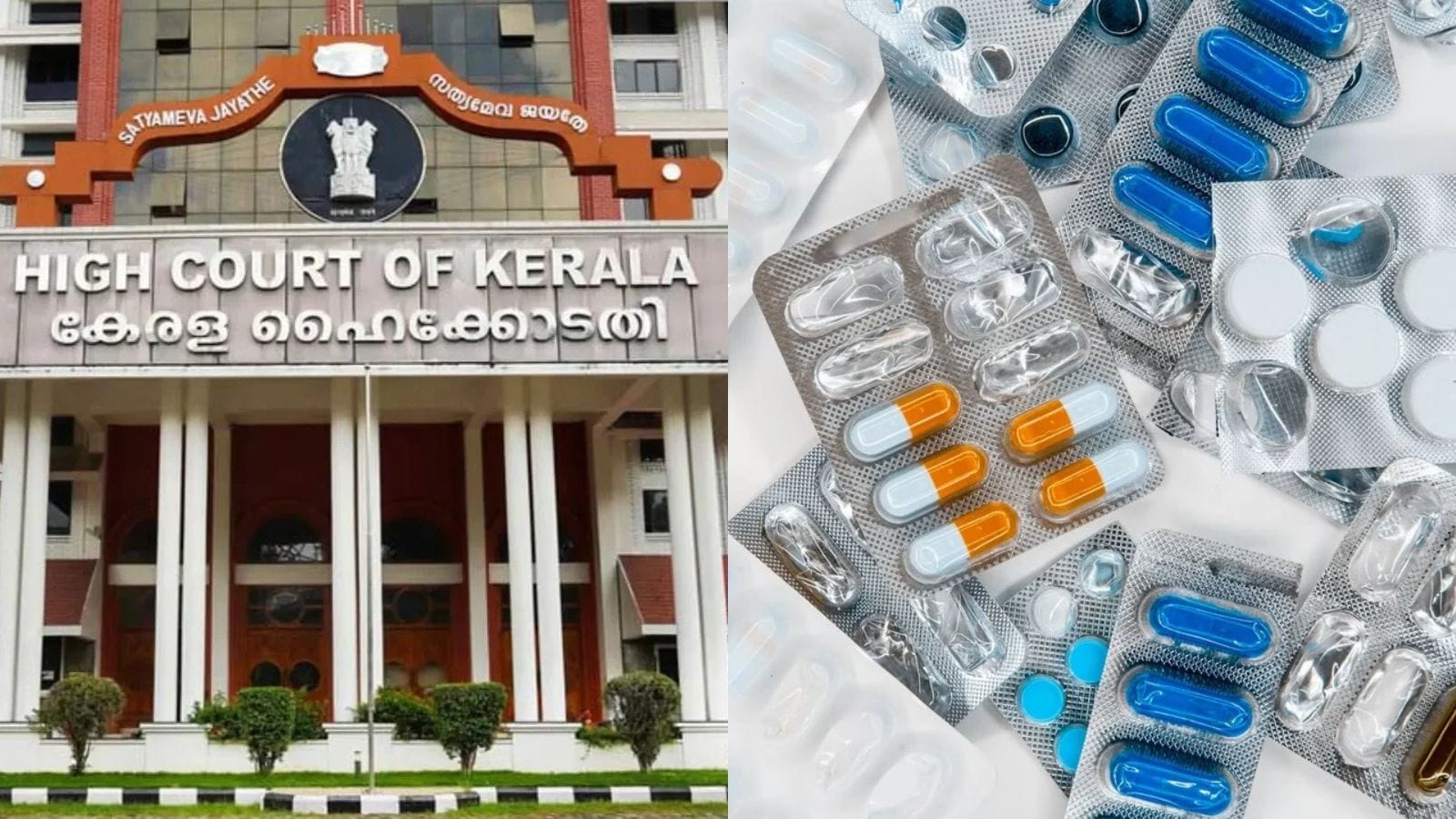
A woman with breast cancer needed an expensive medicine called ribociclib.
She asked the court to help make the medicine cheaper.
She died before the case was finished.
The Kerala High Court later said the Government of India can make a patented medicine, or let another company make it, for patients who cannot afford it.
The court did not order the government to start making the drug immediately.
It said the government must first study how many people need the medicine and whether current support programs are enough.
The drug company said India already receives the medicine at a very low price and that patents help pay for research.
The court said both innovation and access to life-saving treatment are important.

The Kerala High Court ruled that the Government of India can use Section 100 of the Patents Act to manufacture or authorise production of patented medicines for needy patients.
The ruling arose from a 2022 petition by a breast-cancer patient who could not afford Novartis’s ribociclib; she died before the case ended.
The court did not order immediate production, instead asking the government to assess patient needs, affordability and existing subsidies.
The Government of India and drug companies argued that patent protections, price monitoring and alternative medicines already addressed access concerns.
The court rejected the view that palbociclib was an interchangeable substitute for ribociclib and emphasized constitutional public-health obligations.
- Who
- The Kerala High Court, the Government of India, Novartis, and patients needing expensive cancer medicines.
- What
- The court ruled that the government may use Section 100 of the Patents Act to manufacture or authorise production of patented life-saving medicines for needy patients.
- Where
- The case was heard by the Kerala High Court in India.
- When
- The petition began on June 2, 2022; the patient died while it was pending, and the ruling came more than four years later.
- Why
- The case concerned whether the government could address the high cost of patented medicines for patients unable to afford them.
Patient Access and Public Health
Patent Protection and Market Systems
Government power under patent law
Patient Access and Public Health
The court held that government purposes can include making a patented medicine available to needy patients on a non-commercial basis, particularly when its price is exorbitant.
Patent Protection and Market Systems
The Government of India argued that Section 100 is intended for the government’s own use and should not become a general price-control tool.
Affordability of ribociclib
Patient Access and Public Health
The patient and court’s public-health concerns focused on people being priced out of life-saving treatment; one later participant reported spending about Rs 7.90 lakh annually on ribociclib.
Patent Protection and Market Systems
The Government of India said the medicine’s price was monitored and capped, while Novartis said India received it at its lowest global price and cited a 30% trade-margin cap.
Alternative medicines and innovation
Patient Access and Public Health
The court rejected the claim that palbociclib could be treated as a simple substitute, saying the two medicines were not interchangeable.
Patent Protection and Market Systems
Drug companies argued that patents must be protected because research and innovation are costly, and warned that weakening patent protection could discourage inventors.
Key facts
- Medicine at issue
- Ribociclib, a targeted breast-cancer therapy made by Novartis.
- Original reported cost
- About Rs 58,140 for a 21-day course involving three tablets daily.
- Reported later price
- The price of 21 tablets fell from Rs 24,355 to Rs 22,217.85 after a February 1, 2026 customs-duty cut, then rose to Rs 22,335 in July.
- Legal provision
- Section 100 of the Patents Act, 1970, concerning government use of patented inventions.
- Court’s direction
- The government must gather data on patients’ needs, affordability and existing financial-support schemes before deciding whether to act.
- Cancer-cost burden
- Medicines were reported to account for nearly 36% of cancer-treatment costs.
- Financial hardship
- A parliamentary committee report cited in the ruling said about 40% of cancer hospitalisations are funded through loans, asset sales or relatives’ help.
Quotes
Maitreyi Sachidananda Hegde
Advocate appointed as amicus curiae in the case
“This is a milestone judgment on access to life-saving medicines, though it falls short on implementation, there is no timeline given to the Centre to implement it.”
 NDTV
NDTV
Sources
Related news
Supreme Court Questions ₹27,000 MRP on ₹2,700 Cancer Drug
Firstpost Story Sparks India-Netherlands Effort for Affordable Tiratricol
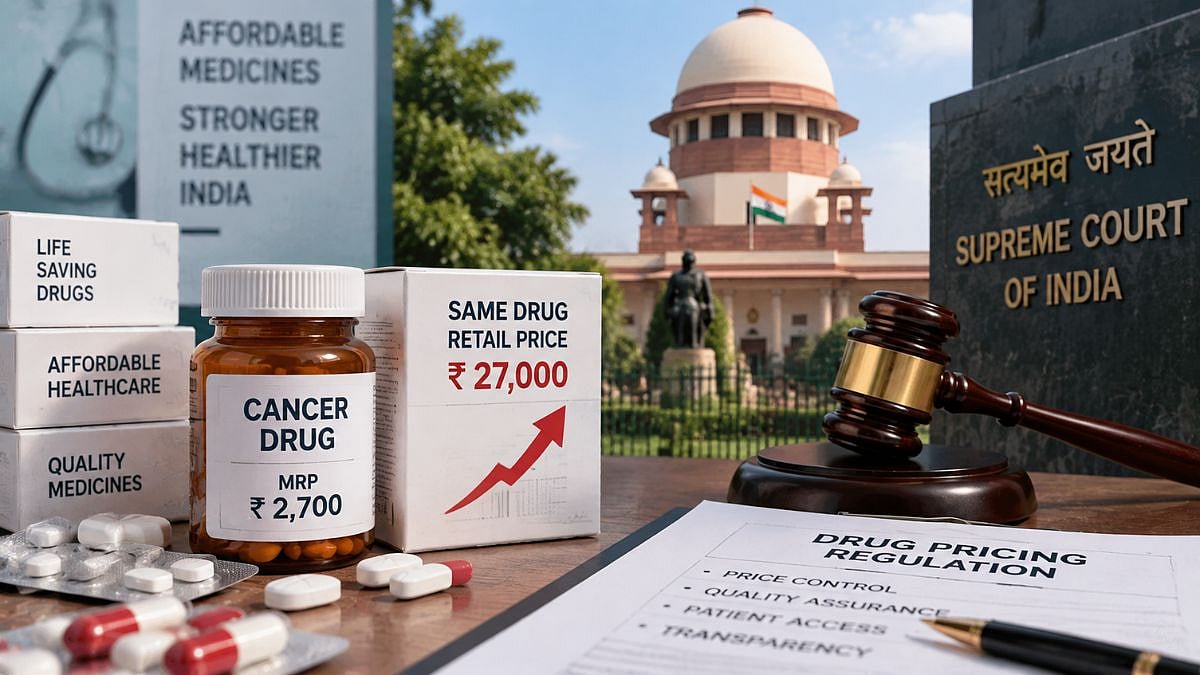
Supreme Court Questions India’s Drug Pricing and Calls for Reform
India’s Falling Diabetes Drug Costs Could Expand Modern Treatment Access

Rajasthan Lok Adalat awards compensation after cancer-TB misdiagnosis
Mumbai Court Halts Trial Against ‘Miracle Doctor’ Over Health
AstraZeneca Breast Cancer Drug Etcamah Misses Primary Trial Goal

Kerala High Court scrutinizes Centre's breast cancer drug stance