1 day ago
Europe’s Far Right Rises on Identity, Insecurity and Historical Nostalgia
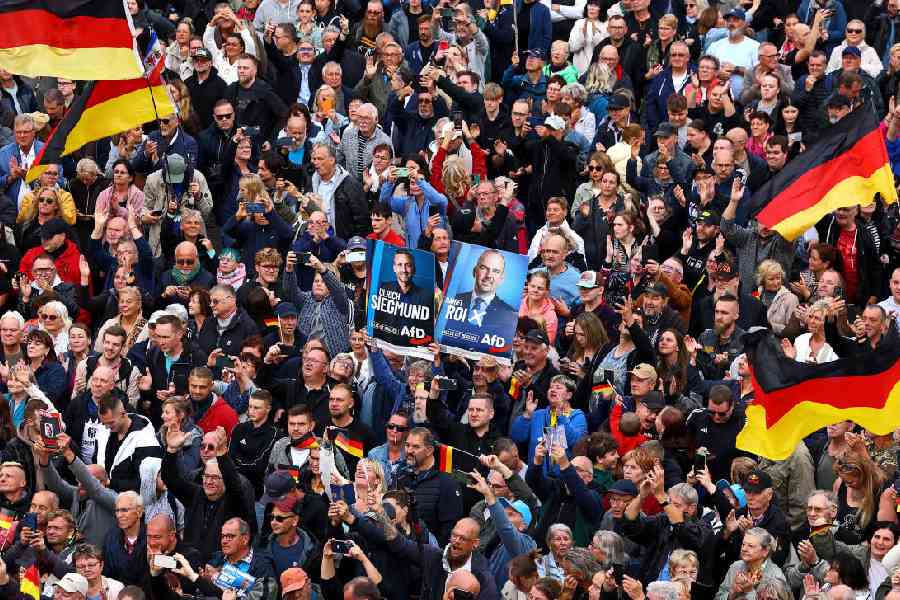
Far-right political parties are gaining support in several European countries.
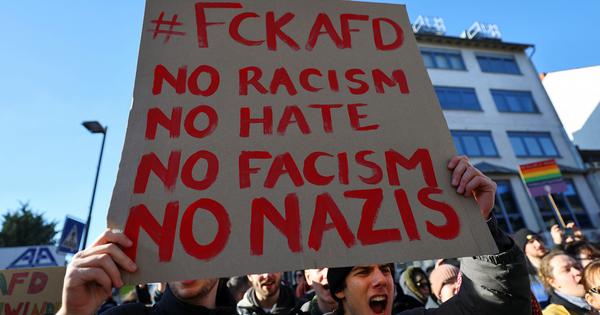
In Germany, the Alternative for Germany has done especially well in polls and state elections.
Many supporters feel unsafe, left behind economically or unhappy about immigration and social change.
The party says migration and globalization threaten German culture.
Some voters in eastern Germany also feel that their identity was lost after the country reunited.
Far-right leaders often describe an older, simpler and more Christian past as better than today.
Critics say this memory can leave out difficult facts, including fascism, war and inequality.
They also worry that reducing attention to Nazi crimes could harm democracy.
Elections in several European countries will show how much support these ideas have.

The Alternative for Germany has become Germany’s most popular party in polls and performed strongly in recent state elections.
Analysts link the far right’s growth to economic decline, insecurity, migration concerns and alienation from liberal multicultural politics.
Far-right parties across Europe promote national identity, assimilation and restrictions on immigration while criticizing globalization and the European Union.
In eastern Germany, nostalgia for a lost regional identity and resentment over reunification have strengthened the Alternative for Germany’s appeal.
Critics warn that efforts to replace Germany’s culture of remembrance with national pride could downplay Nazi crimes and weaken democracy.
- Who
- The Alternative for Germany and other European far-right parties, alongside their supporters and critics.
- What
- Far-right parties are gaining support by emphasizing national identity, immigration restrictions, cultural nostalgia and criticism of liberal democracy.
- Where
- Germany, especially eastern Germany, as well as France, Italy, the Netherlands, Sweden, the United Kingdom and other parts of Europe.
- When
- The developments include recent Sunday state elections in Germany and elections scheduled for next year in several European countries.
- Why
- Analysts cite economic and industrial decline, inequality, insecurity, migration concerns, cultural change and resentment toward established political institutions.
Democratic and pluralist critics
Far-right and nationalist advocates
National identity
Democratic and pluralist critics
Identity should be compatible with multicultural, liberal and united societies, rather than being defined mainly by ancestry, religion or ethnicity.
Far-right and nationalist advocates
National identity is rooted in historical heritage, cultural continuity and the traditions of predominantly Christian societies.
Immigration and globalization
Democratic and pluralist critics
Migration and international cooperation should not be treated as inherent threats, and exclusionary politics can deepen social division.
Far-right and nationalist advocates
Large-scale migration, Islam, globalization and institutions such as the European Union are seen as weakening national culture and sovereignty.
Germany’s historical memory
Democratic and pluralist critics
Public education and political culture should continue emphasizing Nazi crimes and collective responsibility to protect democratic norms.
Far-right and nationalist advocates
Germany should place greater emphasis on national achievements and pride instead of allowing historical guilt to dominate its political identity.
Key facts
- German party
- The Alternative for Germany is described as Germany’s most popular party in nationwide polls.
- Recent election performance
- The party finished first in Mecklenburg-West Pomerania and third in Berlin.
- Chancellor’s party
- Chancellor Friedrich Merz called the Christian Democratic Union’s performance a “disaster.”
- Eastern Germany
- Analysts connect the party’s appeal there to lost regional identity, post-reunification resentment and population loss.
- Historical debate
- The Alternative for Germany seeks to reduce the dominance of Germany’s Nazi-focused culture of remembrance and emphasize national pride.
- Shared themes
- European far-right parties commonly stress national values, assimilation, citizen preference and tighter immigration controls.
- Upcoming elections
- France, Italy, Poland and Spain are expected to hold important elections next year involving strong far-right parties.
Quotes

Mohamed A. El-Erian
Economist at the Wharton School, University of Pennsylvania
“They are nostalgic for the world that they believe they understood, and now they’re living in a world that they do not understand.”
 telegraphindia.com
“We live in a world today of fragmentation and growing inequality, no longer with unifying themes or a unifying narrative.”
telegraphindia.com
Anna Wenske
69-year-old resident of Weimar discussing lost East German identity
“It was more German. Not little America, like the West.”
telegraphindia.com
Sources
Related news
AfD Victory Highlights Europe’s Resurgent, Adaptable Far-Right Challenge
Europe’s Rightward Shift Puts Political Establishment Under Pressure

AfD Victory in Saxony-Anhalt Raises Questions for Europe
AfD Victory in Saxony-Anhalt Signals Major Shift for Germany
AfD's Rise in Germany Challenges Indian Migrants' Sense of Safety
Europe’s Far-Right Rise Is Patchy, Funded, and Reversible

Seven Lawmakers Split from Wilders' Far-Right Party

RJ Corp & PVV Infra Boost AP's Solar Industry
Rob Jetten Triumphs in Dutch Election, Poised to Become First Openly Gay PM