1 hr ago
Ganeshotsav 2026: Rising Costs Challenge Mumbai’s Eco-Friendly Idol Transition
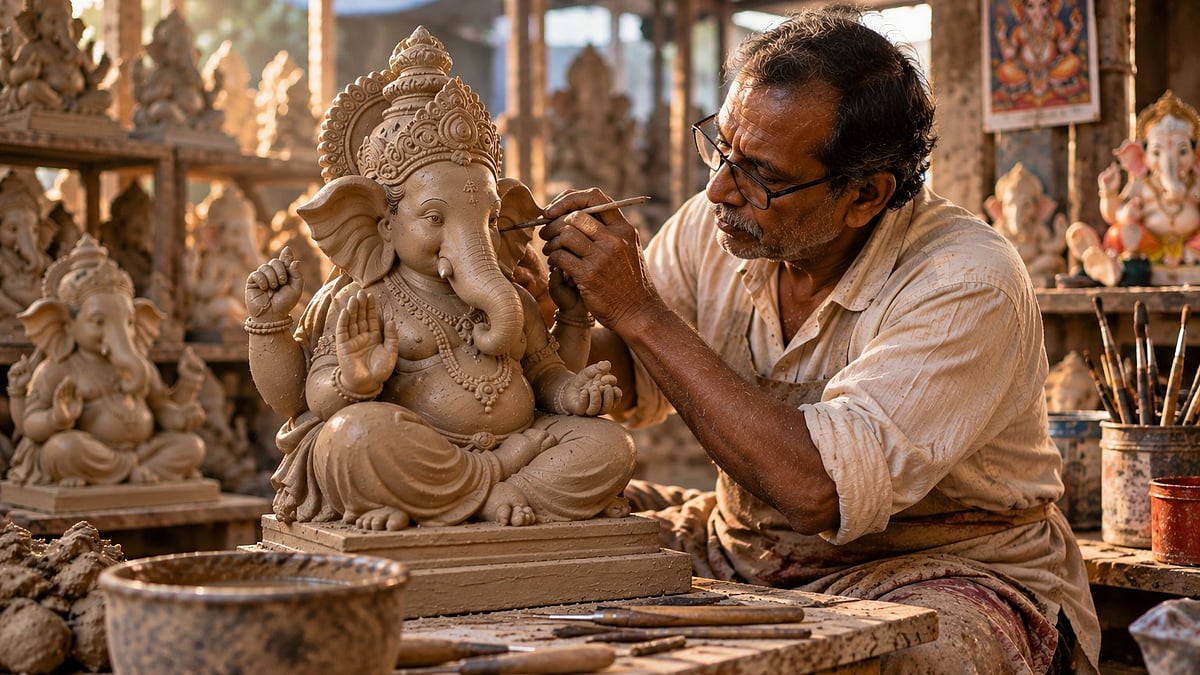
Many artists in Mumbai make Ganpati idols for the festival.
People want idols made from clay because they dissolve more safely in water.
However, clay idols take much longer to make than Plaster of Paris idols.
They also need specially trained workers and can break more easily during transport.
This makes eco-friendly idols more expensive for families and harder for artists to produce.
The government has given artisans free clay and natural colours, but many other costs remain.
Plaster of Paris and some paints can pollute water after immersion.
The state says it needs three more years to stop using Plaster of Paris completely, while the court is concerned about further environmental damage.

Clay idols take roughly two or three days to make, compared with twelve for Plaster of Paris idols.
A handcrafted shadu idol typically starts at about ₹2,000, while statewide idol prices have risen 20–30% this season.
Scientific studies found clay idols dissolve completely, while Plaster of Paris remains insoluble and can worsen water pollution.
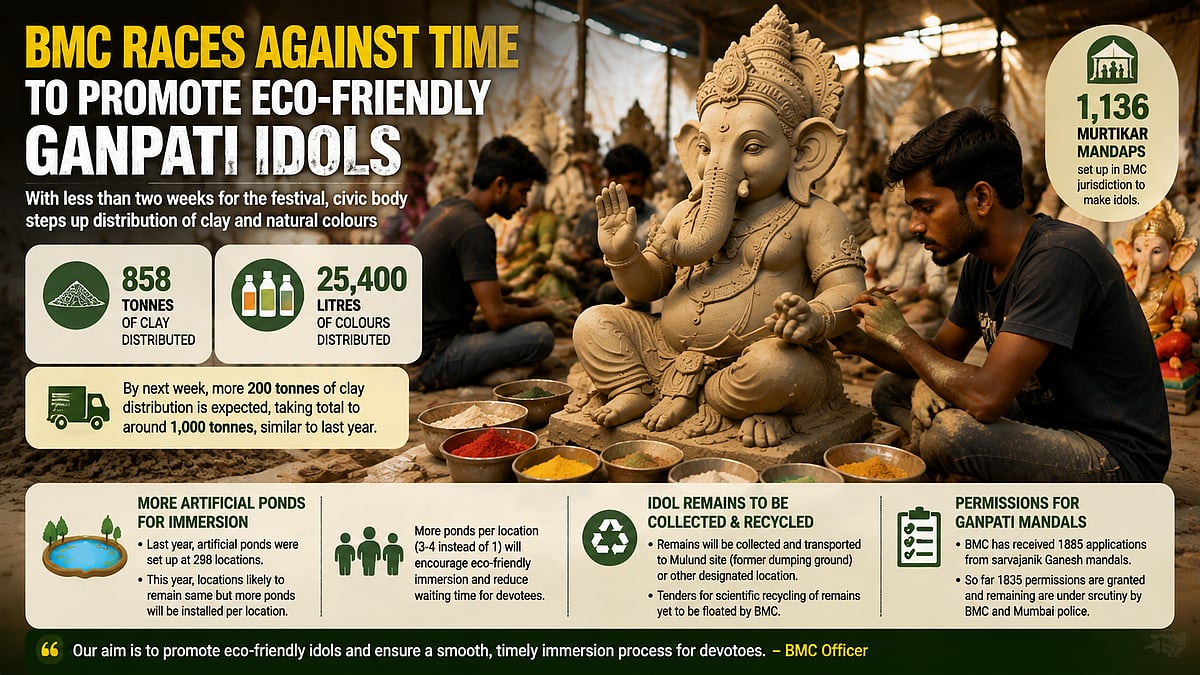
The Brihanmumbai Municipal Corporation distributed 858 tonnes of clay and 25,400 litres of natural colours to artisans.
The state has asked the Bombay High Court for three more years to eliminate Plaster of Paris idols.
- Who
- Mumbai idol makers, the Brihanmumbai Municipal Corporation, the Maharashtra government and the Bombay High Court are involved.
- What
- The article examines the rising cost and practical difficulties of shifting Ganpati idol production from Plaster of Paris to shadu clay and other eco-friendly materials.
- Where
- The issue is centered in Mumbai and also affects artisans elsewhere in Maharashtra, including Pune and Uran.
- When
- The issue concerns Ganeshotsav 2026; the state says it needs three more years for a complete phase-out.
- Why
- Clay idols dissolve more safely than Plaster of Paris idols, but they require more time, labour, skill and money to produce.
Environmental phase-out
Artisan and implementation concerns
Replacing Plaster of Paris
Environmental phase-out
Clay idols dissolve more completely, while Plaster of Paris remains insoluble and can leave sediment; the Bombay High Court has questioned continued delays.
Artisan and implementation concerns
Artisans say clay production is slower, requires more skill and labour, and is more vulnerable to breakage during transport.
Who should bear the cost
Environmental phase-out
Reducing Plaster of Paris use could limit water pollution and the public expense of handling immersion waste.
Artisan and implementation concerns
Artisans face higher clay, colour, labour, transport and working-capital costs; free raw clay does not cover all transition expenses.
Transition timeline
Environmental phase-out
The court has warned that additional delays could cause substantial damage to natural resources and has questioned the need to immerse Plaster of Paris idols.
Artisan and implementation concerns
The state says most idols were already made for this season and has requested three more years for a complete phase-out.
Key facts
- Production rate
- Workshops can make about 12 Plaster of Paris idols a day, but only two or three clay idols.
- Typical clay idol price
- A modest handcrafted shadu idol starts at approximately ₹2,000.
- Price increase
- Idol prices across Maharashtra have risen by 20–30% this season.
- BMC distribution
- The Brihanmumbai Municipal Corporation distributed 858 tonnes of clay and 25,400 litres of natural colours.
- Artisan facilities
- The BMC established 1,136 murtikar mandaps in its jurisdiction, with distribution expected to reach about 1,000 tonnes of clay.
- Previous immersion waste
- After last year’s immersion, the BMC moved roughly 2,500 metric tonnes of Plaster of Paris remains but scientifically processed only 10 tonnes.
- Phase-out timeline
- The Maharashtra government told the Bombay High Court it needs three more years to eliminate Plaster of Paris idols completely.
Quotes
Pradeep Ramkrishna Maduskar
A 73-year-old Mumbai murtikar who runs RV Maduskar Art
“I have always wanted to create murtis, eco-friendly ones, and yes, I have faced difficulty learning it. PoP is easier. But given the demand, I had to learn it, and I am enjoying the process. I hope people understand the importance of it sooner.”
 freepressjournal.in
“If a PoP murti can be made twelve in a day, clay murtis are only two or three a day”
freepressjournal.in
Sources
Related news

Mayiladuthurai Artisans Prepare Eco-Friendly Ganesha Idols For 2026 Festival
Gadilanka’s Century-Old Clay Idol Craft Faces Steep Decline

Clay Ganeshas Gain Momentum Ahead of Eco-Friendly Ganesh Chaturthi
Paper-Mâché Ganpati Idols Offer Lighter, Greener Visarjan Choices
10,000 Students Set Guinness Record With Eco-Friendly Ganesh Idols
BMC Distributes 858 Tonnes Of Clay Ahead Of Ganpati

Maharashtra’s Aheri Court Faces 31 UAPA Cases Amid Delays
Police Uncover Alleged Rs 120-Crore Interstate Khair Smuggling Network

First Kakinada Wood Pulp Rake Marks Shift From Road Rail
Bombay High Court Confirms Co-operative Courts Can Hear Redevelopment Disputes