1 hr ago
Hindutva Boycott Calls Target Muslim Livelihoods Across India
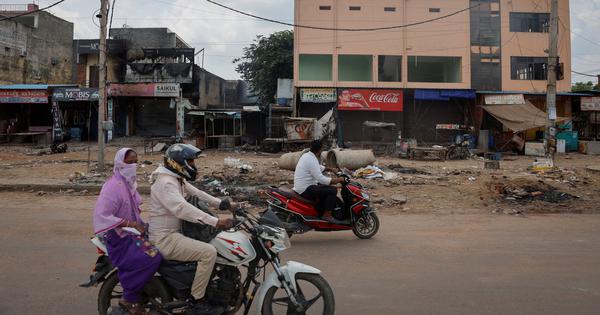
The article says some groups in India are telling people not to buy from or work with Muslims.
These campaigns have targeted many kinds of workers, including shopkeepers, drivers, barbers and street sellers.
Some calls also tell landlords not to rent homes or stores to Muslims.
The author says this can take away people’s jobs and push them out of communities.
Supporters of the boycotts sometimes say they are defending religion or responding to violence.
Critics say punishing an entire religious group is unfair and violates people’s rights.
The article describes examples from several Indian states.
It also says some Hindu customers and employers continue buying from or working with Muslims despite the boycott calls.
The author argues that this quiet cooperation offers hope against discrimination.

Harsh Mander argues that organized boycott campaigns seek to economically exclude Muslims from Indian society.
The article links current calls to earlier campaigns, including post-2002 violence in Gujarat and more recent actions in Karnataka, Madhya Pradesh and Haryana.
Reported targets have included Muslim shopkeepers, traders, hawkers, workers, landlords, artisans and businesses near Hindu temples.
In Khargone, messages reportedly listed 40 Muslim-owned shops, while 91 shop registrations were cancelled in Dharchula after allegations involving a Muslim trader.
Civil-rights advocates describe the campaigns as structural violence and unconstitutional, while supporters frame them as protecting religious sentiments, community interests or public order.
- Who
- Hindutva groups, political and religious figures, Muslim businesses and workers, civil-rights advocates, and residents are involved.
- What
- Calls and actions seek to economically or socially boycott Muslims and Muslim-owned businesses in several parts of India.
- Where
- Reported examples come from Gujarat, Karnataka, Madhya Pradesh, Haryana, Uttarakhand, Chhattisgarh, Assam and other parts of India.
- When
- The article traces such calls from the 1930s through the 2002 Gujarat violence and incidents reported from 2021 to 2023.
- Why
- Boycott advocates have cited religious concerns, alleged communal violence, public order and protecting Hindu interests; critics characterize the campaigns as anti-Muslim exclusion.
Critics of Economic Boycotts
Boycott Supporters
Purpose and consequences
Critics of Economic Boycotts
Harsh Mander, the People's Union for Civil Liberties and Shahrukh Alam say the campaigns are discriminatory, threaten Muslim livelihoods and represent structural violence or majority tyranny.
Boycott Supporters
Supporters described in the article say boycotts can protect Hindu interests, defend religious sentiments, stop alleged unrest or pressure Muslims to change their behavior or beliefs.
Treatment of entire communities
Critics of Economic Boycotts
Critics argue that punishing Muslim traders and workers collectively for alleged individual acts is unjust and conflicts with constitutional rights.
Boycott Supporters
Some local organizers and associations endorsed broad restrictions, including excluding Muslim traders, workers and businesses from particular villages, cities or temple areas.
Boycotts as a political tool
Critics of Economic Boycotts
The author argues that repeated calls amplify anti-Muslim hate and could produce widespread exclusion, while noting that some Hindus quietly resist them.
Boycott Supporters
The article reports that some organizers presented boycotts as necessary to save the country, preserve Hindu identity or make India a Hindu Rashtra.
Key facts
- Author
- Harsh Mander, a writer and peace and justice worker
- Historical reference
- The article says calls for economic boycotts of Muslims date back to the 1930s.
- Gujarat aftermath
- About two lakh Muslims were reported to have lived in relief camps for months after the 2002 carnage.
- Khargone
- Messages reportedly listed 40 Muslim-run shops for boycott after communal violence in 2022.
- Dharchula
- A traders’ association cancelled the registrations of 91 shops owned mainly by Muslim traders.
- Haryana
- More than 50 village panchayats in three districts reportedly issued statements barring Muslim traders.
- Civil-rights response
- The People's Union for Civil Liberties and lawyer Shahrukh Alam called for action against boycott campaigns.
Quotes
Suresh Chavhanke
Editor of Sudarshan News
“somehow presume that Muslims have a lesser right to this country, and thus they can be ordered out of towns and districts. Moreover, such demands violate the integrity and security of the Indian nation. They are violative of guaranteed fundamental rights in the Indian Constitution”
 scroll.in
“Put this in your head, from today, if you buy anything, buy it from a Hindu person not from these traitors [Muslims]. If the 100 crore Hindus living in India follow this ideology, the remaining 25 crore [referring to Muslims] will definitely want to convert into Hinduism.”
scroll.in
Sources
Related news
Gurugram's Friday Namaz Restricted to Six Sites Amid Majoritarian Politics
Bhagwat’s New York Speech Sparks Debate Over Hindutva
Justice For All Opposes Mohan Bhagwat’s Planned Western Tour
Hate, Islamophobia and a Bounty: Why Was Bhardwaj ‘Swatantra’?
Maharajganj Customers Reject Rahul Gandhi’s Separate Cups Claim

Cleric Criticizes Mamdani’s Opposition to RSS Chief’s Event
Haryana Voter Rolls Reveal Legacy of Unwanted Daughter Names
Delhi, Mumbai Set for More Rain, Heavy Showers Elsewhere
Haryana Government Transfers 29 IPS Officers and One HPS Officer
Punjab, Haryana Temples Celebrate Janmashtami With Krishna Chants