

3 weeks ago
Gurugram's Friday Namaz Restricted to Six Sites Amid Majoritarian Politics
Gurugram is a big city in India, near the capital Delhi.
Many people moved there from villages to work in offices, shops and construction sites.
Some of these workers are Muslims, but there are only a few small mosques in the city.
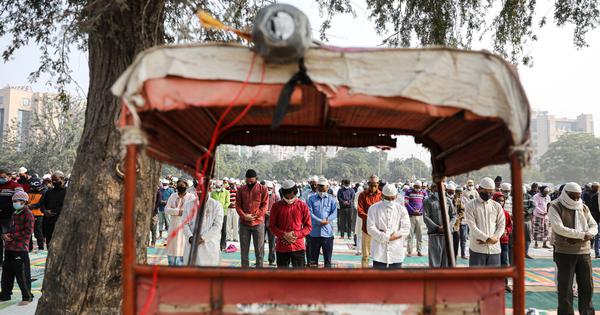
Because the mosques were too small, Muslims prayed outside in open places every Friday.
Starting in 2018, some groups protested and tried to stop these outdoor prayers.
The city now only allows Muslims to pray in six open places, instead of the 150 they used before.
It is hard for many poor workers to travel that far during their short lunch breaks.
The government says Muslims should pray in mosques, but no new mosques have been built.
Some kind people, like a shop owner and five Sikh gurudwaras, offered their own places for prayer.

Since 2018, Hindutva groups under the Hindu Sanyukt Sangharsh Samiti have blocked Muslim Friday prayers held in open spaces across Gurugram.
Negotiations with the district administration reduced open-air prayer sites from about 150 to roughly 30 and then to just six.
The government has not permitted the construction of any new mosque, while land was allotted for 22 temples, 20 churches and nine gurudwaras.
An estimated 19 pre-1947 mosques remain under occupation and are used for purposes such as storage, leaving only 13 mosques for worship.
Acts of solidarity included a businessman opening his shop floor and five Sikh gurudwaras offering space for Friday prayers.
- Who
- Muslim residents and migrant workers in Gurugram, Hindutva groups under the Hindu Sanyukt Sangharsh Samiti, and the Haryana administration led by Chief Minister Manohar Lal Khattar.
- What
- Muslim Friday congregational prayers held in open spaces were disrupted and restricted from about 150 sites to just six permitted locations.
- Where
- Gurugram (formerly Gurgaon) in Haryana, India.
- When
- Organised protests began in 2018 and the restrictions remained in place as of the article's writing.
- Why
- Hindutva organisations opposed open-air namaz, alleging illegal occupation of land and security threats, while the administration declined to permit new mosques.
Muslim worshippers and rights advocates
Hindutva protesters and state administration
Open-air Friday prayers
Muslim worshippers and rights advocates
Muslims have a constitutional right to worship; open-air prayer is a necessity because too few mosques exist and no new ones are permitted. The sites are ordinary open grounds, not prime public parks being hijacked.
Hindutva protesters and state administration
Open-air namaz amounts to illegal occupation of government land described as 'land jihad' tied to an international conspiracy, and creates fear among residents; Muslims should pray inside mosques.
Role of police and administration
Muslim worshippers and rights advocates
The administration failed to act against disrupters, asked worshippers to disperse, filed an FIR against Muslim leaders, and cut prayer sites under pressure instead of upholding fundamental rights.
Hindutva protesters and state administration
Weekly road blockages disrupt the economy and cannot be allowed constitutionally; the administration held negotiations and maintains status quo on government land, with the chief minister saying namaz should be offered in mosques or Idgahs.
Tactics and conduct of the protesters
Muslim worshippers and rights advocates
Protesters used degrading methods such as throwing cow dung, shouting slogans and playing cricket on prayer grounds; worshippers showed restraint and no retaliatory violence was reported.
Hindutva protesters and state administration
Residents said unknown people coming for namaz created fear in their neighbourhoods and worried about theft and crime, describing the agitators as patriots.
Key facts
- City
- Gurugram (formerly Gurgaon), Haryana, India
- Muslim share of population (2011 census)
- 4.5%
- Open-air prayer sites before 2018
- About 150
- Permitted prayer sites at time of writing
- 6
- Old mosques under occupation
- 19
- Mosques available for worship
- 13
- HUDA land allotments to other faiths
- 22 temples, 20 churches, 9 gurudwaras
- Year of renaming
- 2016
Quotes
Shehzad Khan, imam of the local mosque
Muslim religious leader speaking during a Friday prayer
“"Muslims are as much citizens of India as Hindus. Our forefathers have also sacrificed for this country."”
 scroll.in
“"I will not stop my fight until this becomes illegal."”
scroll.in
Sources
Related news
Mamdani Opposes Bhagwat’s New York RSS Event, Citing Exclusion

Noon Briefing Covers Gurugram Floods, Census Changes, Technology and More
Justice For All Opposes Mohan Bhagwat’s Planned Western Tour

Dhar Bandh Over Bhojshala Prayer Site Dispute
Yogi Adityanath Inaugurates 194 Projects, Attacks Samajwadi Party Rule

DLF, Old Gurugram Homeowners Protest Bulldozer Action, Seek Regularisation

Congress Questions Haryana’s Falling Sex Ratio Despite Beti Bachao
Haryana Says Ayushman Bharat Health Services Continue Despite IMA Call

Private Hospitals Flag Ayushman Bharat Payment Delays and Claim Deductions

Haryana Records Highest SGST Growth Among States in 2026-27
Haryana sanitation workers’ strike puts BJP government under pressure