1 week ago
How British Transformation Secularized India’s Spiritual Snakes and Ladders
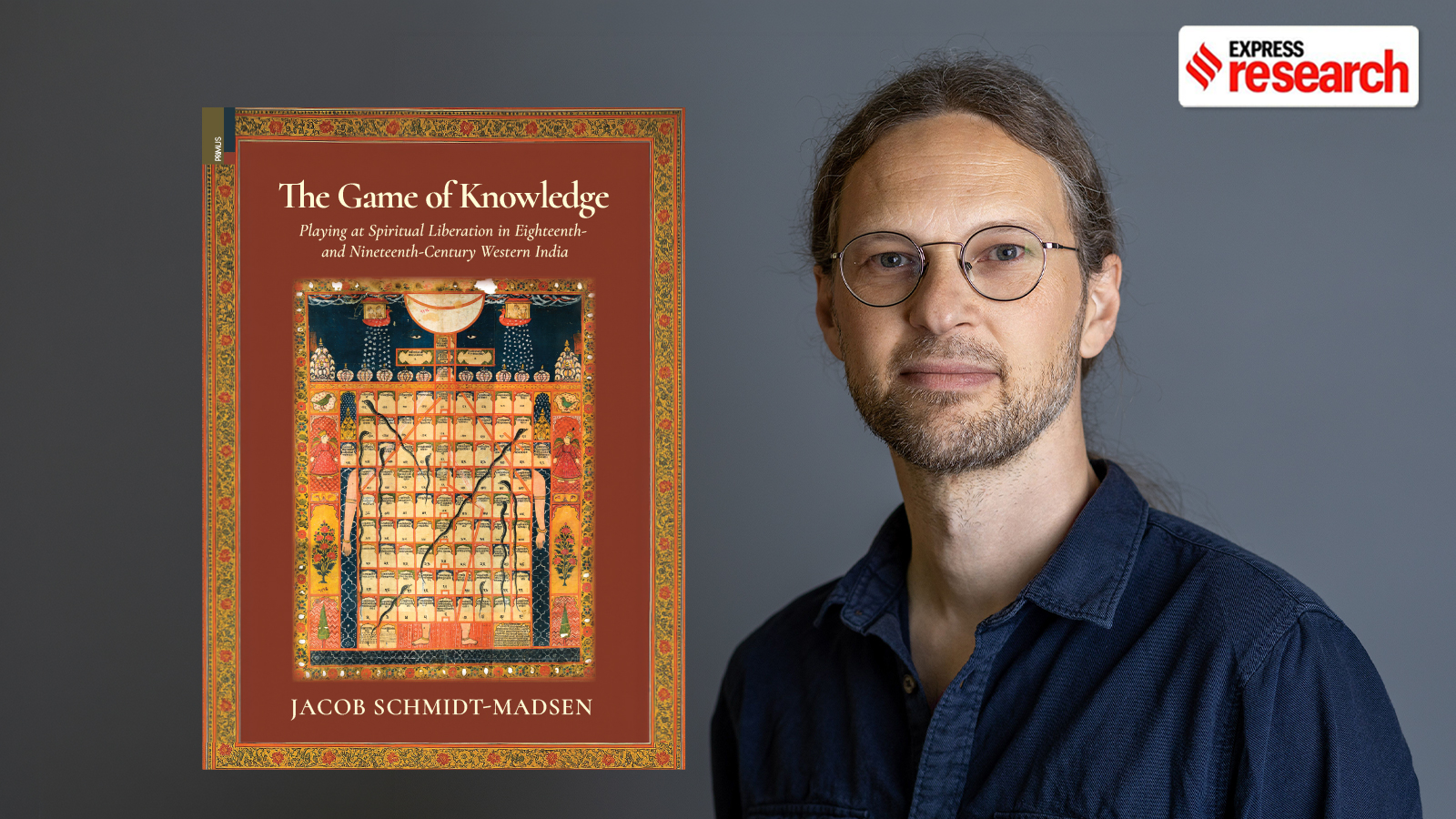
Long ago, people in India played a game called Gyan Chaupar.
Its board was covered with ideas about religion, the universe, and how people could reach spiritual freedom.
Players moved pieces along a path that represented the cycle of rebirth.
Snakes pulled players backward, while ladders helped them move forward.
British game makers later brought the game to Europe and kept the snakes and ladders but removed most of the religious writing.
They added lessons about good and bad behavior in Victorian society.
The simpler game was eventually sold back in India.
This story shows how games can travel between cultures and change along the way.

Gyan Chaupar, an Indian precursor to Snakes and Ladders, used religiously inscribed boards to depict spiritual liberation.
Vaishnava, Jaina, Sufi, Shaiva, and other communities created boards reflecting their distinct religious worldviews.
The game’s track symbolized rebirth, while dice, snakes, and ladders represented fate and karmic forces.
British manufacturers adopted the snakes-and-ladders imagery in the late 19th century and replaced religious symbolism with secular and Victorian moral lessons.
Snakes and Ladders and Ludo later became popular in India, contributing to the decline of Gyan Chaupar and other traditional games.
- Who
- Jacob Schmidt-Madsen, British game manufacturers, and religious communities in India are central to the account.
- What
- Gyan Chaupar was adapted into the secular game now known as Snakes and Ladders.
- Where
- The game originated in western India, spread to West Asia and Europe, and was later marketed in India.
- When
- Gyan Chaupar existed in India for several hundred years; British adaptations appeared in the late 19th century, including an untitled 1892 game.
- Why
- British manufacturers adopted the visually recognizable snakes and ladders, while simpler commercial versions later outcompeted traditional Indian games.
Cultural Exchange
Colonial Appropriation
How the transformation should be understood
Cultural Exchange
Games have crossed borders and adopted new forms for millennia, so the British adaptation can be viewed as part of a broader process of cultural exchange.
Colonial Appropriation
The adaptation occurred within a British trading network that weakened local competition and brought commercial versions back to India to displace their predecessors.
What changed in Europe
Cultural Exchange
British manufacturers made the game easier to understand by emphasizing its visual mechanics rather than requiring players to read religious inscriptions.
Colonial Appropriation
The European versions removed the religious framework of Gyan Chaupar and replaced spiritual teachings with Victorian moral and social lessons.
Key facts
- Original name
- Gyan Chaupar, meaning The Game of Knowledge
- Vaishnava board
- The standard Vaishnava Bhakti board has 72 squares arranged in eight rows and nine columns.
- Religious symbolism
- Boards represented creation, the organization of the universe, religious practice, and paths toward liberation.
- Game mechanics
- Players moved pawns along a one-way track using dice, with snakes sending them backward and ladders moving them forward.
- European adaptation
- The earliest cited British example is an untitled game from 1892.
- Victorian version
- Later British versions replaced spiritual-liberation teachings with lessons about social success, status, wealth, and morality.
- Indian market
- Snakes and Ladders and Ludo eventually overtook Gyan Chaupar and Chaupar in popularity, though the exact re-export date is unclear.
Quotes
Jacob Schmidt-Madsen
Cultural historian and postdoctoral researcher at the Max Planck Institute for the History of Science
“If you go to Nepal, for example, there are no ladders, only good snakes and bad snakes. And in West Asia, there are often arrows instead of ladders, and sometimes chains instead of snakes.”
 indianexpress.com
“The board represented an entire universe. And each square on the board represented an element of that universe, such as a principle of creation or a realm of existence.”
indianexpress.com
Sources
Related news

Denmark’s Indian Empire Helped Shape the Story of L&T

How Foreign Rule and Institutions Reshaped Bharatiya Cultural Life

Angmo Urges Government to Treat Education Protests as Wake-Up Call

How Indigenous Sacred Traditions Endure Across the North East

Sant Sansad at Iver: Guru, not Google, connects inner self
History and Culture Quiz Tests Five UPSC Topics

Pankaj Tripathi Performances to Watch Before Mirzapur The Movie

Gujarat Man Attacks Friend With Knife Over Ludo Winnings

Shah Rukh Khan Celebrates Netflix's 10 Years in India

Board Games as Therapeutic Tools for Mental, Emotional, and Physical Well-being