

0 months ago
Pentagon bets big on laser weapons as drone defence
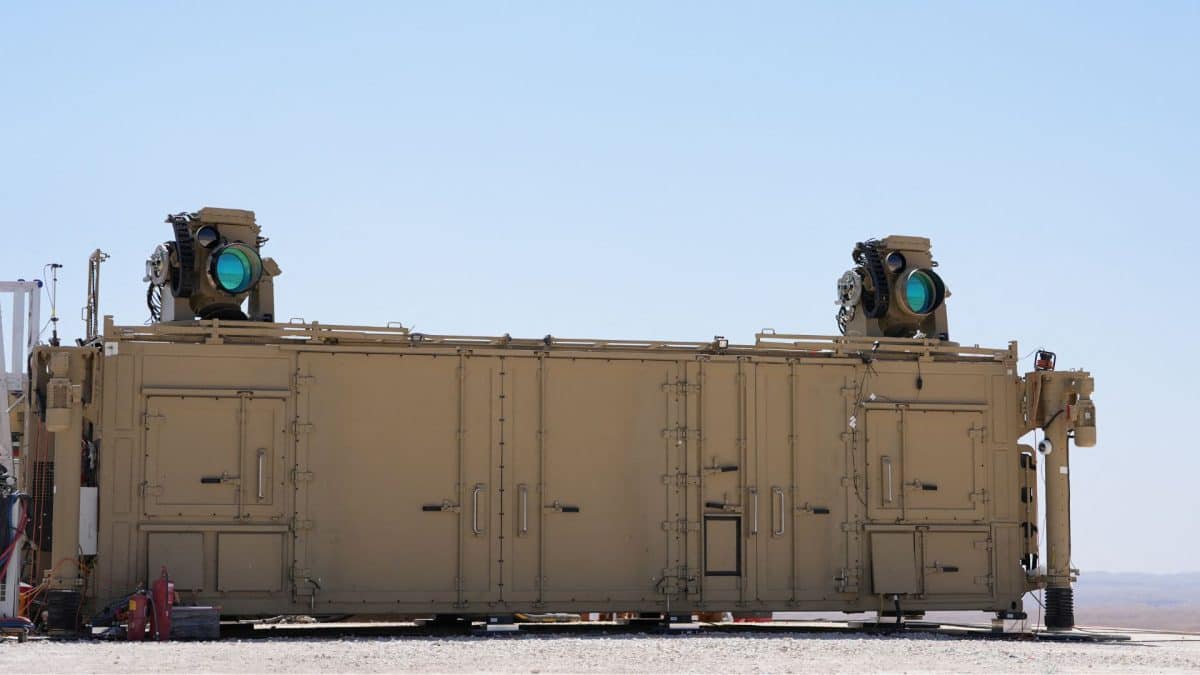
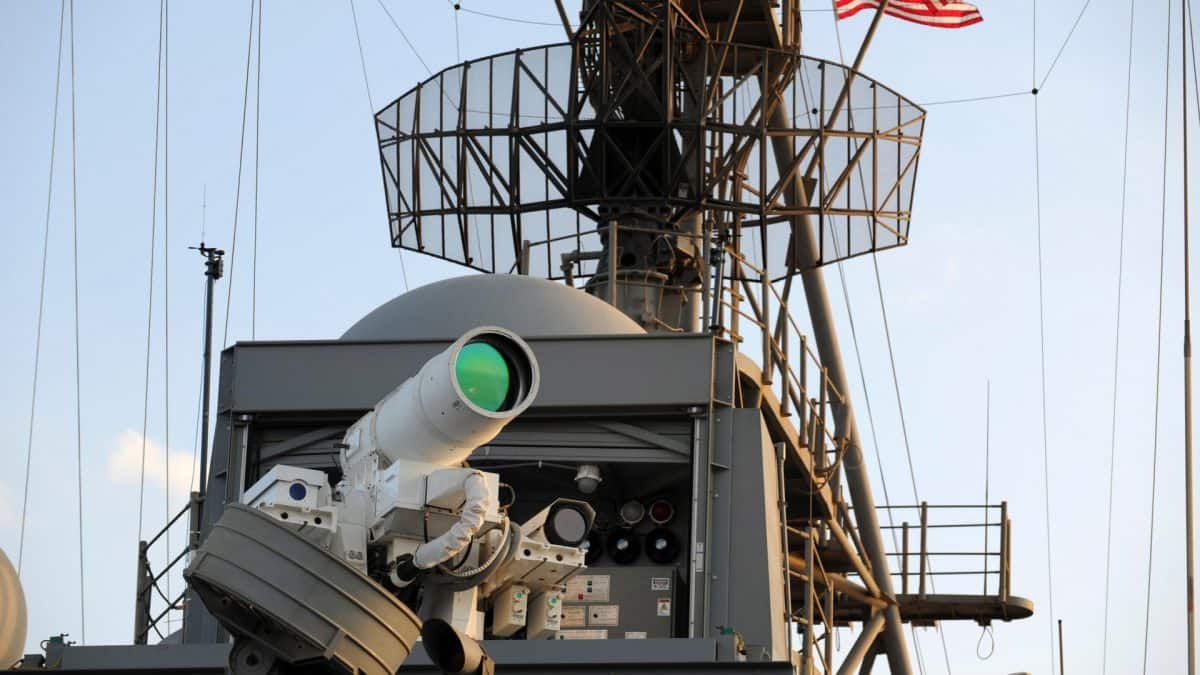
The Pentagon, which is the part of the US government that runs the military, has decided to start building and using laser weapons for real.
A laser is a very strong, focused beam of light that can burn or melt things from far away.
The military used to shoot down enemy drones with giant missiles, but those missiles can cost millions of dollars.
Enemy drones can cost as little as a few hundred dollars, so the military was spending way too much money.
Lasers are much cheaper to use because firing one only costs a few dollars' worth of electricity.
The US Army plans to buy up to 24 laser systems, and the US Air Force has already put laser weapons on bases in Europe.
These lasers fire at the speed of light and can melt a drone's parts or fry its electronic brain.
Lasers cannot work well in thick fog or heavy rain, so the military will still keep missiles and other weapons as backups.
Big companies like Boeing, Lockheed Martin, and Raytheon will build these new laser weapons.

The Pentagon is making high-energy laser weapons a permanent, mass-procured element of the US combat arsenal through the Enduring High Energy Laser (EHEL) programme.
The US Army plans to procure up to 24 standardised EHEL systems rated at roughly 30-50 kW for short-range point defence.
On August 4, the US Air Force operationally fielded Boeing's Compact Laser Weapon System (CLWS) at undisclosed air bases in Europe.
The shift is driven by cost asymmetry: firing $1 million to $4 million missiles at drones costing $500 to $35,000 is financially unsustainable.
The Pentagon has made $86 million in initial awards under an $847 million ceiling for the Joint Laser Weapon System (JLWS) to nLIGHT Defense and Lockheed Martin Aculight.
- Who
- The Pentagon, including the US Army, US Air Force, and US Navy, working with defence contractors Boeing, Lockheed Martin, Raytheon (RTX), and nLIGHT Defense.
- What
- The US Department of Defence is transitioning high-energy laser weapons from experimental prototypes to permanent, mass-produced combat systems, via the EHEL contract, the CLWS deployment in Europe, and the JLWS programme.
- Where
- Europe - at undisclosed, highly sensitive air base installations; the article also cites drone activity affecting the Red Sea, West Asia, and Eastern Europe.
- When
- Reports were confirmed on Tuesday (August 4), with CLWS fielded on August 4 following operational assessments completed in late July.
- Why
- To counter the cost asymmetry of air defence, where cheap drones ($500-$35,000) are engaged by multi-million-dollar missiles, and to respond to hundreds of unauthorised drone incursions near NATO installations.
Key facts
- Programme
- Enduring High Energy Laser (EHEL)
- US Army procurement target
- Up to 24 standardised EHEL systems
- EHEL power output
- Approximately 30-50 kW, scalable higher
- CLWS deployment
- USAFE-AFAFRICA fielded Boeing's system in Europe on August 4
- JLWS contract
- $86 million initial awards under an $847 million ceiling
- JLWS awardees
- nLIGHT Defense and Lockheed Martin Aculight
- Cost asymmetry
- $1M-$4M missiles vs drones costing $500-$35,000
- Deployment trigger
- Hundreds of unauthorised drone incursions near NATO installations over 24 months
Sources
Related news

China Mass Produces AI Laser Mosquito Killer

US Plans Year-Long Test of Laser and Microwave Drone Weapons
Why the US is betting big on laser weapons
India Turns to Britain’s Low-Cost Martlet Missile for Drones

Pakistan's China-backed western build-up, Saudi-Turkey pact, India's air shield

Ikea cuts European prices as cost pressures weaken demand

Europe's Bond Selloff Deepens as Middle East Tensions Lift Oil

China’s Rapid Car Development Faces Growing Safety Scrutiny

CNG Prices Rise Rs 2 per Kilogram in Pune

China Challenges US Leadership in Escalating Global AI Contest
