1 week ago
China Mass Produces AI Laser Mosquito Killer
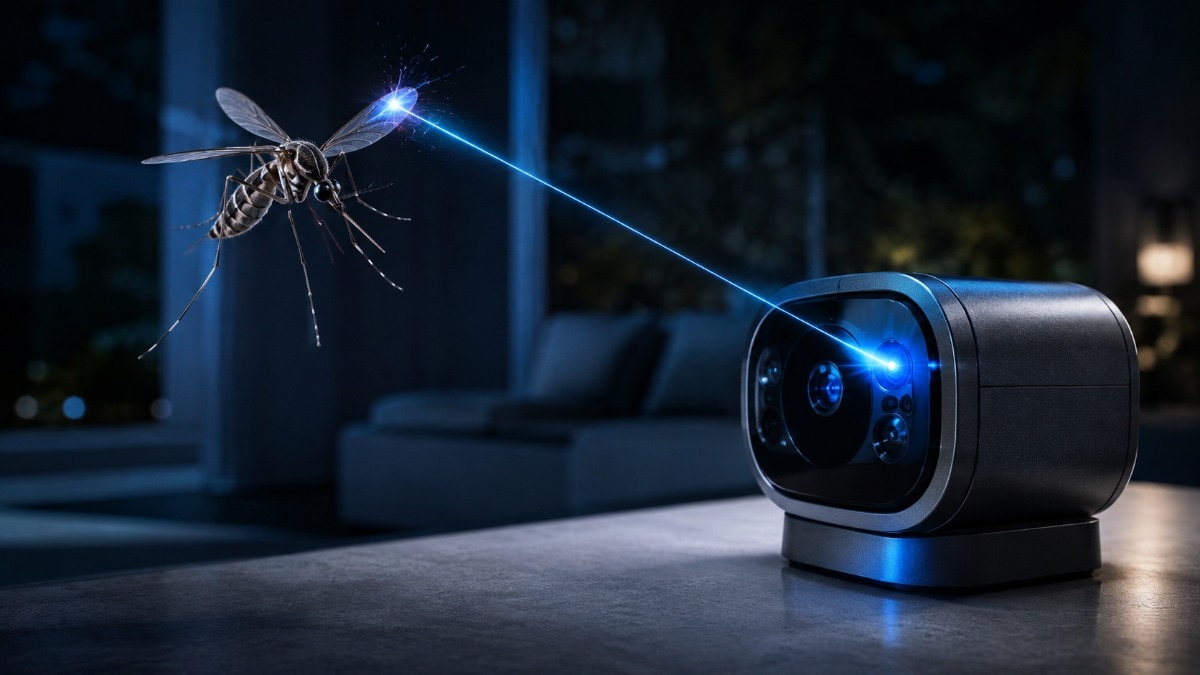
A Chinese company called Photon Matrix is making a device that can find mosquitoes in the air.
It uses sensors and artificial intelligence to decide whether something flying is an insect.
A laser then aims at the mosquito’s wings.
The short laser pulse can damage the wings and make the mosquito fall.
The device comes in infrared and blue-laser versions.
It scans a wide area in front of it.
The idea is somewhat like military systems that find and stop drones, although those weapons are much more powerful.
Several countries are developing larger lasers to fight drones and other flying threats.

Photon Matrix began mass production of its laser mosquito-killing system in August 2026 and opened an official web store.
The device uses LiDAR, millimeter-wave radar and AI vision to identify and track small flying targets.
Available in infrared and blue-laser versions, it uses a galvo-controlled laser to target mosquito wings and disable them.
The portable system scans about 90 degrees horizontally and fires short laser pulses at qualifying insects.
The technology mirrors the detect-track-aim sequence used by military laser systems being developed by China and other countries.
- Who
- Photon Matrix developed the mosquito-killing system; China and several other countries are developing larger laser weapons.
- What
- A portable, sensor-guided laser system that identifies and disables mosquitoes in flight began mass production.
- Where
- The mosquito system is associated with China and is offered through Photon Matrix’s official web store; military systems are being developed in multiple countries.
- When
- Mass production reportedly began in August 2026; the article also cites military-system developments from 2024, 2025 and 2026.
- Why
- The consumer system is intended to kill mosquitoes, while military laser systems are being developed as alternatives to conventional defenses against drones and other aerial threats.
Key facts
- Manufacturer
- Photon Matrix
- Production start
- August 2026
- Versions
- Infrared and blue-laser
- Detection technologies
- LiDAR, millimeter-wave radar and AI vision
- Scanning area
- Approximately 90-degree horizontal plane
- Targeting method
- A galvanometer-controlled laser fires a short pulse, typically at an insect’s wings
- Military comparison
- High-energy laser systems can use tens to hundreds of kilowatts against drones, rockets and missiles
Sources
Related news

China’s Laser Mosquito Killer Enters Mass Production for August Shipments
Pentagon bets big on laser weapons as drone defence

US Plans Year-Long Test of Laser and Microwave Drone Weapons
India Turns to Britain’s Low-Cost Martlet Missile for Drones