

3 hrs ago
Merz Faces Fresh Setbacks After CDU Suffers Two Regional Defeats
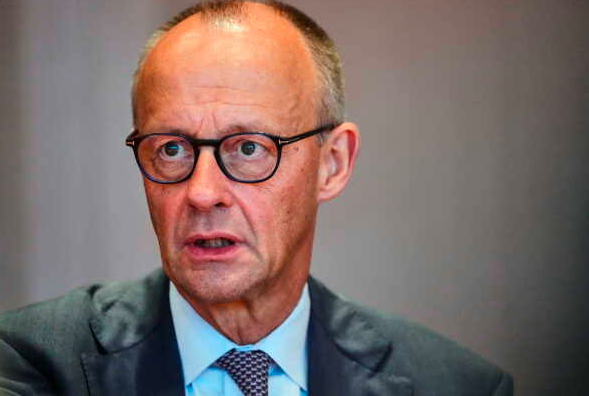
Friedrich Merz is Germany’s chancellor and leads the Christian Democratic Union.
His party performed poorly in two regional elections.
In Mecklenburg-Western Pomerania, it received less than 5% of the vote and lost its seats in the state parliament.
This was the first time that had happened to the party in modern Germany’s federal republic.
In Berlin, the CDU came second behind the Left Party.
The Alternative for Germany was the strongest party in Mecklenburg-Western Pomerania, while the Social Democrats finished close behind.
Merz said the results were a disaster but promised to continue working.
His government wants to change pensions, reduce bureaucracy, and cut some taxes.

The Christian Democratic Union fell below the 5% threshold in Mecklenburg-Western Pomerania and lost all seats there.
The CDU finished second behind the Left Party in Berlin’s regional election.
The Alternative for Germany emerged as the strongest party in Mecklenburg-Western Pomerania, with the Social Democrats close behind.
Friedrich Merz called the Mecklenburg-Western Pomerania result a “disaster” but vowed to remain in office and pursue reforms.
Merz’s reform agenda includes pension changes, bureaucracy reductions, and income-tax cuts for low- and middle-income families.
- Who
- German Chancellor Friedrich Merz, his Christian Democratic Union, the Alternative for Germany, the Social Democrats, and the Left Party were central to the results.
- What
- The CDU suffered defeats in regional elections, including falling below the parliamentary threshold in Mecklenburg-Western Pomerania and finishing second in Berlin.
- Where
- Berlin and Mecklenburg-Western Pomerania, Germany.
- When
- The elections were held on Sunday, with their political consequences discussed on Monday; five state elections are scheduled for next year.
- Why
- The results increased pressure on Merz, while regional campaigning, opposition to federal reforms, and polarization between the AfD and Social Democrats affected the vote.
Federal Reform Supporters
State-Level Critics and Concerned Voters
Economic reforms
Federal Reform Supporters
Federal governing parties say reforms are necessary to strengthen Germany’s sluggish economy, including changes to pensions and bureaucracy.
State-Level Critics and Concerned Voters
State-level politicians, including Manuela Schwesig and others in governing parties, have questioned aspects of the federal agenda, while Matthias Miersch said people’s concerns must be taken seriously.
Response to the AfD
Federal Reform Supporters
The Social Democrats campaigned around Manuela Schwesig as a bulwark against the far-right Alternative for Germany.
State-Level Critics and Concerned Voters
The resulting polarization helped squeeze other mainstream parties, including the CDU, and the AfD became the strongest party in Mecklenburg-Western Pomerania.
Key facts
- Mecklenburg-Western Pomerania result
- The CDU fell just below the 5% threshold and lost its seats in the regional parliament.
- Berlin result
- The CDU came second behind the Left Party.
- Strongest party in Mecklenburg-Western Pomerania
- The Alternative for Germany emerged as the largest party.
- Merz’s response
- He called the result a “disaster” but said he would remain in office and continue reforms.
- Federal reform agenda
- Plans include pension-system changes, bureaucracy reductions, and income-tax cuts for low- and middle-income families.
- Upcoming elections
- Five state elections are scheduled for next year, including one in North Rhine-Westphalia.
Quotes

Matthias Miersch
Head of the Social Democrats' group in Germany's national parliament
“we must also take people's concerns seriously.”
 deccanchronicle.com
“we need reforms。”
deccanchronicle.com
Sources
Related news
AfD Leads German State Vote as Merz Conservatives Routed

Merz Gains Brief Relief as AfD Advances in Germany
Merz Calls CDU Defeat in Saxony-Anhalt Most Severe Yet
German State Elections Put Merz Under Pressure as AfD Rises
AfD Victory Puts Merz’s German Reform Agenda Under Pressure

Germany Struggles to Counter AfD as Party Reaches New High
German Police Investigate Fresh Suspected Power Grid Sabotage
EU Backs Germany, Signals Russia Sanctions After Leipzig Drone Attack
Germany Investigates Two Power Grid Sabotage Attacks Amid Russia Fears
Wildfire forces evacuation of over 2,000 in western Germany