

2 hrs ago
Germany Struggles to Counter AfD as Party Reaches New High

Germany’s AfD party has become more popular than ever in recent polling.
It is receiving just under 30% support, about twice its share in 2023.
The party is leading in two states that are holding elections.
It is also one of the strongest parties in Berlin.
In Saxony-Anhalt, it might win enough seats to govern alone.
Chancellor Friedrich Merz’s CDU/CSU is in second place nationally with about 20%.
The SPD, another major party, has fallen to about 12%.
The article says voters have turned away from the traditional parties after controversial decisions about migration, pandemic rules, energy and cars.

The AfD is polling just below 30%, its highest level and double its 2023 share.
The party leads in two of three election states and is among the front-runners in Berlin.
The AfD may win an absolute majority in Saxony-Anhalt’s state parliament.
Chancellor Friedrich Merz’s CDU/CSU is polling nationally at around 20%, while the SPD is at 12%.
The traditionally dominant parties have been weakened by controversies over migration, pandemic restrictions, nuclear power and car policy.
- Who
- The AfD, the CDU/CSU led by Chancellor Friedrich Merz, and the SPD.
- What
- The AfD is gaining support while Germany’s traditional governing parties are losing ground.
- Where
- Germany, including Berlin and the election states of Saxony-Anhalt and two other unnamed states.
- When
- Current polling, compared with the AfD’s 2023 support; some cited policies date to 2015–16 and the COVID-19 pandemic.
- Why
- The article links the traditional parties’ decline to controversy over migration, civil-liberties restrictions, nuclear power and European car regulations.
Key facts
- AfD national polling
- Just below 30%
- AfD comparison
- About double its share in 2023
- CDU/CSU national polling
- Around 20%
- SPD national polling
- 12%
- AfD state performance
- Leading in two of three election states and among the front-runners in Berlin
- Possible state outcome
- The AfD may win an absolute majority in Saxony-Anhalt’s state parliament
- Migration policy cited
- The opening of borders during the 2015–16 European migrant crisis
Sources
Related news

AfD Wins Historic Saxony-Anhalt Vote, Falls Short Majority

AfD Wins Historic Saxony-Anhalt Election, Challenging Germany’s Political Firewall

Merz Calls CDU Defeat in Saxony-Anhalt Most Severe Yet

AfD claims CDU lawmakers secretly support government bid in Germany

Germany’s AfD Seeks Historic Breakthrough in Saxony-Anhalt Vote

AfD Victory in Saxony-Anhalt Signals Major Shift for Germany
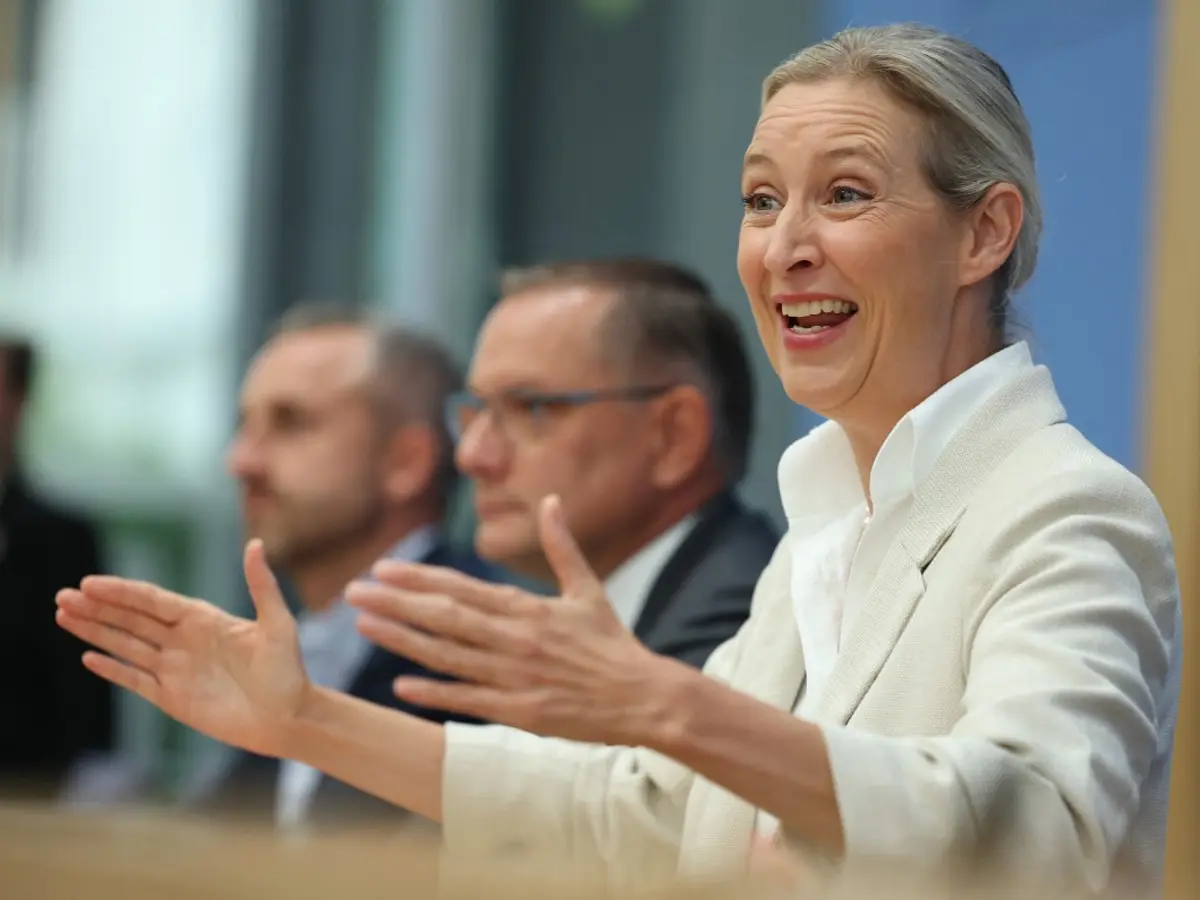
Who Is Alice Weidel, AfD Leader Driving Germany’s Far-Right Rise
AfD Victory Puts Merz’s German Reform Agenda Under Pressure