1 day ago
US Tariff Threat Endangers India’s Russian Oil Supply Lifeline
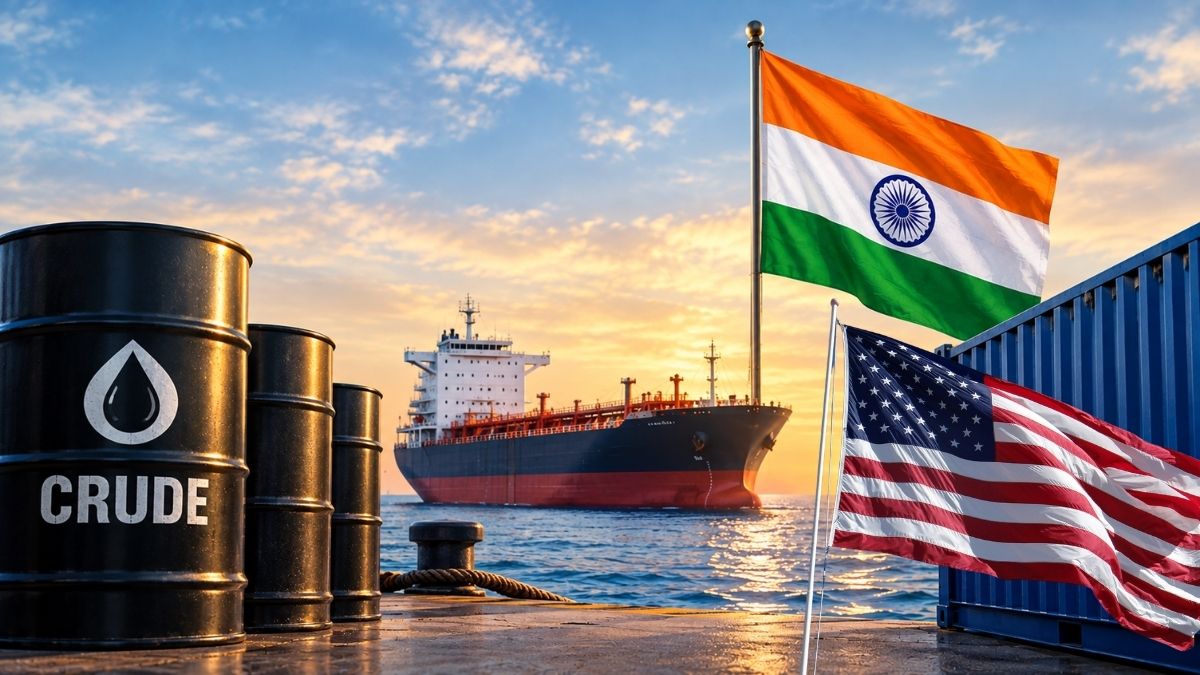
The United States may put very high tariffs on countries that buy Russian oil.
India buys a large amount of its oil from Russia.
This oil is cheaper and helps protect India when supplies from the Gulf region are disrupted.
Replacing all the Russian oil quickly would be difficult and expensive.
Some alternative shipments already cost between $130 and $140 per barrel.
One analyst said India imported about 2 million barrels of Russian oil per day in August.
Kpler estimated that Russian oil made up more than half of India’s crude imports in June and July, showing that estimates vary by period and source.
India says its energy security is important.
Analysts expect India to diversify its suppliers rather than completely replace Russian oil immediately.

US legislation would allow tariffs of up to 100% on major buyers of Russian energy.
India imported $28.32 billion of Russian crude through July in FY27, nearly 45% of its crude import bill.
Russian crude accounted for about 45% of India’s imports in August, according to one analyst; Kpler estimated more than 50% in June-July.
Replacing Russian supplies would be difficult as Gulf production is disrupted and alternative cargoes cost about $130-$140 per barrel.
Analysts expect India to seek diversified supplies, with Iraq, Saudi Arabia and the UAE among potential substitutes.
- Who
- India, the United States, Russia, Indian refiners and the proposed US tariff legislation’s major Russian-energy buyers.
- What
- US legislation would authorize tariffs of up to 100% on major buyers of Russian oil or gas, putting India’s Russian crude supplies at risk.
- Where
- The measure was passed in the United States, while its potential effects concern India’s crude imports and global oil markets.
- When
- The US House passed the legislation on September 16 after Senate approval in August; India’s crude basket reached $126.88 per barrel on September 16.
- Why
- The legislation is intended to pressure major purchasers of Russian energy, while India relies on Russian crude for energy security, cost and supply flexibility.
India’s Energy-Security Position
US Tariff-Pressure Position
Policy priority
India’s Energy-Security Position
India has indicated that national energy security comes first and that Russian crude remains an important, lower-cost supply hedge.
US Tariff-Pressure Position
The proposed US law would use tariffs of up to 100% to pressure major buyers of Russian oil or gas.
Effect on oil supplies
India’s Energy-Security Position
Indian refiners and analysts say rapidly replacing Russian crude would be difficult or potentially impossible at current volumes, especially amid Gulf disruptions.
US Tariff-Pressure Position
The legislation creates leverage for the United States to influence countries’ purchases of Russian energy, although the articles do not state that tariffs will definitely be imposed immediately.
Likely next steps
India’s Energy-Security Position
India is expected to favor diversification among suppliers while balancing energy security, crude quality and cost.
US Tariff-Pressure Position
Analyst Natalia Katona expects President Donald Trump may initially use the tariff threat as bargaining power in trade talks rather than implement it immediately.
Key facts
- Proposed tariff authority
- Up to 100% on the five largest buyers of Russian oil or gas.
- House vote
- The Lindsey O. Graham Sanctioning Russia and Iran Act passed 262-159 on September 16.
- India’s FY27 Russian crude imports
- $28.32 billion through July, compared with total crude imports of $63.32 billion.
- India’s FY26 Russian crude imports
- $40.823 billion, or 30% of total crude imports worth $134.71 billion.
- Russian crude estimates
- Natalia Katona estimated about 2 million barrels per day, or 45% of India’s August imports; Kpler estimated around 2.7 million barrels per day and more than 50% in June-July.
- Alternative cargo costs
- Physically delivered oil cargoes were reported at about $130-$140 per barrel.
- Potential substitutes
- Iraq, Saudi Arabia and the United Arab Emirates were identified as attractive alternatives, with Iraq’s medium-sour grades closest to Russian Urals.
Quotes
Natalia Katona
Abu Dhabi-based commodity analyst
“Replacing Russian crude at current volumes would be challenging or impossible. A rapid curtailment of Russian flows to India or Asia could therefore have implications well beyond trade patterns; it will further tighten balances and put upward pressure on prices.”
 financialexpress.com
“In the medium term, diversification rather than complete replacement is likely to remain India’s preferred strategy, balancing energy security, crude quality requirements, and commercial competitiveness.”
financialexpress.com
Sources
Related news
US Russia Sanctions Bill Puts India Under Tariff Pressure
India Warns US Russian Oil Tariffs Could Harm Ties
India Defends Russian Oil Purchases Amid US Tariff Threat
Trump Signs Russia Sanctions Law, Putting India Ties Under Pressure

Russian Envoy Warns Markets Cannot Cope Without Russian Oil
US Russia Sanctions Bill Raises India Tariff Risk
Houthis Report 26 Saudi Strikes Amid Yemen War

Iran War Drives Diesel Supply Losses Beyond Trump’s Claims

Record Shipping Costs Drive US Crude Flows Toward Asia

India’s Crude Basket Nears $130, Reviving Fiscal and Inflation Worries