2 weeks ago
Kaziranga Villagers Back Site-Specific Eco-Sensitive Zone Proposal Amid Livelihood Debate
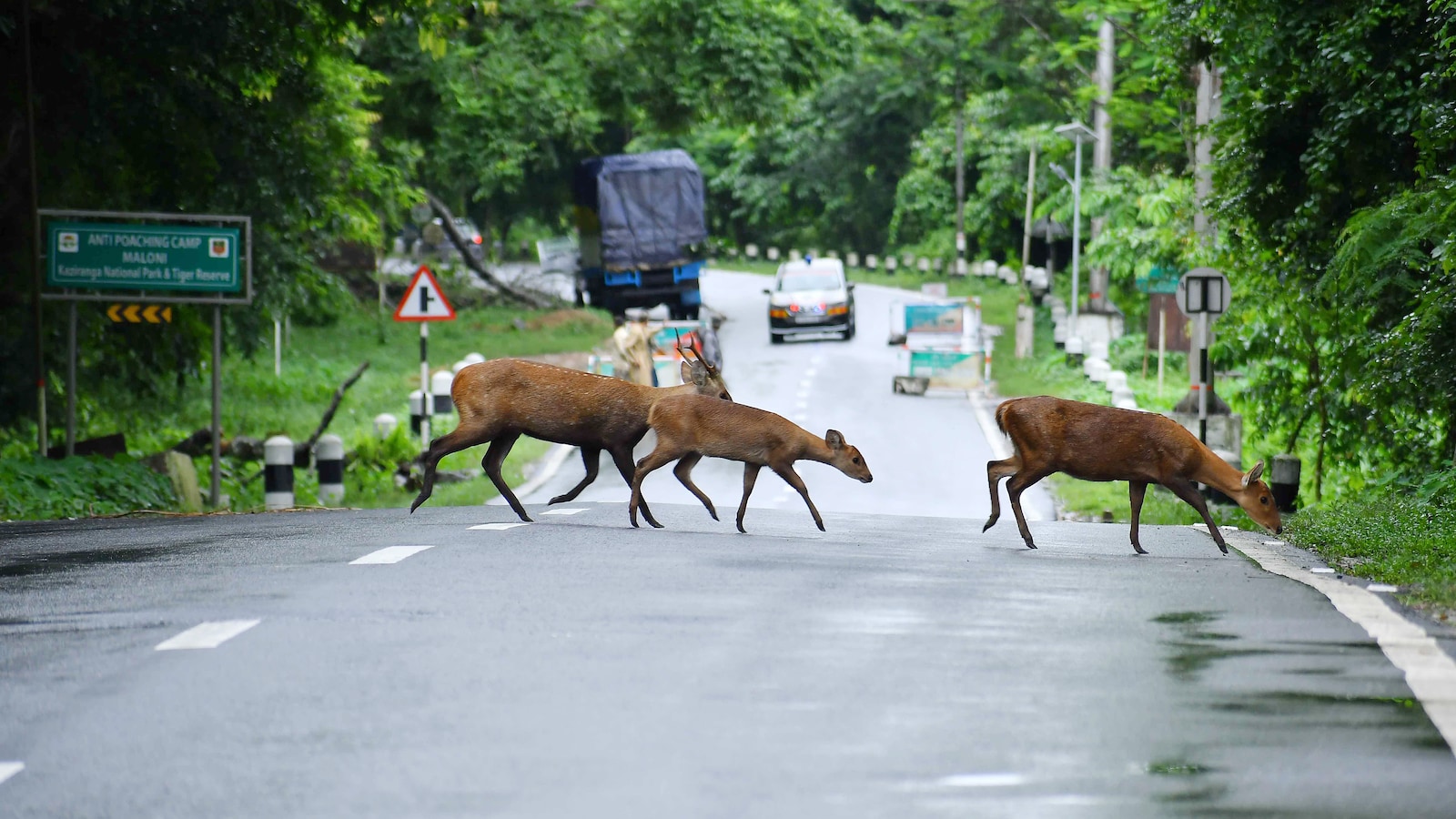
People living near Kaziranga National Park want the protected area around the park to be decided according to local conditions.
They say the same rule everywhere could make it harder to build homes, run businesses and earn a living.
Some villagers support reducing the zone from 10 kilometres to about one kilometre in some places.
They also say wildlife and people both need space.
Congress leader Gaurav Gogoi disagrees with the government’s proposal.
He says a smaller zone might put animal corridors and surrounding forests at risk.
Animals often move to higher areas near Karbi Anglong during floods.
Chief Minister Himanta Biswa Sarma says the government must protect Kaziranga without displacing local communities.
Courts and environmental authorities will determine the final boundary.

Villagers around Kaziranga support Assam’s site-specific Eco-Sensitive Zone proposal instead of a blanket 10-kilometre boundary.
Residents say wider restrictions could affect homes, land use, construction, businesses, tourism and livelihoods.
Congress leader Gaurav Gogoi says reducing the zone could weaken wildlife protection and benefit commercial or mining interests.
Chief Minister Himanta Biswa Sarma says conservation and the rights of communities living around Kaziranga must both be considered.
The final Eco-Sensitive Zone extent must follow the legal and environmental process, while the existing 10-kilometre protection remains disputed.
- Who
- Villagers around Kaziranga, the Assam government led by Himanta Biswa Sarma, Congress leader Gaurav Gogoi, conservation interests and the courts are involved.
- What
- They are disputing whether Kaziranga’s Eco-Sensitive Zone should follow a site-specific boundary or retain a wider 10-kilometre protection.
- Where
- In villages and surrounding areas of Kaziranga National Park in Assam, including the wider Kaziranga landscape and Karbi Anglong hills.
- When
- The dispute is ongoing; a March 2026 Gauhati High Court order noted that the 10-kilometre protection remained operative at that stage.
- Why
- The disagreement concerns the balance between wildlife protection, animal movement during floods, community livelihoods and possible commercial or mining activity.
Government and Local Community View
Congress and Wider-Conservation View
Size of the protected zone
Government and Local Community View
Villagers and the Assam government support a site-specific approach, arguing that populated and forested areas require different treatment and that a blanket 10-kilometre zone could harm livelihoods.
Congress and Wider-Conservation View
Gaurav Gogoi and conservation advocates argue that reducing the zone to one or two kilometres would not provide wildlife with sufficient protection.
Development versus conservation
Government and Local Community View
Residents and Chief Minister Himanta Biswa Sarma say communities should not be forced to choose between development and Kaziranga’s protection.
Congress and Wider-Conservation View
Gogoi alleges that the proposal prioritizes commercial interests and could facilitate mining and other activities in the wider Kaziranga landscape.
Impact on wildlife corridors
Government and Local Community View
The government says the actual effects of any wider zone should be assessed by examining the people, businesses and activities affected.
Congress and Wider-Conservation View
Congress argues that animals need surrounding areas and wildlife corridors, particularly higher ground used during floods.
Key facts
- Government proposal
- A site-specific Eco-Sensitive Zone whose extent would vary according to conditions in different parts of the Kaziranga landscape.
- Villagers’ concern
- A blanket 10-kilometre zone could restrict homes, construction, land use, small businesses, tourism and other livelihood activities.
- Suggested reduced boundary
- Madhur Mohanta said the government’s proposal would reduce the zone from 10 kilometres to 1 kilometre.
- Opposition position
- Gaurav Gogoi argues that a smaller zone could weaken protection for wildlife corridors and adjoining areas.
- Flood-related concern
- Animals move toward higher ground and nearby areas, including the Karbi Anglong hills, when Kaziranga floods.
- Legal position
- Supreme Court directions require at least a 1-kilometre zone where a wider zone has not already been legally prescribed.
- Current legal status
- The Gauhati High Court said in March 2026 that the 10-kilometre protection remained operative because a final ESZ had not been notified.
Quotes

Himanta Biswa Sarma
Chief Minister of Assam, defending the government’s stance
“"We welcome the government's decision to reduce the Eco‑Sensitive Zone around Kaziranga from 10 kilometres to 1 kilometre. This will help in the development of our villages and also create opportunities for tourists visiting Kaziranga to explore nearby villages, which can benefit local people and generate employment,"”
 NDTV
NDTV
“"The question is, if political pressure is created and the people living around Kaziranga are eventually displaced from the area, then who will take responsibility for the people of Kaziranga? That is the real issue,"”
NDTV
Sources
Related news
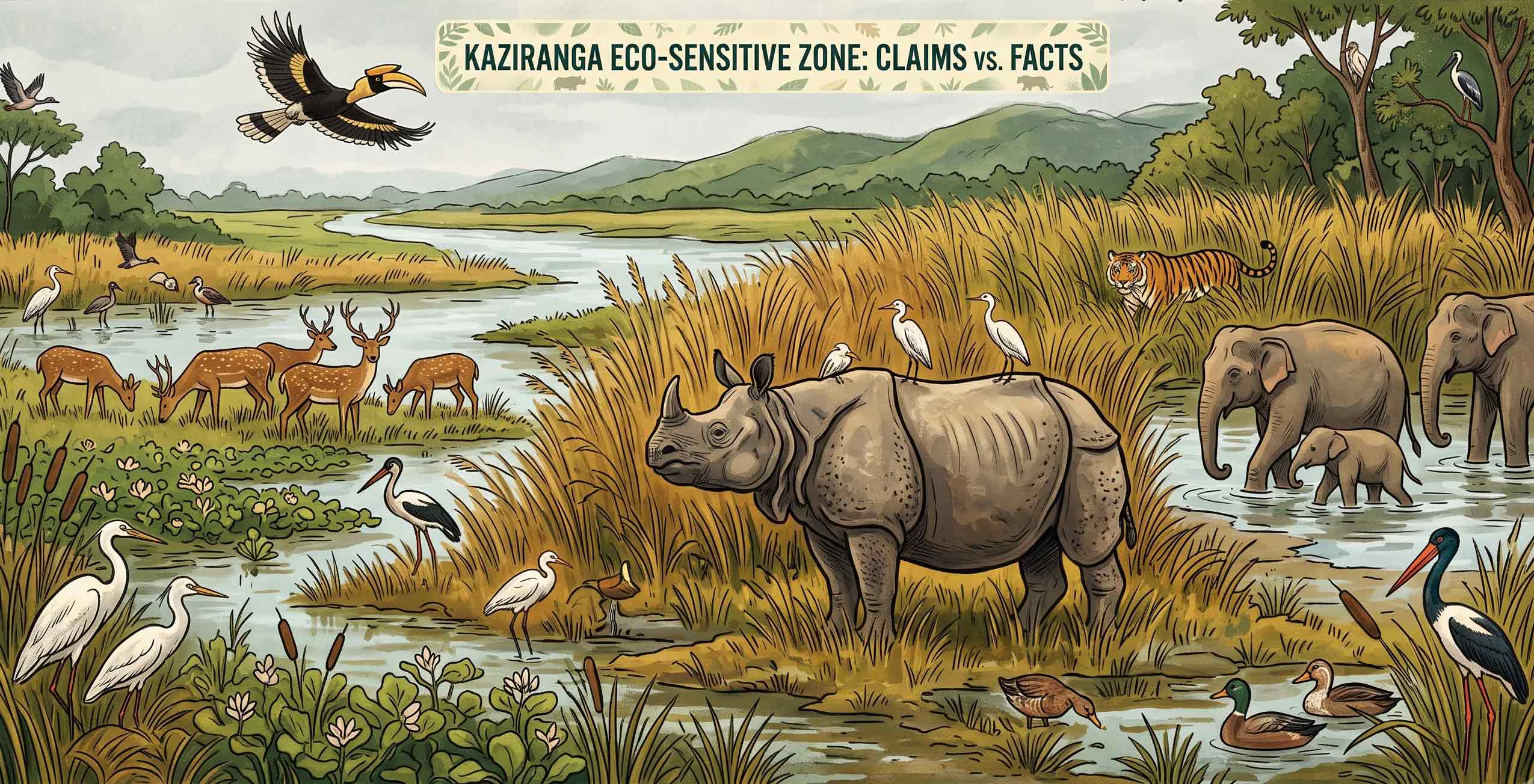
Assam's 1 km Kaziranga Eco-Sensitive Zone Plan Draws Criticism

Assam to seek 1-km eco-sensitive zone for Kaziranga from Centre
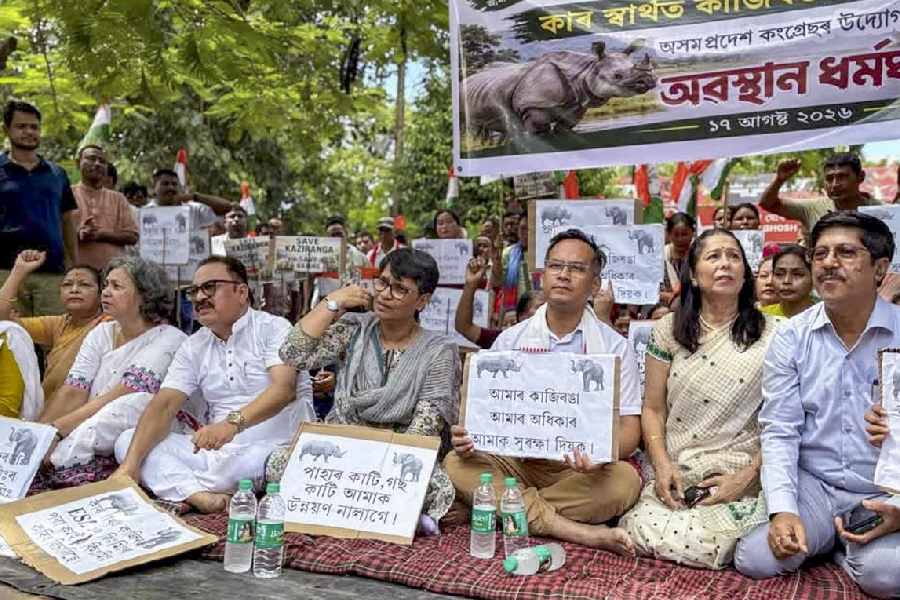
Assam Congress Protests Proposed Kaziranga Eco-Sensitive Zone Reduction
Assam to Seek Centre Approval to Cut Kaziranga Buffer Zone

Assam Congress Plans Statewide March Over Kaziranga ESZ Reduction

Assam Land Dispute Pits Kaziranga Conservation Against Luxury Tourism

Lachit Barphukan Academy Emerges as National Police Training Hub

West Bengal Plans Mega Durga Puja Show at Eden Gardens
Assam Teacher Allegedly Kills Wife, Two Children; Daughter Critical

Assam Proposes Scholarships for 100 IIT Guwahati Students
NESt Fest to spotlight Northeast culture and youth talent