

1 week ago
Allahabad High Court Denies Bail in Rs 16 Crore Fraud
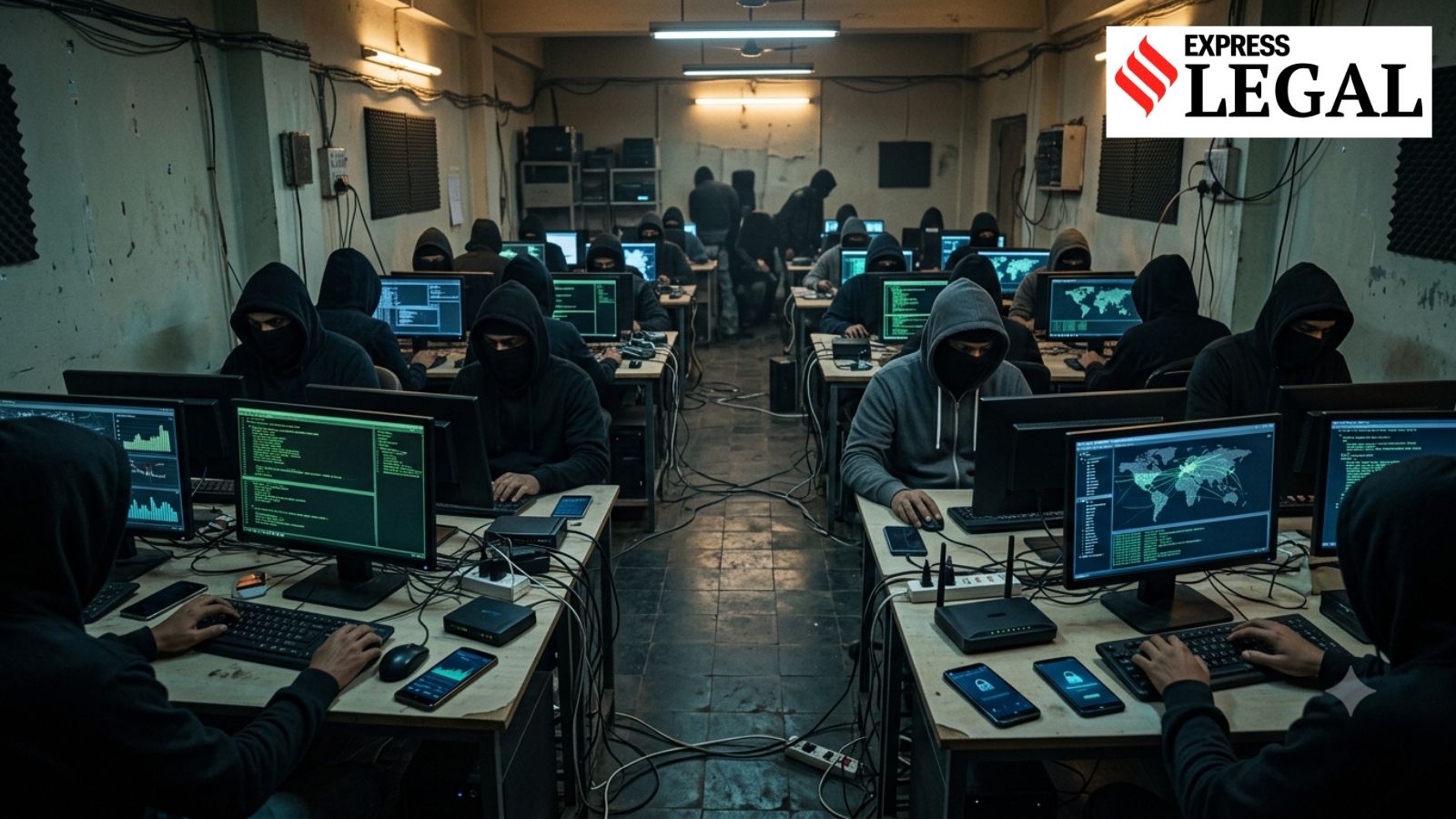
The Allahabad High Court refused to release Mohammad Shahvez on bail.
He is accused of helping a group take more than Rs 16 crore from Nainital Bank.
Prosecutors say he provided bank accounts that could be used to move stolen money.
Shahvez’s lawyer said he was innocent and had been falsely accused.
The lawyer also said the trial had not begun and that some co-accused had received bail.
The court said each accused must be judged based on their own alleged role.
It found no new reason to grant Shahvez bail and said he might interfere with evidence.
The court also warned that cybercrime harms people’s money, trust and security.

The Allahabad High Court rejected Mohammad Shahvez’s second bail plea in a cyber fraud case.
Authorities allege that Shahvez and others siphoned off more than Rs 16 crore by hacking Nainital Bank’s server.
The prosecution accused Shahvez of providing mule accounts on a two percent commission basis.
The court said parity with co-accused who received bail was not sufficient without examining Shahvez’s individual role.
The court described cybercrime as a widespread “silent virus” and said Shahvez’s release could risk interference with evidence.
- Who
- The Allahabad High Court, Justice Ashutosh Srivastava, accused Mohammad Shahvez, the prosecution and Shahvez’s defence counsel.
- What
- The court rejected Shahvez’s second bail application in a case involving an alleged cyber fraud of more than Rs 16 crore.
- Where
- The case was registered at the Cyber Crime police station in Gautam Budh Nagar and concerns alleged hacking of Nainital Bank’s server.
- When
- The court issued the cited observations on August 19; Shahvez has been jailed since April 21, 2025, and his first bail plea was rejected on November 27, 2025.
- Why
- The court found no new ground for bail, considered the allegations serious and said release could allow interference with prosecution evidence.
Prosecution’s Case
Defence’s Case
Alleged involvement
Prosecution’s Case
The state alleged that Shahvez acted with others in siphoning off more than Rs 16 crore by hacking Nainital Bank’s server and was an active member of a cyber fraud syndicate.
Defence’s Case
Shahvez’s counsel argued that he was innocent and had been falsely implicated.
Bail and risk
Prosecution’s Case
The prosecution said Shahvez might not remain available during trial and could interfere with prosecution evidence if released.
Defence’s Case
The defence said he had no criminal antecedents and was unlikely to flee or tamper with evidence.
Parity with co-accused
Prosecution’s Case
The court said bail granted to co-accused could not by itself justify Shahvez’s release because his individual role had to be examined.
Defence’s Case
The defence sought bail partly because co-accused Kuldeep Singh and Shubham Bansal had already received bail.
Key facts
- Accused
- Mohammad Shahvez
- Alleged loss
- More than Rs 16 crore
- Affected bank
- Nainital Bank
- Alleged role
- Providing mule accounts to a co-accused on a two percent commission basis
- Bail status
- Second bail application rejected
- Charges cited
- Sections 420, 467, 468, 471, 120B and 201 of the Indian Penal Code, plus Sections 66 and 66C of the Information Technology Act
- Court’s cybercrime warning
- The court called cybercrime a stealthy and disruptive “silent virus” affecting trust, security and progress
Quotes

Allahabad High Court
The court hearing Shahvez’s bail application
“This Court finds that in India, the rapid advancement of technology and the widespread adoption of digital infrastructure have led to a significant rise in cyber-crimes including phishing scams, ransomware attacks, cyber-stalking and data breaches”
 indianexpress.com
“Cyber-crime in our country is like a silent virus, stealthy, disruptive, and costing society more than just money, but trust, security and progress…”
indianexpress.com
Sources
Related news

Delhi court denies anticipatory bail in cyber fraud case

Mumbai Court Rejects Bail in Mule Account Cyber Fraud Case
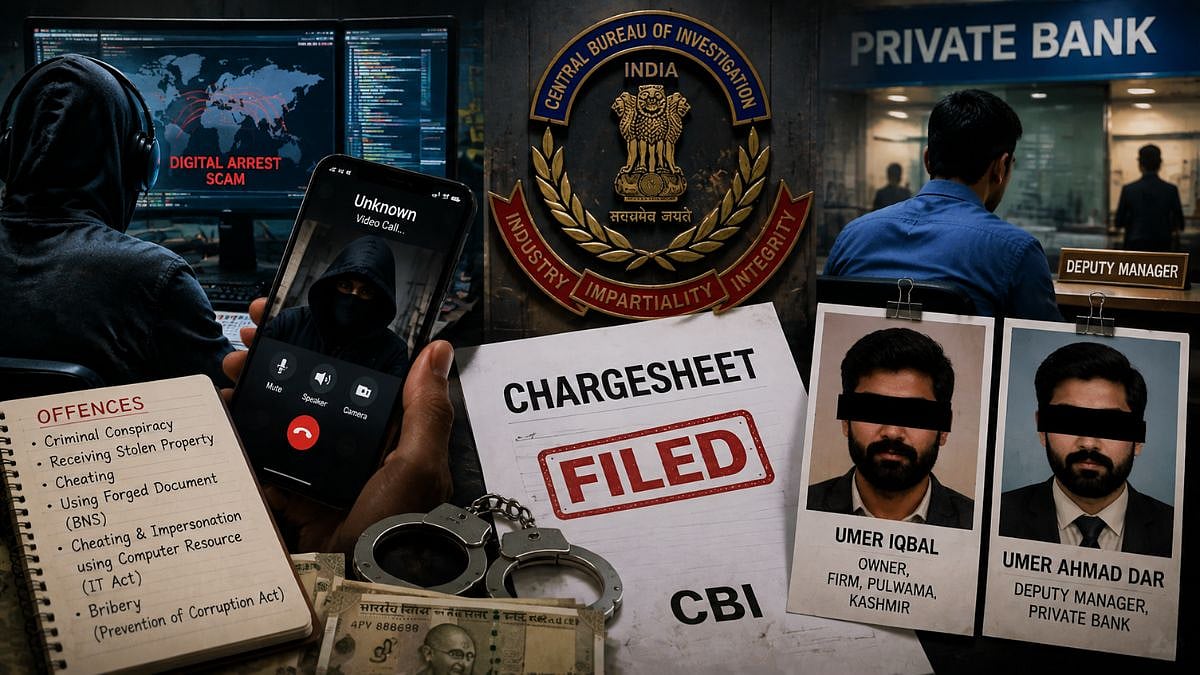
Charge sheet filed in Rs 1.6 crore digital arrest scam

Mumbai Police Bust Mule Account Racket Linked To 38 Cases

Mumbai Police Bust 'Digital Arrest' Fraud Racket, Arrest Seven

Goa Digital Arrest Probe Exposes Pan-India Cyber Fraud Network

Piyush Goyal Defends India’s 7.8% GDP Growth Amid Criticism

UPI at Ten: India’s Payment Rail Enters Next Decade

Darjeeling Himalayan Railway Train Becomes AI Coding Classroom

India likely to reach 62 pc 5G adoption by 2030
