2 days ago
Women's Profanity Protests Expose India's Double Standard in Politics

People in India are arguing about young women who use rude words at political protests.
The article says men have used similar language in public life for a long time.
People usually criticize the language when men use it.
But when women use it, critics often also judge their character and behavior as women.
The article says abusive language can still hurt political discussion.
It argues that the same rules should apply to everyone.
Women in politics can also face threats, sexual abuse and attacks on their private lives.
Young people increasingly use social media to express politics in bold and unusual ways.
A fair democracy should let everyone challenge leaders, even while condemning personal abuse.

Public debate over women using profanity at political protests often focuses on morality and culture.
Men have long used abusive language in politics, television, cinema and social media without the same scrutiny.
Profanity can damage political debate, but criticism of abusive language should apply equally to men and women.
Women in contentious politics also face sexual abuse, threats, harassment and attacks on their private lives.
The article argues that democracy requires equal standards, allowing women the same political anger and freedom as men.
- Who
- Young women protesters, political figures and other participants in public political debate.
- What
- A debate over women using profanity at political protests and the unequal standards applied to men and women.
- Where
- India, including political and online public life.
- When
- The article does not specify a particular date or period.
- Why
- The debate reflects broader discomfort with women publicly rejecting conventional expectations and challenging political authority.
Equal Standards and Political Freedom
Civility and Social Norms
How profanity should be judged
Equal Standards and Political Freedom
The same standard should apply to men and women: condemn personal abuse without turning women’s language into a judgment about womanhood.
Civility and Social Norms
Profanity can make political debate coarser, become intimidating and cross the line from fierce criticism into personal degradation.
Women’s public conduct
Equal Standards and Political Freedom
Women should have the same freedom as men to express political anger, irreverence and opposition to authority.
Civility and Social Norms
Critics may argue that public participants, including protesters, should meet standards of responsible and respectful conduct.
Meaning of the controversy
Equal Standards and Political Freedom
The disproportionate focus on women reveals a narrower boundary for acceptable female behavior and a broader social double standard.
Civility and Social Norms
The controversy can be understood as a legitimate concern about abusive political speech rather than an issue of gender alone.
Key facts
- Central issue
- Whether women using profanity in political protests are judged more harshly than men.
- Article's position
- Abuse should be condemned consistently, regardless of the speaker's gender or status.
- Political language
- Abusive language is described as common in politics, television debates, cinema and social media.
- Potential harm
- Profanity can cheapen disagreement, intimidate others and make public discourse coarser.
- Gendered scrutiny
- Women’s conduct is often framed through morality, culture and expectations about proper behavior.
- Harassment
- Women in contentious politics may face sexual abuse, threats, online harassment and attacks on private information.
- Generational change
- Young citizens increasingly use irreverent, visual and provocative political language through social media.
Sources
Related news

India’s Women Face Conditional Freedom Despite Empowerment Claims

India's young women need to be taken seriously, not forgiven
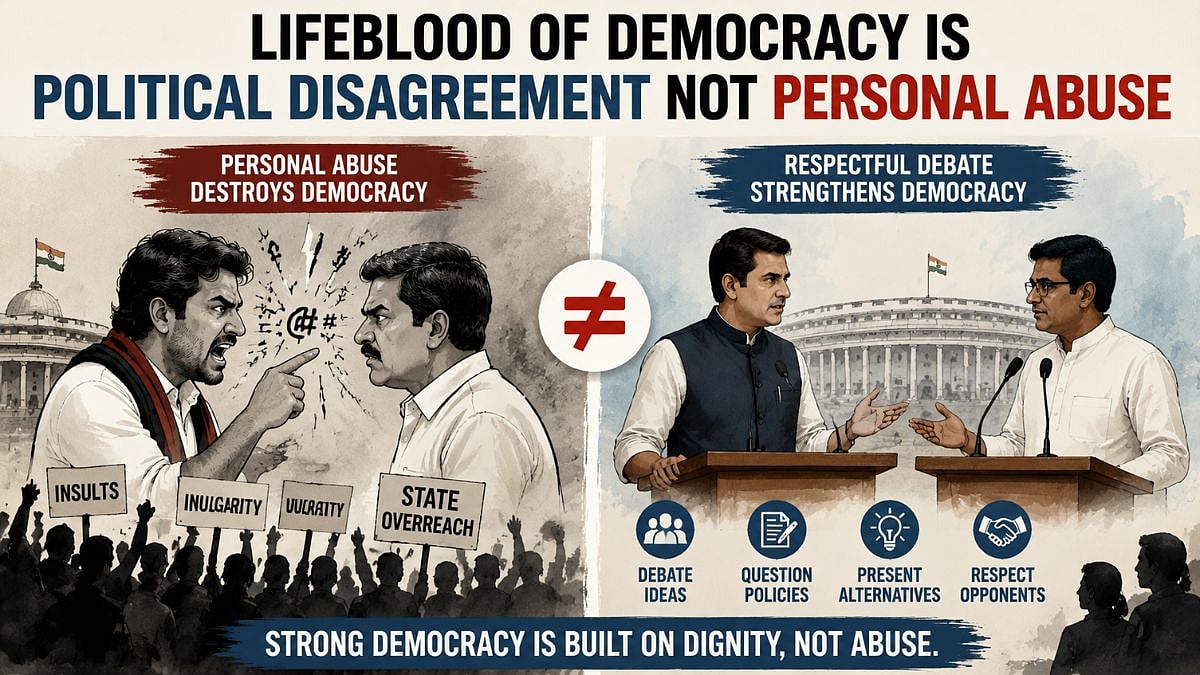
Udhayanidhi Stalin's Remark on CM Vijay Fuels Civility Debate

Viral Noida Woman’s Rant Sparks Debate Over Public Abuse

Why India's Political Parties Don't Truly Care About Women's Empowerment
India's 7.8% GDP Growth Sparks Questions Over Economic Reality
India Needs a Unified Ministry to Strengthen Energy Security
How Personal Guarantees Work Under India’s Insolvency Code

India Plans High-Tech Waiver From Mandatory BIS Certification Rules
India Condemns Demolition of Century-Old Hindu Temple in Pakistan