

0 months ago
Udhayanidhi Stalin's Remark on CM Vijay Fuels Civility Debate
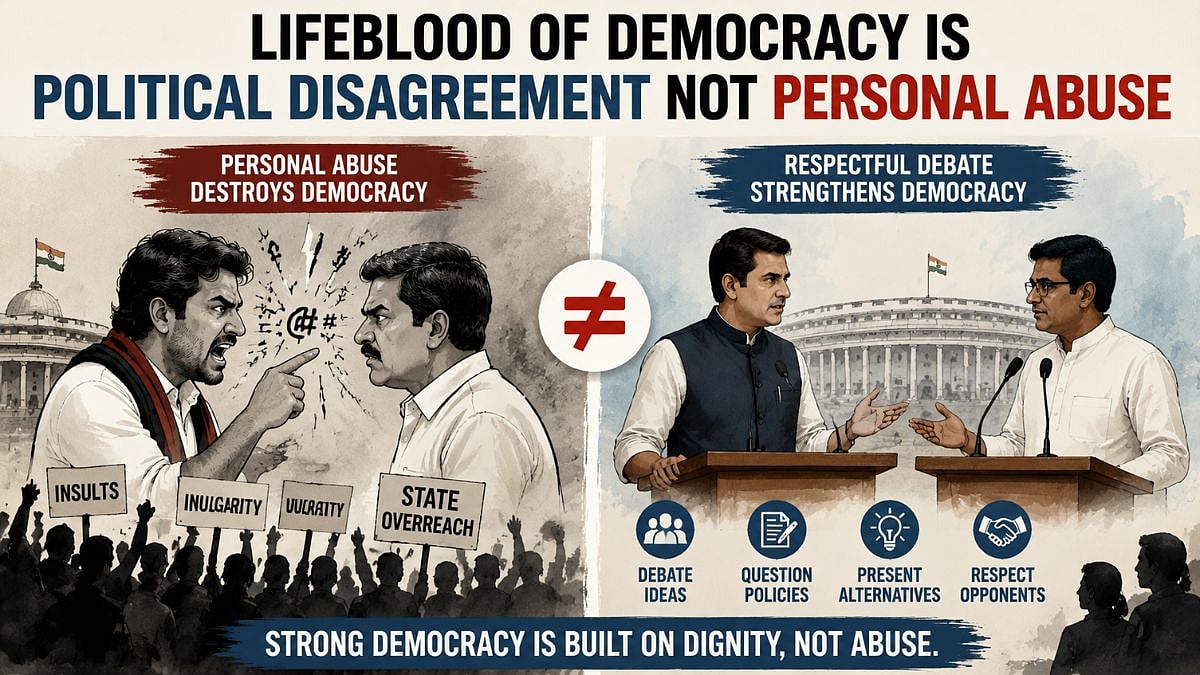
Politicians are supposed to be role models, so people pay attention to the words they use.
A leader named Udhayanidhi Stalin said something rude and mean about another leader, Chief Minister C. Joseph Vijay.
The rude words also hurt the feelings of a film actress, which made many people angry.
Udhayanidhi said he did not mean it that way, but many people did not believe him.
Then the government went too far in the other direction and arrested him for questioning.
A court called the Madras High Court let him go.
When he came out, many people cheered for him.
The story teaches that disagreeing with others is healthy in a democracy, but being abusive is not okay.
It also shows that governments should not use police power to punish people they argue with.

Udhayanidhi Stalin, Leader of the Opposition in the Tamil Nadu Assembly and son of former DMK Chief Minister M. K. Stalin, used a sexually suggestive double entendre against Chief Minister C. Joseph Vijay during a speech in Thanjavur.
The remark was widely condemned as misogynistic and also cast aspersions on a film actress, and Stalin's explanation that he had not intended such a meaning failed to convince many.
The Vijay government invoked multiple provisions of the Bharatiya Nyaya Sanhita to arrest and interrogate Stalin, which the article describes as excessive use of criminal law.
The Madras High Court granted Stalin relief, and he received an enthusiastic welcome after his release, illustrating how public sympathy shifted against the government's response.
The article argues political disagreement is the lifeblood of democracy while personal abuse is not, citing past episodes involving J. Jayalalithaa, Mani Shankar Aiyar and Narendra Modi.
- Who
- Udhayanidhi Stalin, Leader of the Opposition in the Tamil Nadu Assembly, and Chief Minister C. Joseph Vijay.
- What
- Stalin made a sexually suggestive double entendre against Vijay, was arrested under the Bharatiya Nyaya Sanhita, and was granted relief by the Madras High Court.
- Where
- Tamil Nadu, India; Stalin made the remarks during a speech in Thanjavur.
- When
- The article describes the controversy as recent; no specific date is provided.
- Why
- Stalin's offensive remark sparked public outrage, while the government's heavy-handed response drew criticism as state overreach.
Critics of Stalin's remark
Critics of government overreach
Stalin's offensive remark
Critics of Stalin's remark
Stalin's double entendre was plainly misogynistic, unfairly cast aspersions on a film actress, and crossed the limits of acceptable political discourse; the public outrage was a deserved rebuke.
Critics of government overreach
Stalin said he had not intended such a meaning, and the controversy turned him into a victim of alleged state overreach, as shown by his enthusiastic welcome after release.
Government's legal response
Critics of Stalin's remark
Public figures cannot escape responsibility by pleading innocent intent after making offensive remarks.
Critics of government overreach
Invoking multiple provisions of the Bharatiya Nyaya Sanhita to arrest and interrogate Stalin was an excessive use of criminal law that backfired.
Lesson for public life
Critics of Stalin's remark
Leaders have no right to descend into vulgarity in personal abuse.
Critics of government overreach
Leaders have no right to use the coercive power of the state to settle political scores.
Key facts
- Politician involved
- Udhayanidhi Stalin, Leader of the Opposition, Tamil Nadu Assembly
- Chief Minister targeted
- C. Joseph Vijay
- Location of speech
- Thanjavur
- Legal action
- Arrest and interrogation under multiple provisions of the Bharatiya Nyaya Sanhita
- Court relief
- Madras High Court
- Context
- Udhayanidhi Stalin is the son of former DMK Chief Minister M. K. Stalin
- Core theme
- Political disagreement vs. personal abuse in democracy
Sources
Related news

GDP Row Escalates as Government Rebuts 2.6% Growth Claim

India’s Avocado Boom Turns Luxury Fruit into Farmer Opportunity
Putin Faces Western Isolation While Russia Builds Non-Western Ties
India’s Global Power Ambitions Face Economic and Democratic Setbacks
Modi’s Frugality Appeal Contrasts With Extensive Foreign Travel
