

1 week ago
Delhi Prosecutors Challenge Government’s Mandatory Biometric Attendance Policy
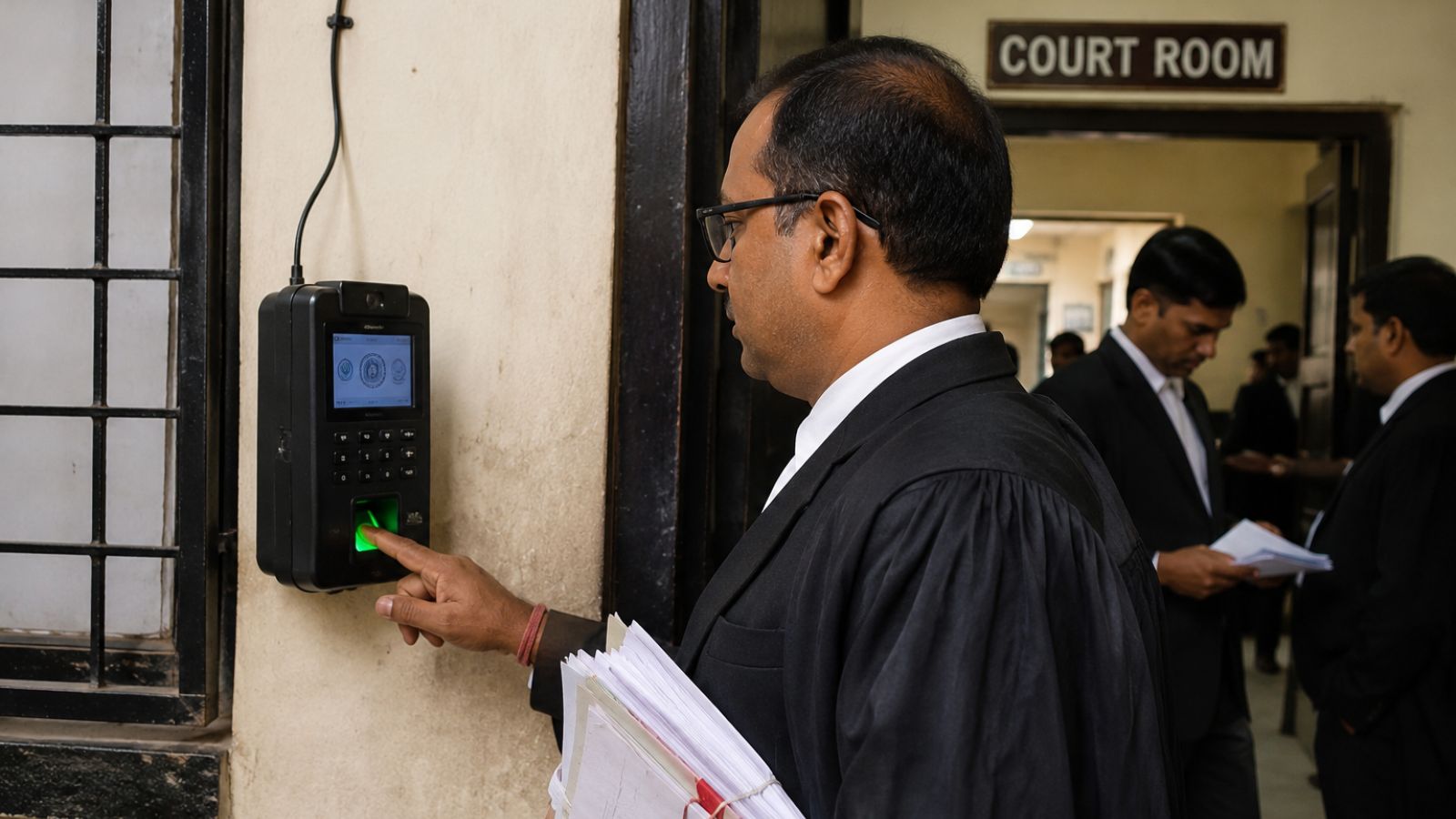
Delhi required government workers, including prosecutors, to record attendance with biometric machines.
Prosecutors are lawyers who represent the government in criminal courts.
They said their work happens mainly in courtrooms, not at one office.
They may need to attend several courts or urgent hearings on the same day.
The prosecutors’ association said waiting at biometric machines could make court work start late.
It asked the Delhi High Court to cancel or pause the rule.
The court did not cancel the rule immediately.
Instead, it told the central and Delhi governments to review the association’s concerns within four weeks.
The attendance requirement was introduced after an inspection found several senior employees absent from work.

The Delhi Prosecutors Welfare Association challenged mandatory Aadhaar-enabled biometric attendance for prosecutors.
The Delhi High Court directed the Centre and Delhi government to consider the association’s plea as a representation.
Prosecutors said the system ignores court-based duties, including simultaneous appearances and urgent remand proceedings.
They argued biometric queues could delay criminal proceedings and create an unnecessary administrative burden.
The attendance policy followed Chief Minister Rekha Gupta finding senior staff absent during an April inspection.
- Who
- The Delhi Prosecutors Welfare Association, representing public prosecutors, additional public prosecutors and assistant public prosecutors, challenged the Directorate of Prosecution’s circulars.
- What
- The association challenged mandatory Aadhaar Enabled Biometric Attendance System attendance for prosecutors.
- Where
- The dispute concerns prosecutors working in Delhi’s district offices and criminal courts and was heard by the Delhi High Court.
- When
- The Directorate of Prosecution issued circulars on July 16 and July 21; the Delhi High Court disposed of the plea on August 17.
- Why
- Prosecutors said mandatory biometric attendance does not reflect their court-based duties and could delay hearings, burden staff and disrupt criminal justice work.
Prosecutors’ objections
Government attendance policy
Where prosecutors work
Prosecutors’ objections
The association said a prosecutor’s workplace is the court, while court records and proceedings already reflect attendance.
Government attendance policy
The circulars required prosecutors to use biometric attendance at offices or designated locations under the Directorate of Prosecution.
Effect on court work
Prosecutors’ objections
Prosecutors said queues and attendance formalities could delay court appearances, criminal proceedings and urgent hearings.
Government attendance policy
The government expanded biometric attendance across departments after an inspection found several senior employees absent from duty.
Policy outcome
Prosecutors’ objections
The association sought cancellation or suspension of the circulars pending a practical, court-centric attendance system.
Government attendance policy
The High Court did not quash the circulars at this stage and instead directed the Centre and Delhi government to review the association’s representation.
Key facts
- Challenging body
- Delhi Prosecutors Welfare Association
- Attendance system
- Aadhaar Enabled Biometric Attendance System (AEBAS)
- Prosecution circulars
- Issued on July 16 and July 21
- Court direction
- The Delhi High Court directed the Centre and Delhi government to consider the plea as a representation and decide it within four weeks.
- Government implementation orders
- The Home department directed implementation in district offices and court complexes on July 24, July 31 and August 3.
- Departments onboarded
- The public attendance dashboard listed 43 government departments, including the Directorate of Prosecution.
- Attendance figure cited
- On the reported Tuesday, one of the Directorate of Prosecution’s 114 registered employees marked attendance.
Quotes
Delhi Prosecutors Welfare Association
Association representing Delhi public prosecutors and petitioner before the Delhi High Court
“Instead of facilitating the administration of criminal justice, they compel Public Prosecutors to spend valuable time reporting to the office, standing in long queues for biometric attendance and completing attendance formalities immediately before Court hours, thereby affecting timely appearance before Courts and compliance with judicial duties.”
 indianexpress.com
Sources
Related news
Delhi Government Puts Biometric Attendance Machines Under CCTV Surveillance
Supreme Court Refuses PIL Seeking Mandatory Biometric School Attendance
Delhi Prosecutors Stretched by Rising Cases and Court Transfers
Supreme Court to hear plea challenging Delhi Police facial recognition

Madhya Pradesh Begins Biometric Attendance Rollout At State Offices

MP Teachers To Get Relief For Genuine E-Attendance Delays

Delhi Cabinet Approves Bill to Simplify Business Approvals

Delhi GST Department Seizes Imported Cigarettes Worth Rs 65 Lakh

NESt Fest to spotlight Northeast culture and youth talent

Delhi Approves Free Rooftop Solar Panels for 2.3 Lakh Homes

Delhi Revises Solar Policy With Free Rooftop Systems
