

1 week ago
Chinese Humanoid Robots Break Human Records at Beijing Games

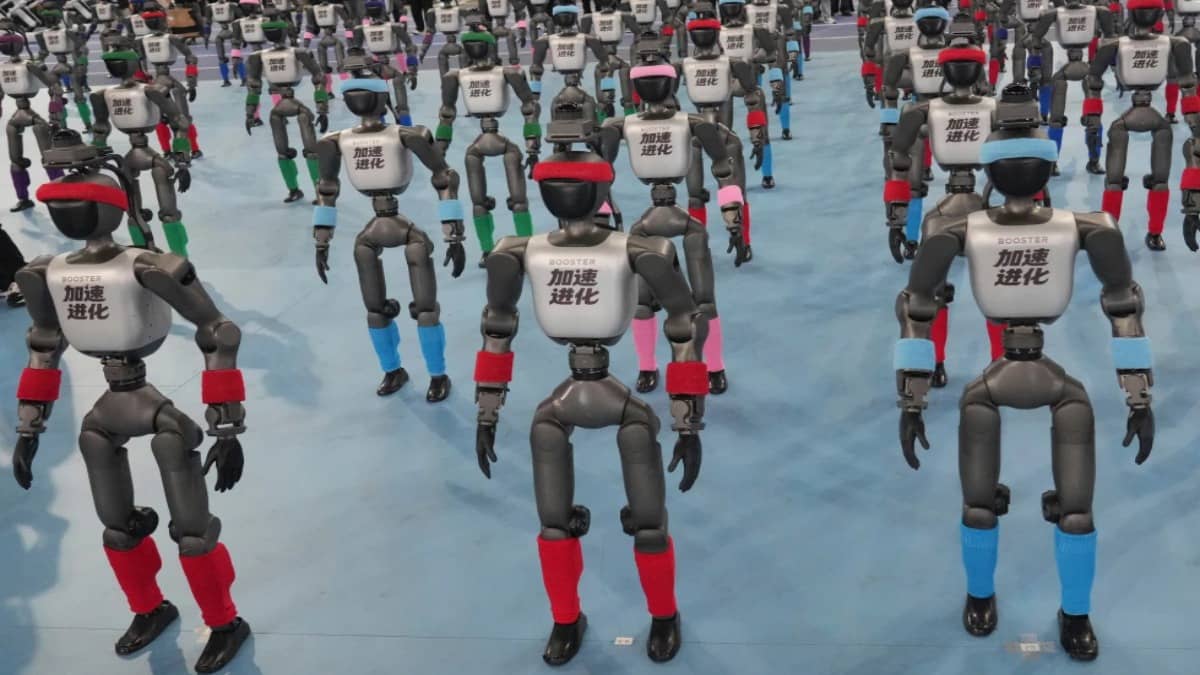
China held a sports competition where only humanoid robots could participate.
The five-day event took place in Beijing.
More than 2,000 robots competed in many different events.
One robot ran 100 meters faster than the human record associated with Usain Bolt.
Another robot jumped higher than the human high-jump record.
The robots were made to show how quickly the technology is improving.
The event also reflected competition between China and the United States in advanced robotics.
Experts said robots still need more development before they can be widely used in everyday jobs.

More than 2,000 humanoid robots took part in Beijing’s five-day World Humanoid Robot Games.
A robot from Beijing-based X-Humanoid ran 100 meters in 9.39 seconds, faster than Usain Bolt’s 9.58-second human record.
Another X-Humanoid robot reached 2.88 meters in the standing high jump, exceeding the human record of 2.45 meters.
The games included 51 events and more than 1,000 competitions, including running, table tennis and soccer.
Experts said humanoid robots remain mainly suited to demonstrations, performances and research rather than widespread real-world use.
- Who
- More than 2,000 humanoid robots, including robots from X-Humanoid, competed; organizers, robot makers, experts and spectators also discussed the event.
- What
- The World Humanoid Robot Games featured 51 events and more than 1,000 competitions, with robots setting reported records in the 100-meter sprint and standing high jump.
- Where
- The games were held in Beijing at the National Speed Skating Oval, which was built for the 2022 Winter Olympics.
- When
- The games opened on Saturday and lasted five days; the event was in its second year.
- Why
- The event demonstrated China’s advances in humanoid robotics amid intensifying technological competition with the United States.
Robotics Progress and Demonstration
Deployment and Security Concerns
Significance of the games
Robotics Progress and Demonstration
Organizers, robot makers and spectators presented the competition as evidence that humanoid robots are rapidly improving and can perform familiar human sports.
Deployment and Security Concerns
Experts said humanoid robots are still mostly used for demonstrations, performances and research, so competition results do not yet show widespread practical deployment.
China-U.S. technology relationship
Robotics Progress and Demonstration
The event showcased China’s large role in humanoid robotics during an intensifying technology race with the United States.
Deployment and Security Concerns
The United States has increased scrutiny of Chinese robots, citing national security concerns; China has rejected the accusations.
Key facts
- Participants
- More than 2,000 humanoid robots
- Duration
- Five days
- Events
- 51 events and more than 1,000 competitions
- 100-meter result
- 9.39 seconds by an X-Humanoid robot; a separate Honor robot reportedly ran 9.32 seconds in a trial
- Standing high-jump result
- 2.88 meters by an X-Humanoid robot
- Venue
- National Speed Skating Oval in Beijing
- Human records cited
- 9.58 seconds for the 100 meters and 2.45 meters for the high jump
Quotes
Yang Shangzheng
A spectator at the robot games
“At first, I wasn’t very accepting of artificial intelligence. I was even a bit resistant to it, because of the possibility that it might replace or displace humans. But now that I see this development is unstoppable, I decided to come and take a look.”
 republicworld.com
“These sports are perfectly normal for humans, but now robots can do them. I find it amazing.”
republicworld.com
Sources
Related news

Humanoid Robot Beats Usain Bolt’s 100-Meter World Record

Chinese Humanoid Robots Surpass Bolt Benchmark at Beijing Games

Chinese Humanoid Robot Sets New 100-Meter Sprint Record

World Humanoid Robot Games Showcase Robots Surpassing Human Sprint Records

Robot sprinter breaks 100-meter record at China’s humanoid games

Tiangong Ultra Runs 100 Metres in 8.86 Seconds

Global roundup spans Iran attacks, SCO summit and ferry disaster

Trump Calls for FCC Action After Attacking NBC Host

Why Trump’s FCC Threat Against NBC Journalist Fails
Trump Threatens NBC Journalist Over His Candidate Endorsements

China Seeks Longer Trade Truce as Xi’s US Visit Nears
