1 week ago
Battery-Backed Renewables Can Beat New Coal Costs in India

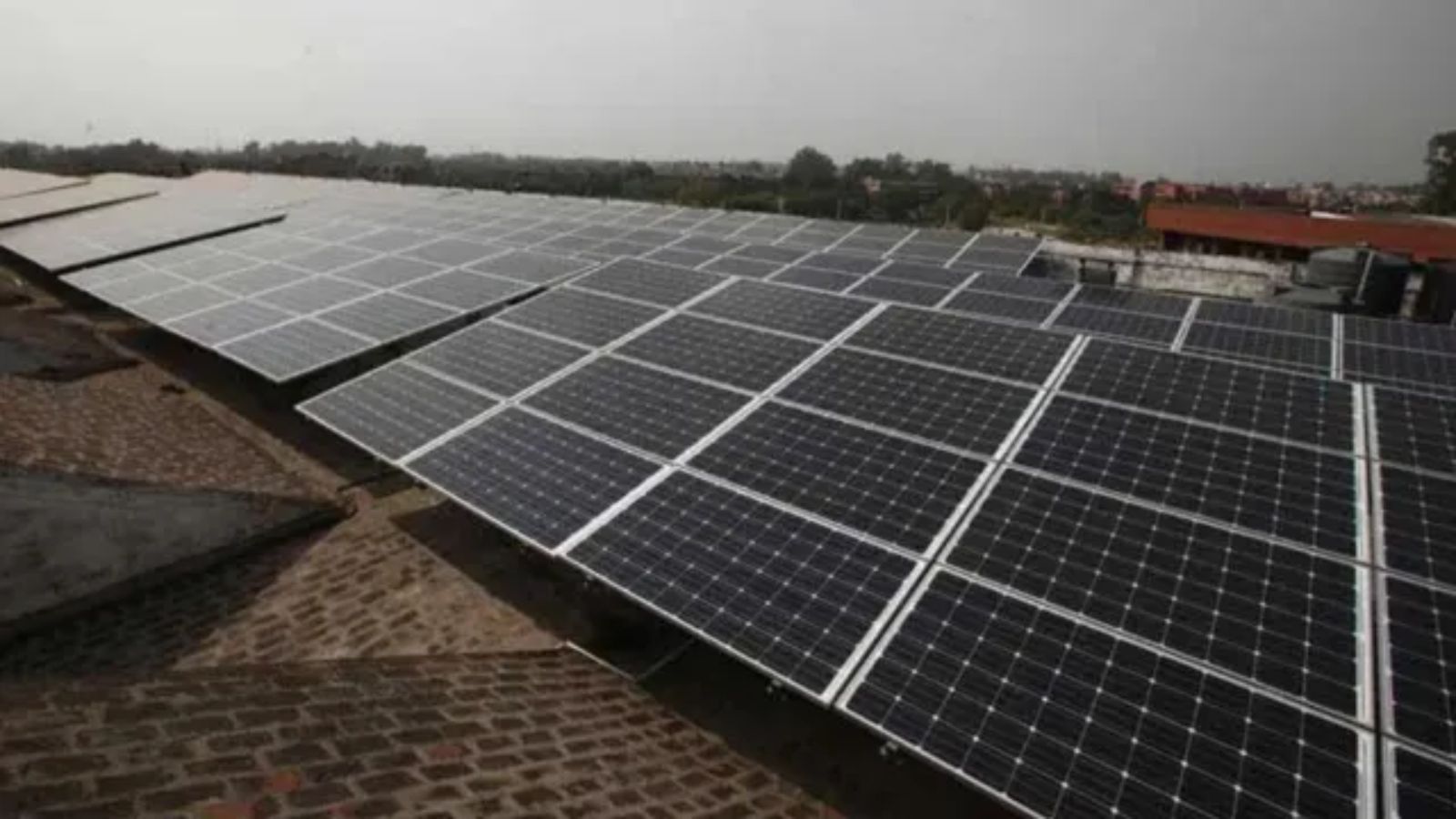
Researchers studied whether solar power and batteries could reliably supply electricity in India.
They examined a large government-backed electricity auction.
The winning renewable projects will be paid about Rs 5.25 for each kilowatt-hour for 25 years.
Batteries would store solar electricity made during the day.
That stored power could then be used in the evening, at night, and in the morning.
The study found that renewable power with batteries could cost less than building a new coal plant.
Seven companies offered very similar prices, which made the researchers view the result as a possible market benchmark.
They said this could help India provide cleaner and more predictable electricity to homes and industries.

A University of California, Berkeley study found battery-backed renewables could provide reliable power below the cost of new coal plants in India.
The analysis examined a 1,000-megawatt Solar Energy Corporation of India auction with a fixed tariff of Rs 5.25 per kilowatt-hour for 25 years.
Meeting the auction requirements would require about three gigawatts of solar capacity and 12 gigawatt-hours of battery storage per 1,000 megawatts contracted.
Seven winning developers submitted tariffs between Rs 5.25 and Rs 5.26 per unit, after bids from 16 companies.
Researchers said firm renewable power could support utilities and energy-intensive industries while avoiding future fuel-price increases.
- Who
- Researchers at the University of California, Berkeley analyzed an auction conducted by the Solar Energy Corporation of India; 16 companies submitted bids and seven won capacity.
- What
- The study assessed whether solar power combined with battery storage could provide reliable, round-the-clock electricity at a lower cost than new coal-fired plants.
- Where
- India, using solar and weather conditions from 10 Indian states, including Rajasthan as a high-quality solar location.
- When
- The electricity tariff is fixed for 25 years; the study used 10 years of hourly weather data.
- Why
- To determine whether firm renewable power could meet demanding supply requirements economically and help utilities and industries manage rising electricity demand.
Key facts
- Auction size
- 1,000 megawatts
- Contract tariff
- Rs 5.25 per kilowatt-hour, fixed in nominal terms for 25 years
- Winning bids
- Seven developers won capacity, with tariffs ranging from Rs 5.25 to Rs 5.26 per unit
- Bidding participation
- 16 companies submitted bids
- Estimated solar capacity
- About three gigawatts per 1,000 megawatts contracted at a high-quality solar location
- Estimated battery storage
- About 12 gigawatt-hours per 1,000 megawatts contracted
- Reliability requirements
- At least 90% of contracted capacity during six purchaser-selected peak hours and at least 70% during other non-solar hours
Quotes
Nikit Abhyankar
Co‑faculty director and study co‑author at the India Energy & Climate Center, UC Berkeley
“"This price is consistent with the dramatic reductions in solar and battery costs we have seen in India. And this is not one unusually aggressive bid: seven winners came in within one paisa. That gives us confidence that Rs 5.25 is emerging as a market benchmark for firm renewable power, not an outlier. In fact, adjusting for inflation, the price will actually decline in real terms over the life of the contract."”
 thehansindia.com
“"If India scales this model, consumers and industry could gain access to firm, clean electricity at a competitive price locked in for 25 years. That combination of reliability, low cost and long‑term price certainty could become an important competitive advantage for Indian manufacturing. India’s experience also offers lessons for other countries still considering expensive new coal or gas plants."”
thehansindia.com
Sources
Related news

ACME Solar Wins 300 MW Renewable Power Project With Storage
India’s Solar-Heavy Grid Needs Flexible Demand and Storage

India weighs storage changes to revive stalled renewable-energy bids

India’s Power Demand Surges as Data Centres Expand Grid Needs

Gujarat Cuts Renewable Banking Fees Before Cost-Based Regime

India Faces Decade-Long Path to Battery Self-Sufficiency

Rampura School Rebuild Begins After Alleged Violence, CJP Leader Says

Jaipur School Demolished, Reconstruction Begins After Attack Controversy

ED Raids 12 Locations Across Four States in Parimatch Probe

Bengaluru Police Expose Fake Officer Profiles Used in Furniture Fraud

Recent Protests Push India’s BJP Toward Greater Political Caution