1 day ago
India Needs District Data, Not GDP Alone, to Measure Growth
India usually measures its economy by looking at states and the country as a whole.
But states can contain districts that are growing very differently.
A state may look successful because a few large cities produce most of its wealth.
Another state may grow more evenly across many districts.
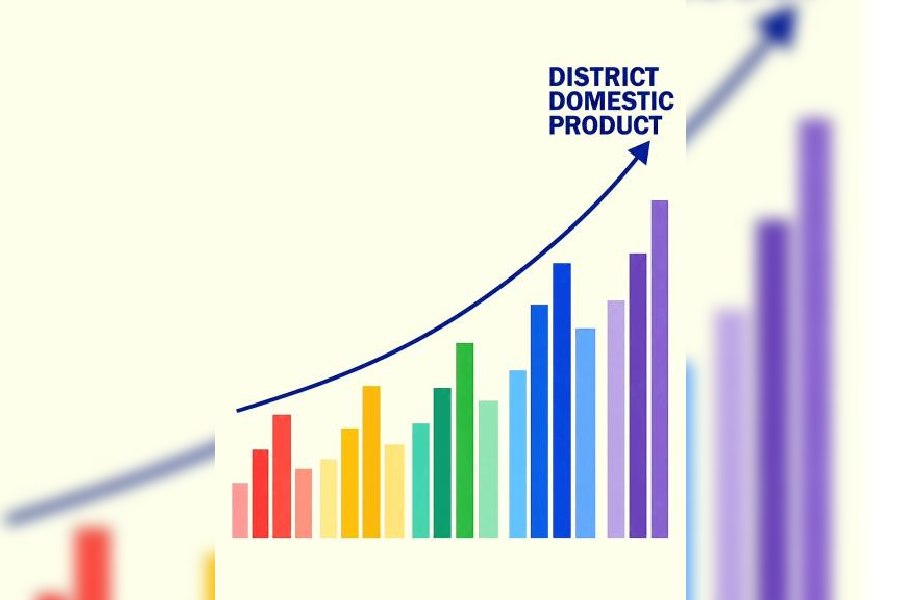
District Domestic Product, or DDP, helps show these differences.
This information can guide decisions about roads, jobs, skills, factories and other investments.
DDP does not measure people’s overall well-being and should not replace GDP or state GDP.
It helps policymakers understand whether growth is concentrated, spreading or leaving some places behind.

India’s new Uniform Guidelines for District Domestic Product aim to show where economic growth occurs within states.
State-level GDP remains important for fiscal transfers, macroeconomic planning and comparisons, but can conceal differences among districts.
About 85% of India’s GDP and 87% of its exports come from roughly 100 of nearly 750 districts.
District data can distinguish concentrated growth in metropolitan areas from broader growth across manufacturing, services and agriculture.
District Domestic Product is intended to support place-based policymaking, not replace GDP, GSDP or measures of welfare.
- Who
- India’s Ministry of Statistics and Programme Implementation, along with policymakers using economic data.
- What
- The ministry released Uniform Guidelines for compiling District Domestic Product to make local patterns of economic growth more visible.
- Where
- Across India’s districts and states.
- When
- The guidelines were recently released; the articles do not specify a date.
- Why
- To identify concentrated, dispersed and excluded areas of growth and improve district-level public investment and policymaking.
Key facts
- Guidelines
- Uniform Guidelines for the Compilation of District Domestic Product
- Current measure
- Gross State Domestic Product remains important for fiscal transfers, macroeconomic planning and inter-state comparisons.
- GDP concentration
- Nearly half of India’s GDP is generated by five states.
- District concentration
- Around 85% of national GDP and 87% of exports originate from roughly 100 of nearly 750 districts.
- Policy relevance
- District-level data can inform industrial corridors, logistics parks, employment programmes, skilling and infrastructure investments.
- Purpose of DDP
- To reveal patterns of economic concentration, diffusion and exclusion within states.
- Limitation
- DDP is not a measure of welfare and should not replace GDP or GSDP.
Sources
Related news

NSO Finds Informal Economy Concentrated in Few Indian Districts

Andhra Pradesh Districts Post Farm Growth Amid Governance Gaps
India’s Manufacturing Exports Cluster in a Few Districts
Top Informal Firms Concentrated in Four Indian States

India’s First District Labour Data Reveals Wide Regional Gaps

GST 2.0 Collections Diverge Sharply Across India’s Top States

Officials Urge Fiscal Prudence and Agile Data for Viksit Bharat

Medical Trips Cost Most as MoSPI Compares Domestic Travel Spending
Economy Quiz Covers GDP, Carbon Markets, Oil and UPI

Religion Drives Nearly Half of India’s Overnight Trips